
This post may contain affiliate links. Please see my disclosure policy for details.
Board game design is a fun, creative journey that turns simple ideas into games friends and family love playing. Anyone can start with just paper, cards, and imagination, no fancy skills needed.
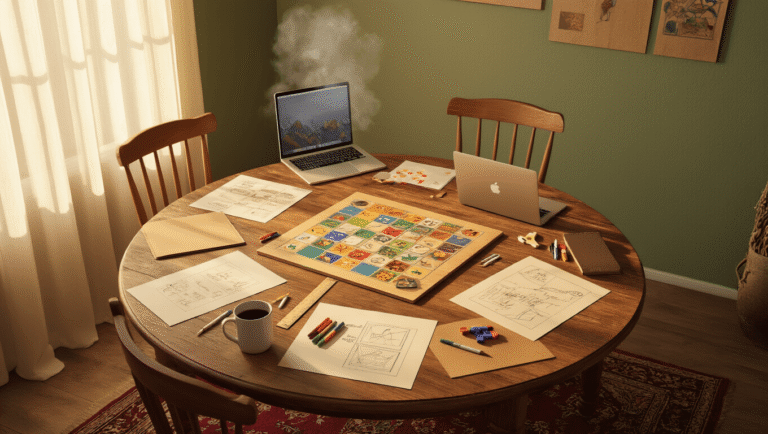
Sketch your core mechanics on graph paper first, then prototype with customizable cardstock sheets for durable testing pieces that look polished without a big investment. From there, playtest relentlessly to refine rules and balance fun.

Getting Started with Board game design Ideas
Contents
Think of a game like telling a story where players make choices. Pick a theme you enjoy, such as exploring a magical forest, building a cozy farm, or racing pirates on the high seas. Jot down what players do: collect treasures, trade items, or team up against a dragon? Keep it simple at first, one main action that repeats and feels exciting.
Play games you like and notice what makes them fun. Does the theme pull you in? Do choices matter? Your game should feel fresh but familiar, like a twist on favorites such as Monopoly or Candy Land.
Building the Heart of the Game
The “heart” is how players take turns and win. Start with easy rules: everyone draws cards to get resources like wood or food, then spends them to build things and score points. Players take turns clockwise, or everyone acts at once to keep energy high.
Make sure no one falls too far behind, give trailing players a little boost, like an extra card. Wins could be “first to 10 points” or “last one standing.” Test with 2-4 players to see if it lasts 20-45 minutes.
Making a Simple Prototype
Grab paper, scissors, and markers. Cut cards for actions, use coins as money, and draw a board on a cereal box. No need for pretty art yet, focus on if the rules work.
Play it yourself first, moving pieces around. Then invite friends over for a casual test. Ask: “Was it fun? What confused you?” Change one thing at a time, like swapping dice for choice cards to reduce luck.
Testing with Real People
Playtesting is like cooking, taste as you go. Gather a mix of kids, adults, and new gamers. Set a timer for short sessions and watch without helping too much.
Listen for laughs, sighs, or “this is boring.” If setup takes forever, simplify the board. After a few rounds, tweak: add more player powers or shorten turns.
Making It Look and Feel Great
Once rules click, add color. Draw fun icons, a tree for wood, a sword for fighting—so players “get it” without reading. Use bright colors but patterns too for everyone.
Components matter: big cards easy to hold, sturdy board that folds. Write rules in plain words with pictures, like a storybook: start with basics, then extras.
Sharing Your Game
When it’s ready, print copies at home or online services for cheap prototypes. Show it at game nights or local meetups for more feedback.
Dream big? Make a one-page “pitch” with photos and join online groups. Publishers love games tested 50+ times that stand out. Or sell via crowdfunding, fans fund your print run!
Common Fun Tips
- Keep choices meaningful: “Do I build or explore?” beats random rolls.
- Themes shine when they match actions, like animals in a zoo game migrating seasonally.
- Replayability comes from random setups or different player goals.
- Cut extras ruthlessly, if it drags, remove it.
Board game design brings joy through shared laughs at the table. Start small today; your first game might become a family treasure.