
This post may contain affiliate links. Please see my disclosure policy for details.
Breaking Into Board Game Design: The Emerging Trends That Could Make or Break Your Game
Contents
Emerging trends and mechanics have completely transformed how I approach board game design, and frankly, they’re the difference between creating something that gathers dust or becomes the next tabletop sensation.
You’re probably staring at your game idea wondering if it’s actually worth pursuing. Maybe you’re worried your concept is too simple, too complex, or just plain boring. Trust me, I’ve been there.
The good news? The board game industry is experiencing its golden age, with more room for innovation than ever before.
Why Current Trends Matter More Than Your Brilliant Idea
Here’s the harsh truth: your amazing game concept means nothing if it ignores what players actually want right now.
I learned this the hard way when my first prototype collected rejection letters because I was designing for the gaming landscape of five years ago.
Today’s successful games share specific characteristics:
- They solve real problems players face
- They incorporate technology thoughtfully
- They create lasting experiences beyond single sessions
- They offer multiple ways to engage
The designers who understand this are the ones getting published.
Current Trending Design Directions That Actually Work
Hybrid Gameplay: When Digital Meets Physical Magic
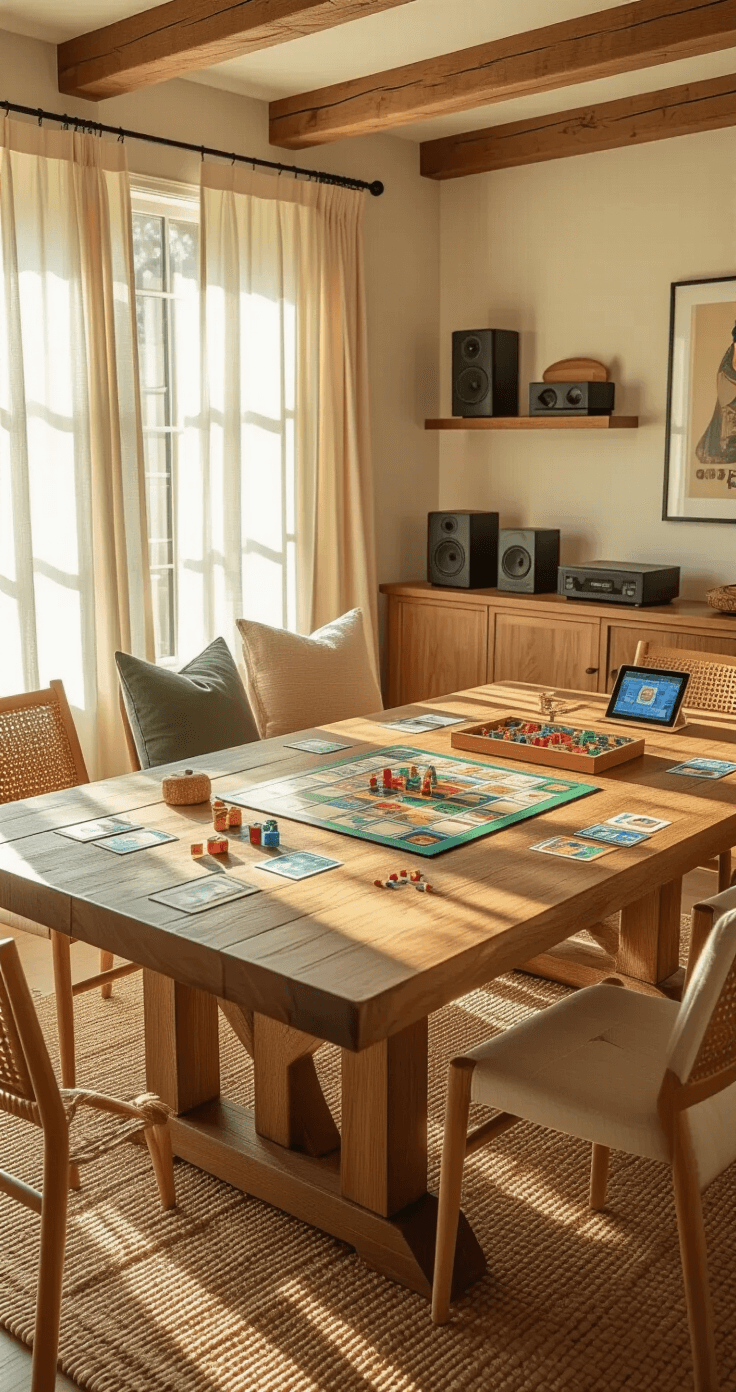
Hybrid gameplay combining physical and digital elements isn’t just trendy—it’s becoming essential for competitive games.
But here’s where most designers mess up: they add apps just because they can.
Smart integration looks like:
- Companion apps that handle complex calculations
- Augmented reality overlays revealing hidden information
- AI-powered storytelling that adapts to player choices
- Digital elements that enhance rather than replace physical components
I recently playtested a game using bluetooth speakers to create dynamic soundscapes. The audio cues added tension without requiring players to stare at screens.
The key question: Does your digital element solve a problem or create unnecessary complexity?

Legacy and Campaign Mechanics: Creating Addiction Through Evolution
Legacy and campaign mechanics have revolutionized player engagement by making every decision permanent.
Games like Pandemic Legacy and Gloomhaven prove that players crave evolving experiences.
What makes legacy mechanics successful:
- Permanent changes that feel meaningful
- Narrative progression that surprises veteran players
- Mechanical evolution that prevents gameplay staleness
- Personal investment through customization
I’m currently designing a legacy system using removable stickers that players apply to their game boards. Each sticker represents a choice that permanently alters future games.
Pro tip: Start small with legacy elements—even minor permanent changes create emotional investment.
Cooperative and Solo Mechanics: United We Stand
Cooperative and solo mechanics are exploding because they solve a fundamental problem: scheduling conflicts.
Modern players need games that work whether they have three friends available or just want to unwind alone.
Successful cooperative design principles:
- Shared victory conditions that require genuine teamwork
- Individual player abilities that complement team strategy
- Difficulty scaling based on player count
- Solo modes that feel intentional, not tacked-on
My breakthrough came when I stopped thinking “multiplayer with solo option” and started designing “scalable experience from one to many players.”
Innovative Mechanics to Explore (And How to Implement Them)
Variable Player Powers: Why Everyone Deserves to Feel Special
Variable player powers transform identical starting positions into unique gameplay experiences.
Each player gets different abilities, creating natural replay value and allowing players to develop personal strategies.
Implementation strategies:
- Asymmetric starting resources
- Unique action sets per character
- Special victory conditions for each player
- Evolving abilities that unlock during gameplay
Deck-Building Systems: Growth That Players Can Touch
Deck-building systems where players improve their starting cards create tangible progression.
Unlike leveling systems in video games, players physically handle their improvements.
Design considerations:
- Clear upgrade paths that don’t overwhelm new players
- Meaningful choices between different improvement strategies
- Balance between powerful cards and game-breaking combinations
- Storage solutions for expanded card sets
Consider investing in card sleeves for your prototypes—shuffling damaged cards breaks immersion faster than bad rules.
Real-Time Mechanics: When Every Second Counts
Real-time mechanics with synchronized action and timer elements add urgency that turn-based games can’t match.
But timing is everything—literally.
Successful real-time implementation:
- Clear audio cues for time transitions
- Actions that can be completed within time limits
- Forgiveness for minor timing mistakes
- Optional real-time modes for accessibility
I use sand timers instead of phone apps because the visual countdown creates shared tension.
Modular Customization: Building Your Own Experience
Modular customization enables players to tailor their experience without breaking core mechanics.
Think expansion packs that integrate seamlessly rather than bolt-on additions.
Modular design benefits:
- Adjustable complexity for different player groups
- Extended replay value through combination variety
- Natural expansion opportunities