This post may contain affiliate links. Please see my disclosure policy for details.
Transform Your Game Night: The Ultimate Guide to Stunning Board Game Illustration
Contents
Board game illustration can make or break your tabletop experience, and I’ve learned this the hard way after years of collecting dusty boxes that never see the table.
You know that feeling when you’re browsing the game store, and one box just grabs you by the eyeballs? That’s the power of great illustration working its magic. But here’s what most people don’t realize—those gorgeous visuals aren’t just pretty decorations. They’re the secret sauce that turns cardboard into adventure.

Why Board Game Art Actually Matters (More Than You Think)
I used to think game art was just window dressing. Boy, was I wrong.
After hosting hundreds of game nights, I’ve watched players’ reactions firsthand. Great board game illustration doesn’t just catch your eye—it pulls you into the world before you even read the rules.
When my gaming group first cracked open Root, Kyle Ferrin’s woodland warrior cats had us completely hooked before we understood a single mechanic. That’s the difference between a game that gets played and one that collects dust.
Here’s what stellar game art actually does:
- Communicates rules without words – Smart iconography beats walls of text every time
- Creates emotional investment – You care more about protecting cute woodland creatures than generic tokens
- Builds anticipation – That unboxing moment sets the tone for everything that follows
- Enables quick learning – Visual cues help new players grasp concepts faster
The Art Styles That Actually Work
Not all illustration styles hit the same way. I’ve seen gorgeous games flop because the art didn’t match the gameplay.
Professional Rendered Artwork
This is your premium tier—think Wingspan or Everdell. These games use museum-quality illustrations that make every component feel special. The downside? Your wallet will feel it.
Cartoon-Style Magic
Games like Fort prove that playful doesn’t mean cheap. Kyle Ferrin’s cartoon style perfectly captures childhood nostalgia while keeping production costs reasonable. This approach works brilliantly for family games or anything with a lighter theme.
Photography-Based Innovation
Sea Salt & Paper blew my mind with its origami photography approach. Instead of traditional illustrations, they photographed actual paper creations. The result feels fresh and tactile—you want to touch everything.
Minimalist Elegance
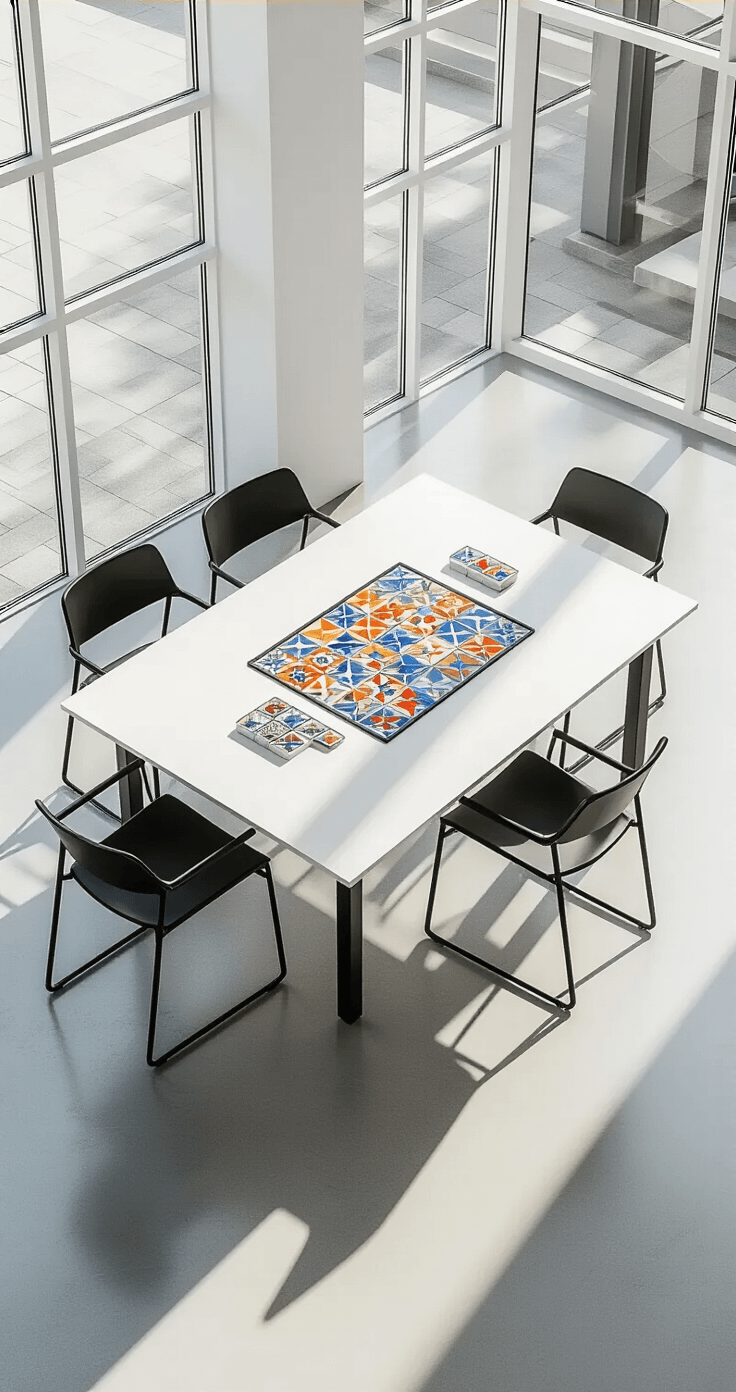
Sometimes less really is more. Games like Azul use simple geometric patterns that feel both timeless and sophisticated. Perfect for players who prefer clean, uncluttered designs.
Pro tip: Match your art style to your audience. Hardcore strategy gamers often prefer clean, functional design, while casual players gravitate toward rich, thematic artwork.
The Real Cost of Great Game Art
Let me give you the numbers that most designers won’t share.
I’ve talked to dozens of indie publishers, and here’s what quality board game illustration actually costs:
Budget Breakdown for Professional Art:
- Small card game (50-80 cards): $3,000-$8,000
- Medium board game with components: $10,000-$15,000
- Premium production (Stonemaier level): $25,000-$30,000
- Major expansion: $10,000-$15,000
Where Your Money Goes
Character illustrations typically run $200-$600 each, depending on complexity. A knight in simple chainmail costs way less than one in ornate full plate armor.
Card art usually ranges from $50-$150 per piece. Games often reuse backgrounds across multiple cards to keep costs down—smart move.
Box art is your biggest single expense at $1,000-$3,000. This is your marketing piece, so don’t cheap out here.
Game boards and maps vary wildly from $500 for simple layouts to $2,000+ for detailed fantasy worlds.
Want to save money? Consider these art supply storage solutions if you’re thinking about commissioning custom work.
Behind the Scenes: How Great Game Art Gets Made
I’ve watched several games go from concept to shelf, and the creative process always surprises people.
Step 1: Theme and Mechanics Dance Together
The best games don’t slap art onto finished mechanics. Instead, visuals and gameplay evolve together.
When the Ofrenda team finalized their character illustrations, they actually tweaked game rules to match the visual storytelling. That’s how you get art that feels integral, not decorative.
Step 2: International Considerations
Smart designers plan for global markets from day one. Heavy text on cards kills international sales, so the best games communicate through clear iconography.
7 Wonders works worldwide because its symbols transcend language barriers.
Step 3: The Unboxing Experience
This part gets overlooked constantly, but it’s huge. Your box needs to feel like opening a treasure chest, not a shipping container.
Games like Wingspan turn unboxing into an event with their gorgeous organizer inserts and layered reveals.
Artists Who Changed Everything
Some illustrators have completely reshaped what board games can look like.
Kyle Ferrin turned the hobby upside down with Root. His asymmetrical animal characters pack more personality into tiny wooden pieces than most video games manage with full animation. Every faction feels distinct just from the artwork.
Marie Cardouat proved abstract games could be beautiful with Dixit. Her dreamlike illustrations create stories in players’ minds—that’s incredibly difficult to pull off.
Ian O