This post may contain affiliate links. Please see my disclosure policy for details.
Creating DIY Board Games: A Complete Guide
Contents
Making your own board games might sound intimidating, but I’ve discovered it’s one of the most satisfying creative projects you can tackle at home.
You’re probably wondering if you need special skills or expensive materials to create something actually playable. The truth is, some of my favorite homemade games started with nothing more than cardboard boxes and markers I had lying around.

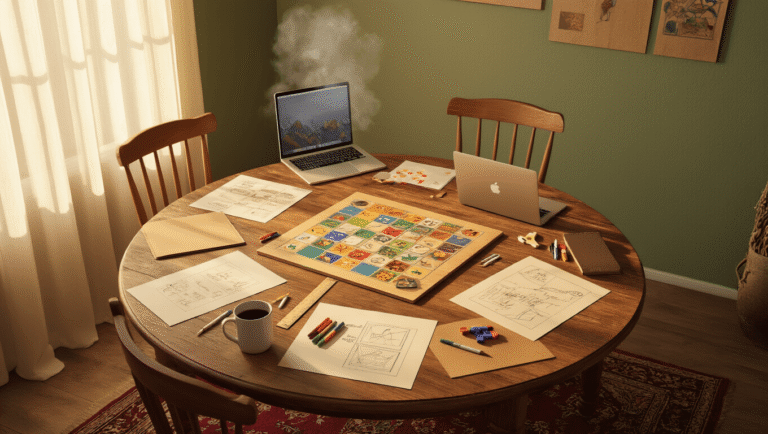
Why Your Kitchen Table Is the Perfect Game Design Studio
I remember staring at my dining room table one rainy Saturday, surrounded by bored kids and thinking, “There has to be something better than another round of Monopoly.”
That’s when I realized I could create something completely custom.
The best part about DIY board games? You control every single element. Want a game about your family’s inside jokes? Done. Need something that takes exactly 30 minutes because that’s your attention span? Perfect.
Here’s what changed my mind about homemade games:
- They cost a fraction of store-bought versions
- You can test and modify rules instantly
- Kids become invested when they help create
- No more “this game is too hard/easy” complaints

Essential Materials That Won’t Break Your Budget
Start With What You Already Own
I’ve made fully functional games using nothing but items from my junk drawer.
Your basic arsenal includes:
- Cardboard from Amazon boxes
- Poster board from the craft closet
- Markers, colored pencils, or crayons
- Dice from other board games
- Random figurines (Lego people work brilliantly)
The cardboard approach is forgiving. Mess up a square? Draw over it or slap on a sticker. This flexibility keeps you moving instead of getting stuck on perfection.
Level Up Your Materials (When You’re Ready)
Once you’ve caught the game-making bug, 60-point chipboard feels like a professional upgrade.
It’s thick enough to handle repeated use but still cuts easily with scissors. Most craft stores stock it, and it won’t make your wallet cry.
Foam sheets became my secret weapon for game pieces. They come in every color imaginable, cut cleanly, and feel substantial in your hands.

Premium Options (For the Ambitious)
After making dozens of games, I started experimenting with:
- Birch plywood for boards that last decades
- Acrylic sheets for translucent game pieces
- Metal components for that luxury weight
- Resin for detailed miniatures
But honestly? Start simple. Your first game doesn’t need to be a masterpiece.
Building Your First Board Game: The Path Method
Choose Your Foundation
Grab the biggest piece of cardboard you can find. Pizza boxes work perfectly if you can get past the grease stains.
Pick Your Theme First
This step trips up everyone. Don’t start with mechanics—start with what excites you.
Love space exploration? Your path becomes a journey through the solar system. Obsessed with cooking? Create a recipe-collecting adventure. Kids into dinosaurs? Time travel through different prehistoric eras.
Design Your Path
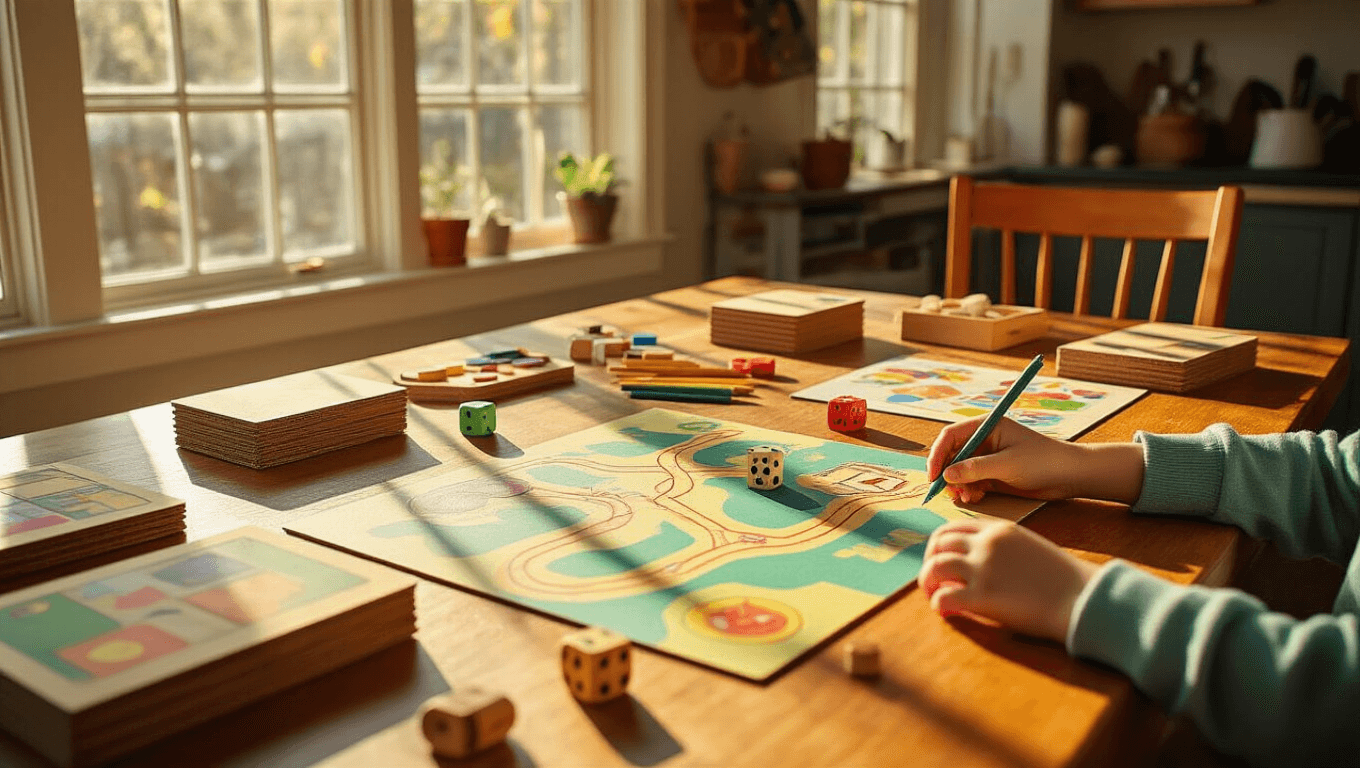
I draw my paths freehand because perfect squares are overrated. Start at one corner, snake across your board, and end at the opposite corner.
Each space should be big enough for your game pieces to sit comfortably. About the size of a quarter works well.
Add Visual Interest
This is where you make it yours:
- Color-code different types of spaces
- Draw themed illustrations at major points
- Add texture with patterns or stickers
- Write fun messages on special squares
Game Pieces That Actually Work
Player Tokens From Your Toy Box
Chess pawns make excellent players. Different colored buttons work too. I’ve used everything from tiny toy cars to bottle caps.
The key is making sure each player’s piece is easily distinguishable.
Creating Custom Pieces
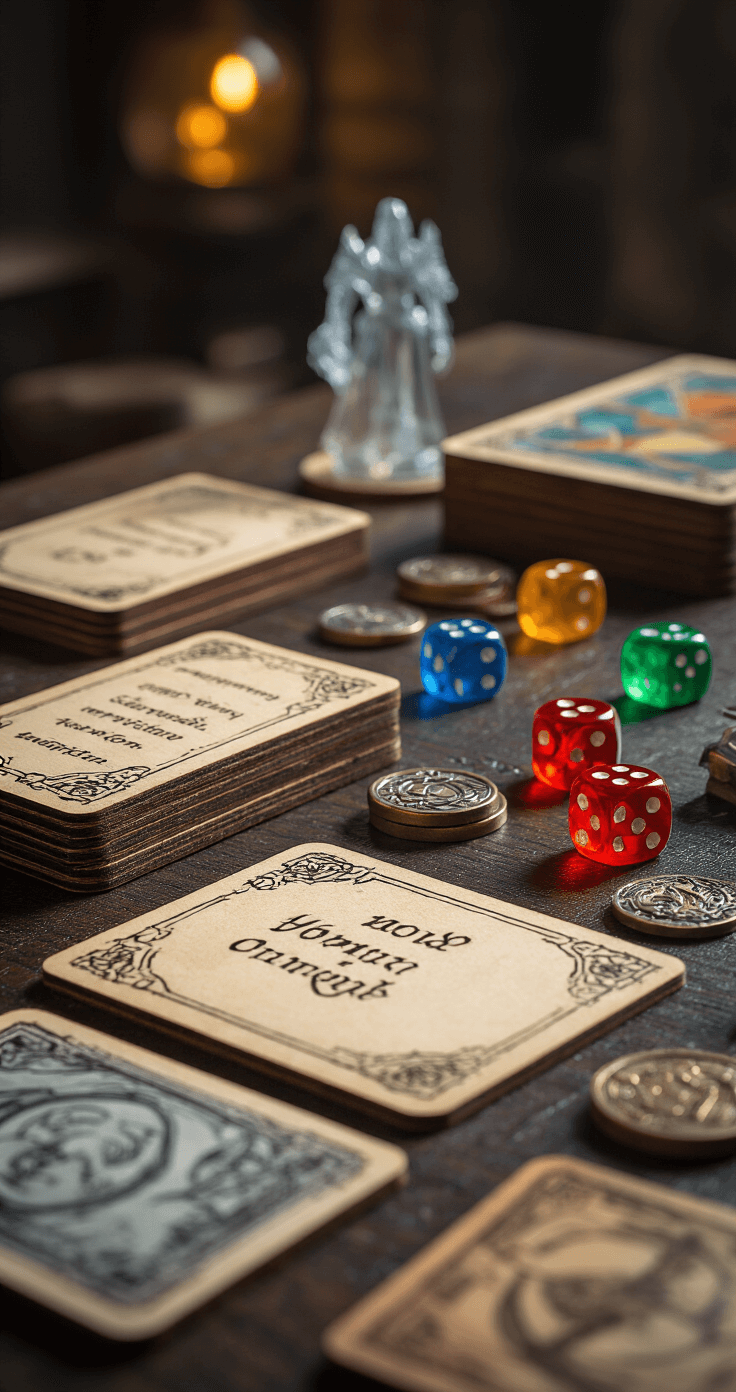
Wooden craft shapes paint beautifully and feel professional.
For cards, I print designs on regular paper and glue them to thin cardboard. Cut them all the same size for that polished look.
Dice Solutions
Standard dice work for most games, but you can customize them. Cover existing dice with stickers showing symbols instead of numbers. Or create custom dice with exactly the outcomes you need.
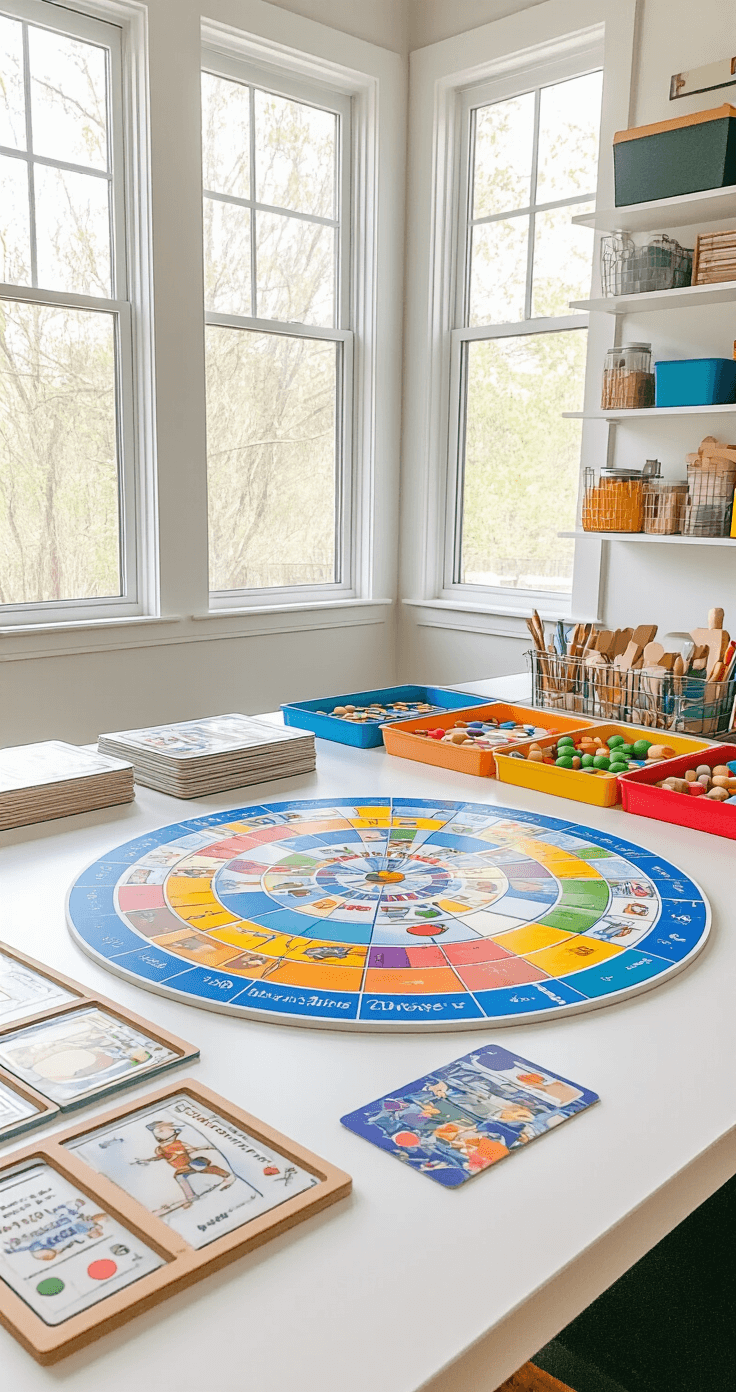
The Circular Collection Game Alternative
Not every game needs a linear path.
Draw a large circle around the edge of your board, then a smaller circle in the center. Connect them with lines creating individual spaces.
Players move around the outer ring, collecting items from the center. This mechanic works brilliantly for:
- Resource collection games
- Shopping simulation games
- Treasure hunting adventures

Rules That Make Sense
Start Stupidly Simple
Your first rule should fit on one index card. Something like: “Move the number of spaces you roll. First person to the end wins.”
Add Complexity Gradually
After playing your basic version, add one new rule at a time: