
This post may contain affiliate links. Please see my disclosure policy for details.
Why Your Desk Lamp Might Be Ruining Your Productivity (And How to Fix It)
Contents
- Why Your Desk Lamp Might Be Ruining Your Productivity (And How to Fix It)
- What Actually Makes a Desk Lamp Worth Your Money
- Where You’re Probably Positioning Your Lamp Wrong
- LED vs. Traditional Bulbs: This One’s Not Even Close
- Eye Strain: The Silent Productivity Killer
- Styles That Don’t Sacrifice Function
Your desk lamp is probably terrible—let me explain why, and more importantly, what you should do about it.
I spent years squinting at documents under a flickering fluorescent bulb that made my home office feel like an interrogation room. My eyes ached by 3 PM. My neck hurt from hunching forward to see better. And my productivity? Absolutely shot.
The truth is, most people treat desk lamps like an afterthought, grabbing whatever’s cheap at the store or using that crusty lamp their aunt gave them in 2003.
But here’s what I discovered after researching proper workspace lighting and testing different setups: desk lamps can either make or break your ability to work comfortably, and the difference between a good one and a bad one is like night and day (pun absolutely intended).
What Actually Makes a Desk Lamp Worth Your Money
Let’s cut through the marketing nonsense and talk about what matters.
Lumens: The Brightness Number That Actually Counts
Forget watts—that’s old-school thinking. Lumens measure actual light output, and here’s what you need to know:
- 450-550 lumens: Perfect for everyday reading, homework, or general office work
- 800+ lumens: What you need for detail work like drawing, painting, crafting, or anything requiring precision
I learned this the hard way when I bought a desk lamp that looked gorgeous but produced about as much light as a birthday candle.
Don’t make my mistake.
Color Temperature: Why Your Lamp Might Be Making You Feel Terrible
This one blew my mind when I finally figured it out.
Color temperature is measured in Kelvin (K), and different temperatures do wildly different things to your brain and eyes:
- 2700-3000K (warm light): Cozy, relaxing, makes you sleepy—great for winding down, terrible for spreadsheets
- 4000-4500K (neutral light): Balanced, comfortable for most tasks
- 5000-6500K (cool light): Crisp, energizing, mimics daylight—excellent for focused work
The best desk lamps let you adjust the color temperature throughout the day. I use cooler light when I’m tackling my morning emails and switch to warmer tones as evening approaches.
Some specialized LED desk lamps even offer preset modes—like “paper reading mode” at 5700K for physical documents or “screen mode” at 4000K to reduce eye strain when you’re staring at your computer.
Pro tip: If you work with both paper documents and digital screens (and who doesn’t?), look for lamps with these dual modes.
Where You’re Probably Positioning Your Lamp Wrong
Position matters more than you think.
I used to plop my lamp directly in front of me on my desk, which seemed logical until I realized it was creating glare on my screen and shining directly into my eyes like some kind of medieval torture device.
The Right Way to Position Your Desk Lamp
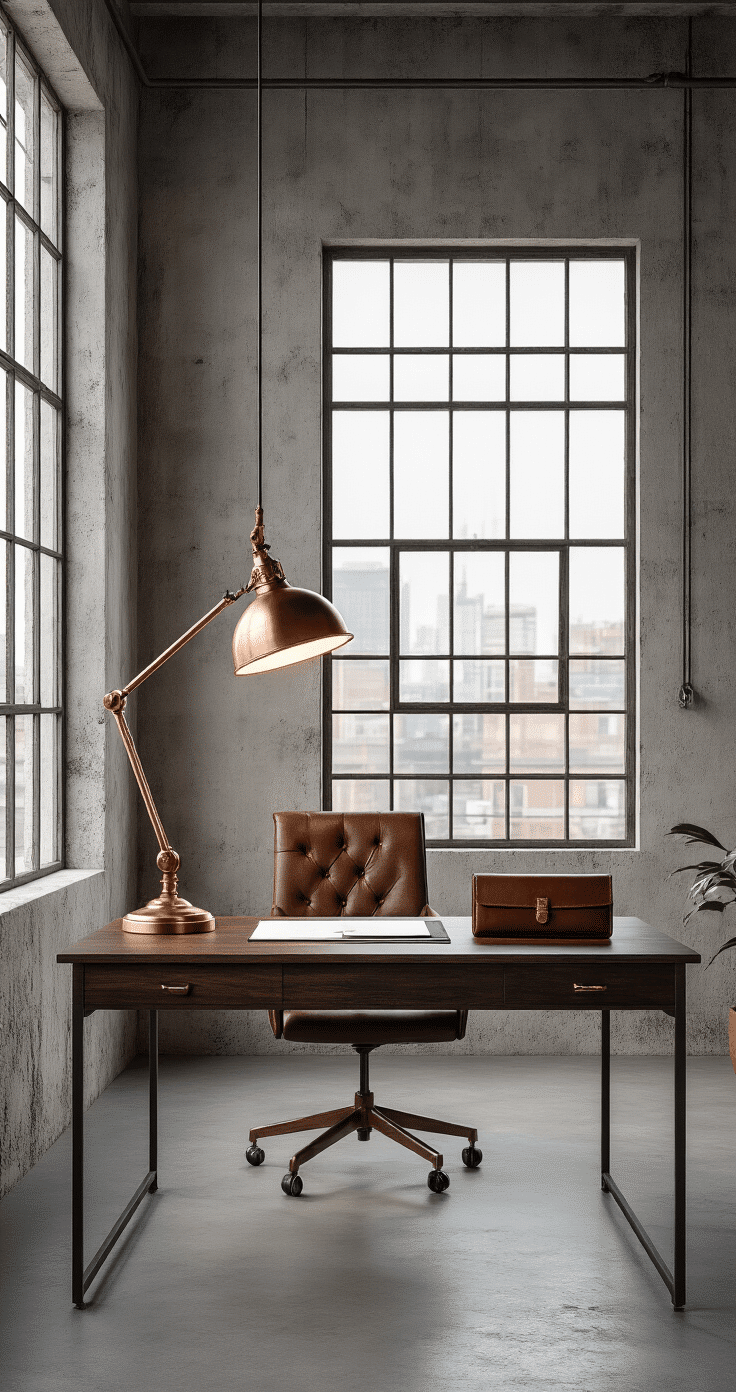
Place it above your head or angle it away from your direct line of sight.
This eliminates glare and keeps light from blasting straight into your eyeballs.
For right-handed people, position the lamp on your left side to avoid shadows when writing. Lefties, do the opposite.
If your desk is already cluttered (no judgment—mine looks like a paper tornado hit it), consider a clamp desk lamp that attaches to your desk edge and keeps your workspace clear.
Adjustable Arms Are Non-Negotiable
Look for lamps with flexible, adjustable arms and heads.
You need to direct light exactly where you’re working, whether that’s:
- A book you’re reading
- Your keyboard
- A sketchpad
- Fine detail work that requires precision
Fixed lamps are basically decorative objects that happen to produce light—they won’t cut it for actual work.

LED vs. Traditional Bulbs: This One’s Not Even Close
I’m going to be blunt: if you’re still using incandescent bulbs in your desk lamp, you’re wasting money and hurting your eyes.
Why LED desk lamps win every time:
- They run cooler: No more accidentally burning your hand when adjusting the lamp
- They use less energy: Your electricity bill will thank you
- They last longer: Some LEDs run for 50,000 hours—that’s over 5 years of continuous use
- They’re gentler on your eyes: Softer, more consistent illumination without harsh glare
I switched to an adjustable LED desk lamp about two years ago, and I genuinely can’t imagine going back.
The difference in eye comfort after a long workday is remarkable.
Eye Strain: The Silent Productivity Killer
Let’s talk about what happens when you get your lighting wrong.
Eye strain doesn’t just make your eyes tired—it triggers headaches, neck pain, difficulty concentrating, and that overwhelming urge to close your laptop and take a nap at 2 PM.
Your desk lamp can eliminate eye strain in two ways:
- It removes the struggle to see in dim conditions (no more squinting at tiny text)
- It eliminates harsh glare from traditional bulbs that make your eyes work overtime
Think of proper desk lighting like an ergonomic office chair—it’s an investment in your ability to work comfortably for extended periods.
I used to think my afternoon fatigue was just normal. Turns out, my garbage lighting was exhausting my eyes, which exhausted my brain, which tanked my productivity.
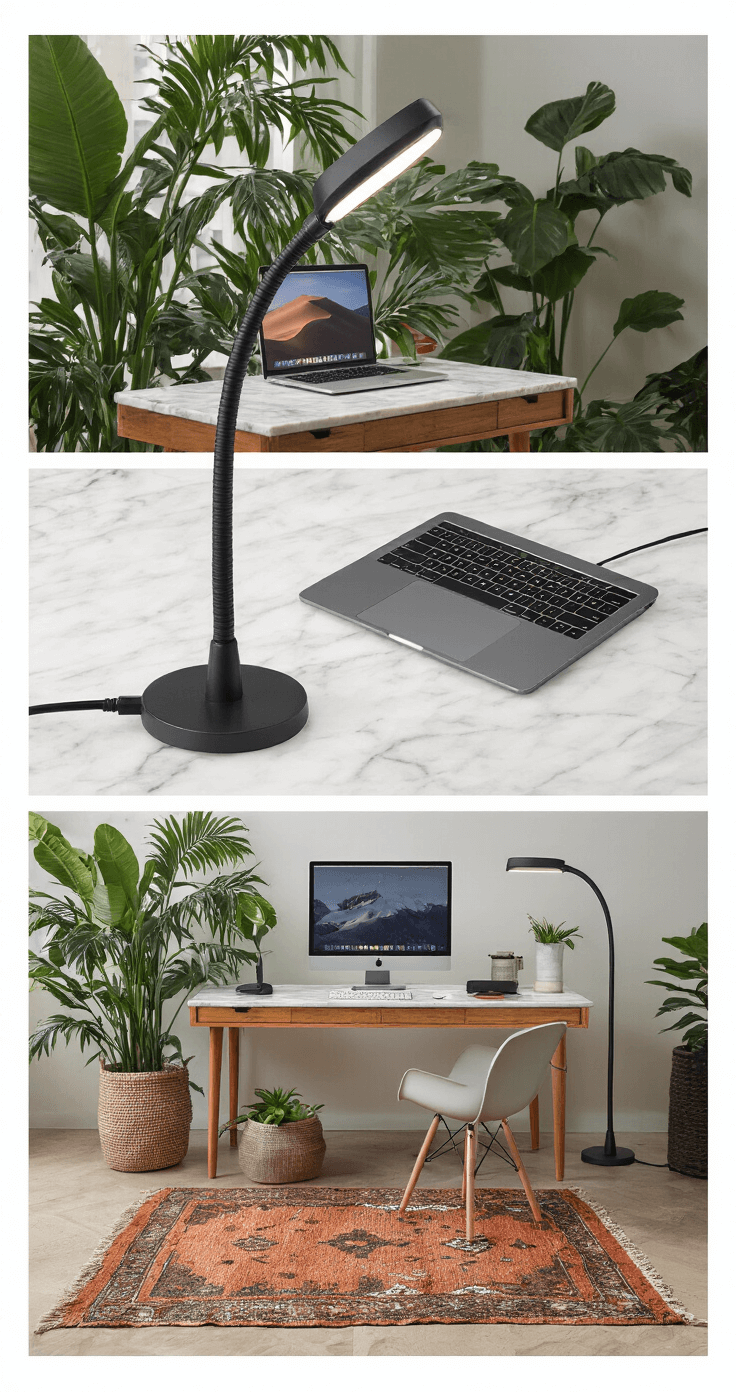
Styles That Don’t Sacrifice Function
Here’s the good news: you don’t have to