This post may contain affiliate links. Please see my disclosure policy for details.
Why I Started Making My Own Board Games (And Why You Should Too)
Contents
- Why I Started Making My Own Board Games (And Why You Should Too)
- Pick Your Game Style & Concept: The Foundation of Fun
- Design Your Board: From Blank Canvas to Game Central
- Make Player Pieces That Actually Stay Put
- Add Essential Game Elements Without Breaking the Bank
- Gameplay and Actions: Where Learning Meets Fun
- Rules and Instructions: Keep It Crystal Clear
Three years ago, my seven-year-old declared that all our board games were “boring.” Rather than shell out another fortune on games that might end up forgotten in a closet, I decided to get crafty. Best decision ever.
Making your own games isn’t just about saving money—though you definitely will. It’s about creating something uniquely yours that perfectly fits your family’s interests and learning goals.
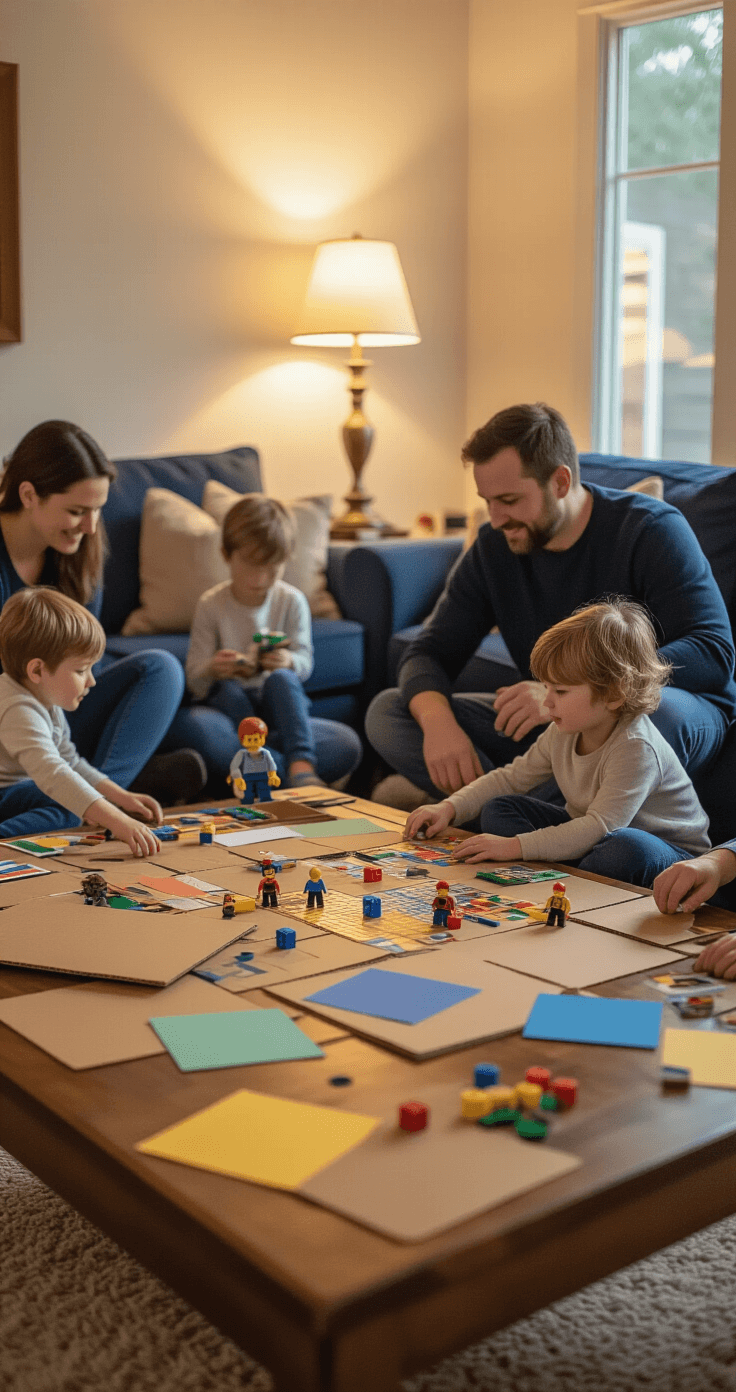
Pick Your Game Style & Concept: The Foundation of Fun
Before you touch any cardboard for crafting, you need a solid concept.
Here’s how I approach it:
- Classic race games: Perfect for younger kids who love the thrill of reaching the finish line first
- Trivia games: Brilliant for sneaking in educational content without kids noticing
- Adventure themes: Pirates, space exploration, fairy tales—whatever gets your family excited
- Strategy games: For older kids and adults who want something more challenging
I always steal inspiration from established games. There’s no shame in borrowing the basic mechanics of Monopoly or the adventure elements of Risk. The magic happens when you add your own twist.
My personal favorite combo? A race game with educational challenges. Kids move forward by answering math problems or spelling words correctly.
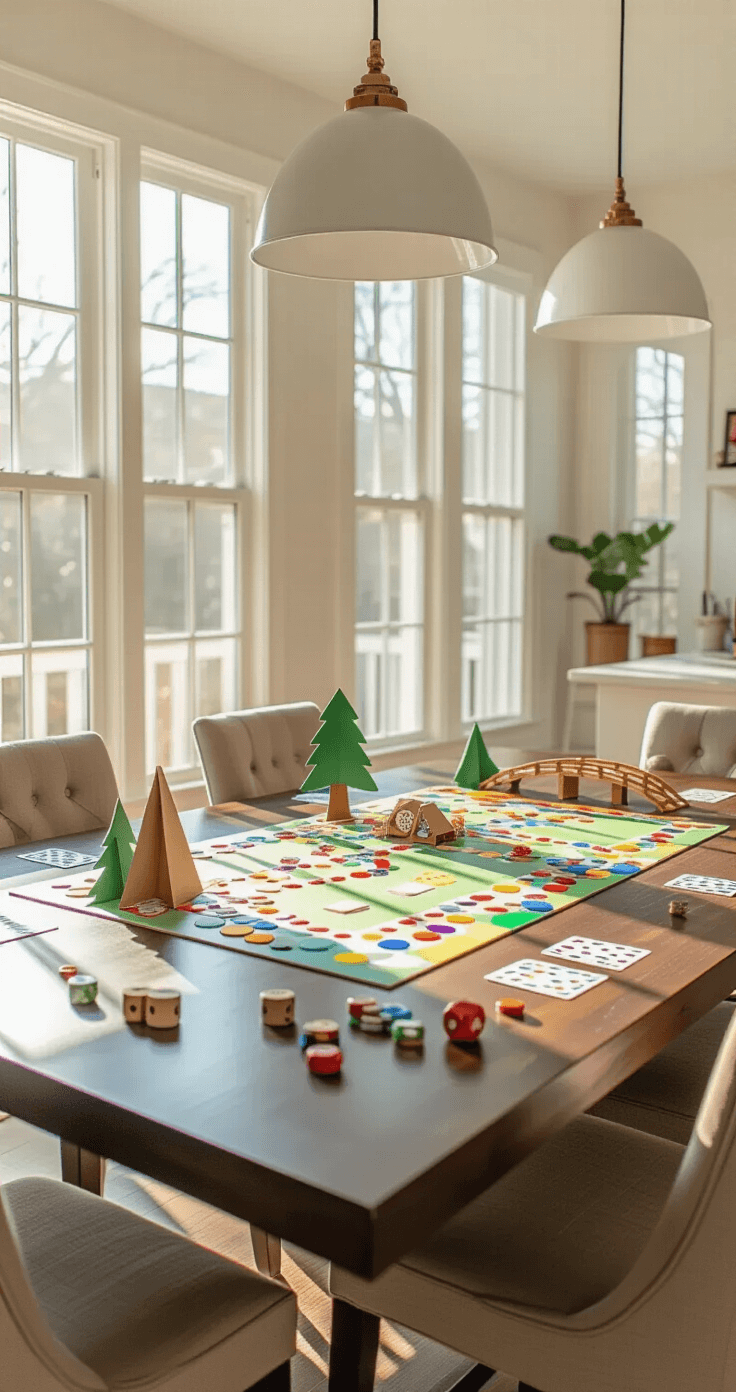
Design Your Board: From Blank Canvas to Game Central
This is where the real creativity kicks in, and honestly, it’s my favorite part of the whole process.
Materials that actually work:
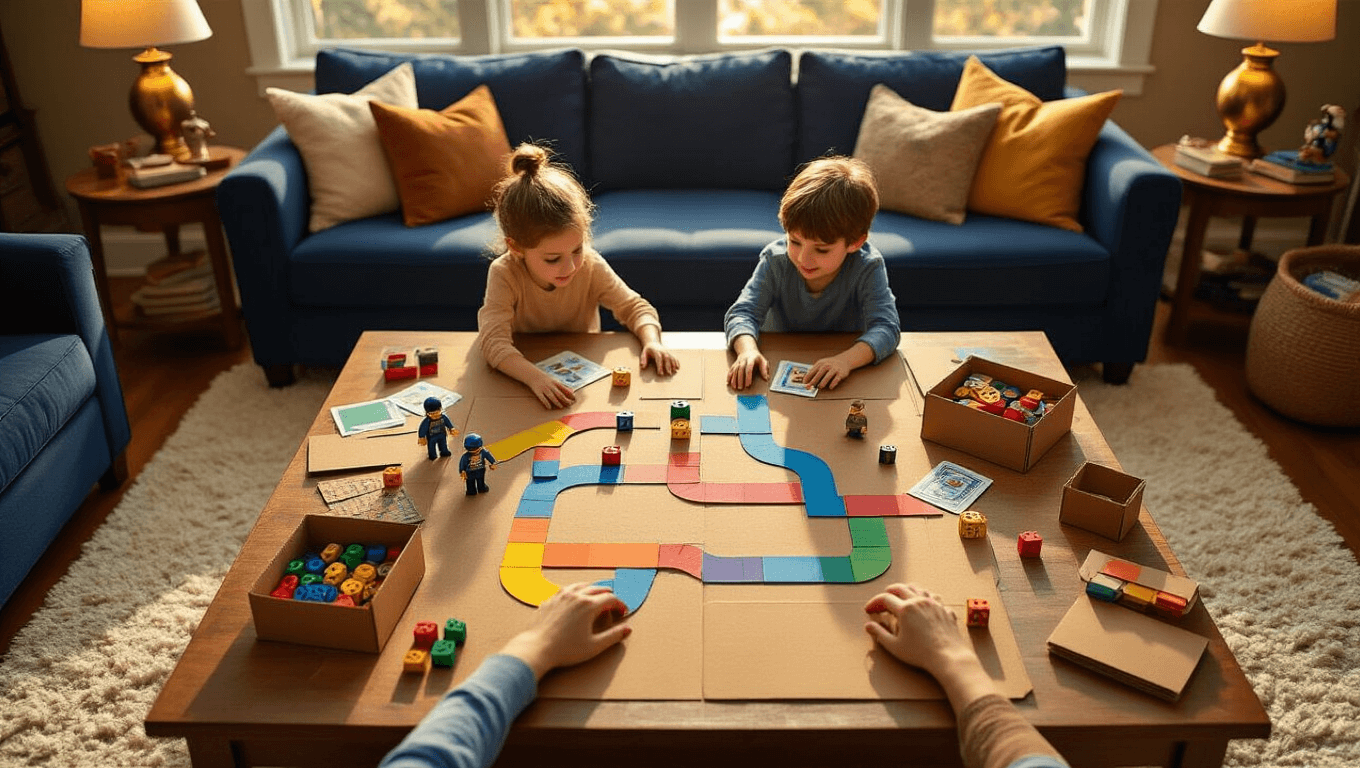
- Large pieces of cardboard (cereal boxes work perfectly when flattened)
- Construction paper for colorful paths
- Kraft paper if you want something more durable
- Outdoor option: Sidewalk chalk for temporary games
Board layout options that never fail:
- Winding path: Classic and easy to follow
- Simple loop: Great for race games
- Grid system: Perfect for strategy games
- Custom shapes: Get wild with it—make a dinosaur-shaped board or a castle
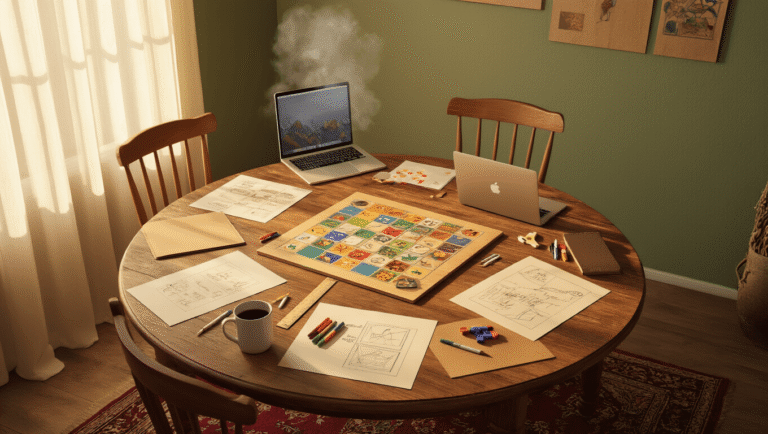
Pro tip from my experience: Start simple. My first board was a disaster because I tried to make it too complicated. Now I sketch the layout on regular paper first, then transfer it to the final board.
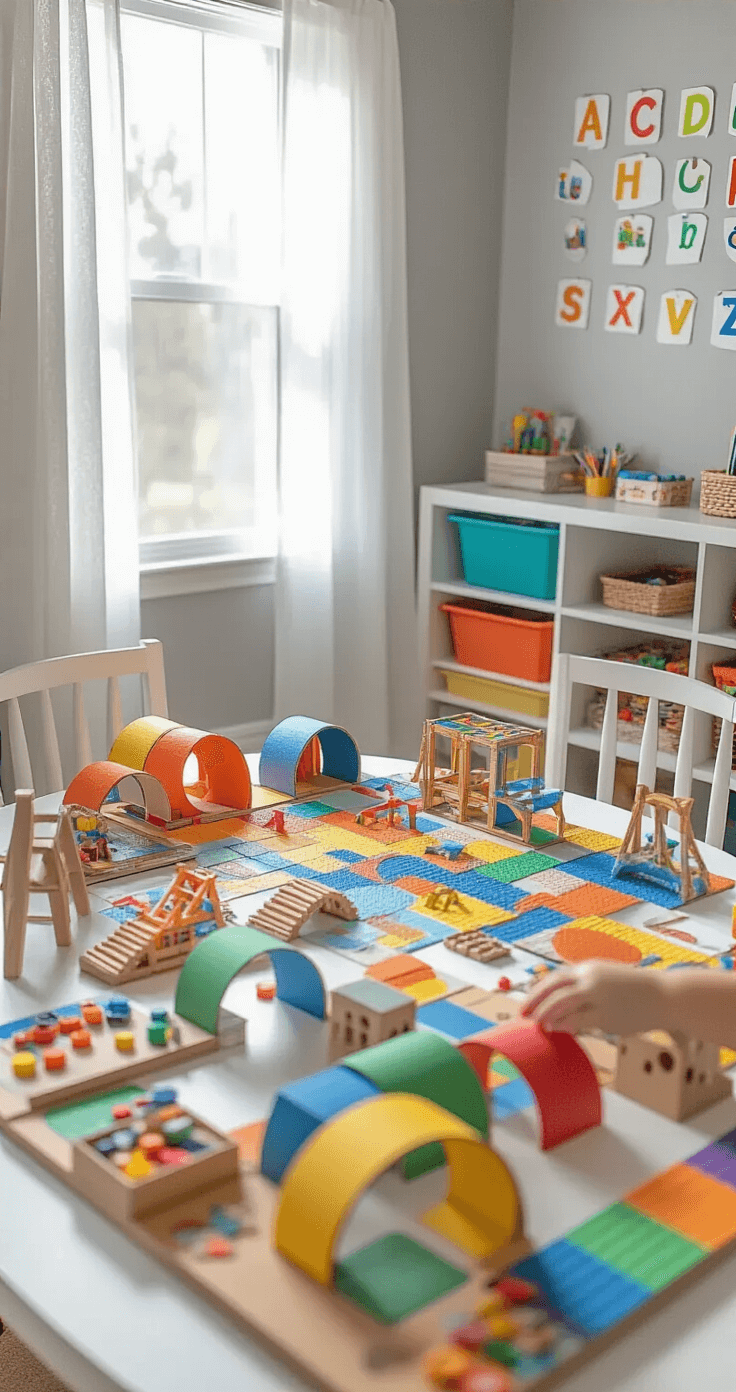
Make Player Pieces That Actually Stay Put
Nothing kills game night faster than player pieces that fall over or get lost under the couch.
What works brilliantly:
- Lego minifigures: Heavy enough to stay put, fun to use
- Coins: Boring but practical
- Small toys: Perfect excuse to repurpose those tiny toys cluttering your house
- Handmade tokens: Cut from thick cardboard and decorated
What doesn’t work: Anything too light, too small, or too tippy. Learn from my mistakes here.
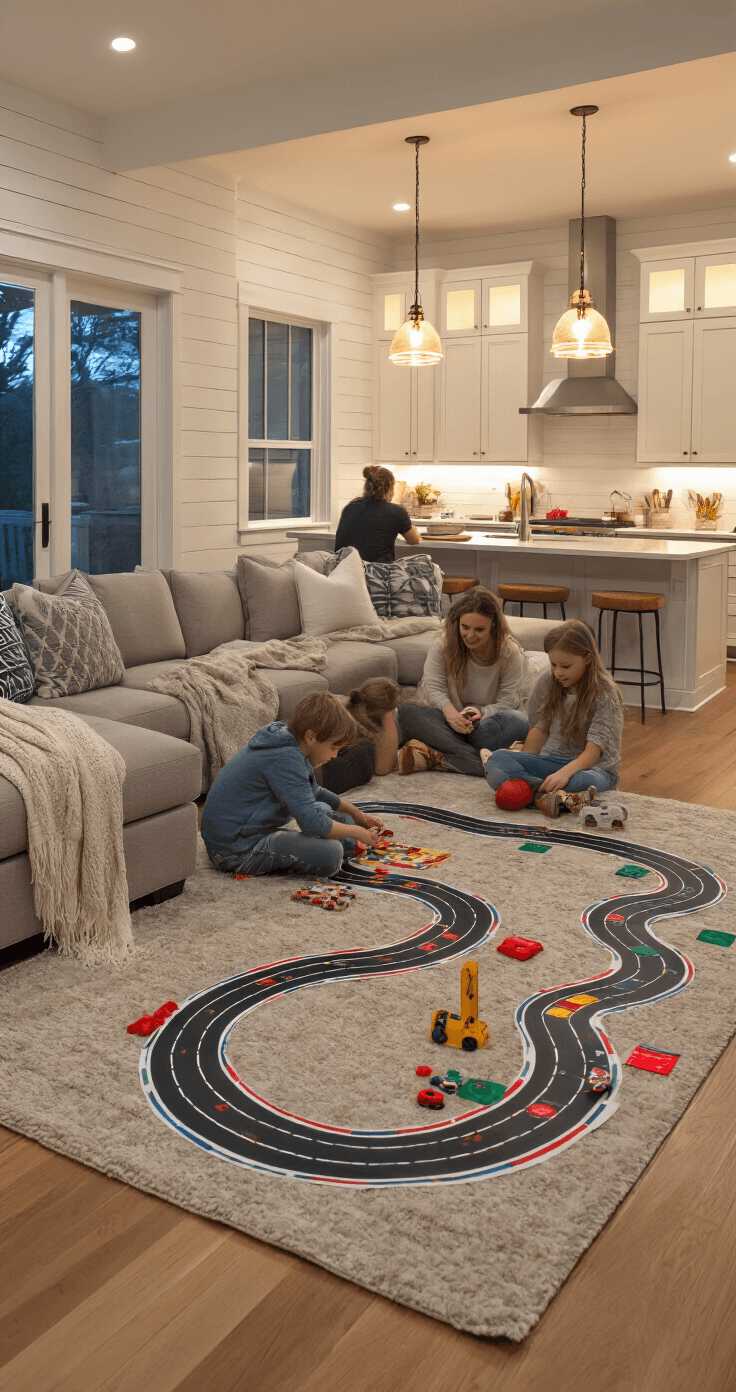
Add Essential Game Elements Without Breaking the Bank
Dice solutions that won’t cost you a fortune:
- Raid old board games for spare dice
- Print dice templates online and fold them
- Use dice apps on your phone (kids love this high-tech twist)
- Dice sets are actually pretty affordable if you want to invest
Card creation made simple:
- Hand-draw on index cards
- Print designs on cardstock
- Use blank playing cards if you can find them
- Digital cards displayed on a tablet work too
Gameplay and Actions: Where Learning Meets Fun
This is where you can get sneaky with education, and kids won’t even realize they’re learning.
Action ideas that actually engage kids:
- Physical challenges: “Do 5 jumping jacks,” “Hop on one foot to the kitchen”
- Educational tasks: “Name three animals that start with B,” “Solve 7+5”
- Creative prompts: “Sing your favorite song,” “Tell us about your best day ever”
- Game mechanics: “Move back 2 spaces,” “Draw another card,” “Skip your next turn”
My secret weapon: I tailor actions to whatever my kids are learning in school. Multiplication tables become way more fun when they’re part of a pirate adventure.

Rules and Instructions: Keep It Crystal Clear
Nobody wants to spend game night arguing about rules. Trust me on this one.
Essential rule elements:
- Clear win condition: First to finish, most points, last player standing
- Movement rules: