
This post may contain affiliate links. Please see my disclosure policy for details.
Finding Game Board Inspiration: Your Ultimate Guide to Creating Epic Board Games
Contents
Game board inspiration strikes when you least expect it, but I’ve learned that the best creators don’t wait around for lightning to hit.
You’re staring at that blank piece of cardboard again, aren’t you? The cursor’s blinking on your design software. Your brain feels emptier than a Monopoly bank after your cousin’s been the banker for three hours.
I’ve been there, friend. After designing dozens of board games over the past eight years, I can tell you that inspiration isn’t some mystical force that descends from the gaming gods. It’s a skill you can develop, a muscle you can flex, and a process you can master.

Where Game Board Inspiration Actually Comes From
Let me burst your creative bubble right now. The “eureka moment” is mostly Hollywood nonsense. Real game board inspiration comes from systematic exploration and deliberate practice.
I remember my first attempt at game design. I sat there for weeks waiting for the perfect idea to materialize. Spoiler alert: it didn’t happen.
What did work was getting my hands dirty with research.
Start with what already exists:
- Browse Wikipedia’s comprehensive board game database
- Play games outside your comfort zone
- Analyze mechanics that make you go “how did they think of that?”
- Take notes on what frustrates you about existing games
The magic happens when you start combining unexpected elements. Think Monopoly meets Risk. Scrabble meets Dungeons & Dragons. Chess meets… well, anything really.
One of my most successful designs came from wondering what would happen if Settlers of Catan had a baby with Pac-Man. Weird? Absolutely. Fun to play? You bet.

Your Game Development Process That Actually Works
Here’s where most people mess up. They jump straight into building without planning. It’s like Gordon Ramsay trying to cook a soufflé without preheating the oven.
Sketch everything first. And I mean everything.
Your sketches don’t need to win art awards. Stick figures and wobbly circles work perfectly fine. I’ve launched games that started as napkin doodles.
What to sketch:
- Board layout (even if it’s just squares and circles)
- Player movement patterns
- Card designs and text
- Component placement
- Turn sequence flow
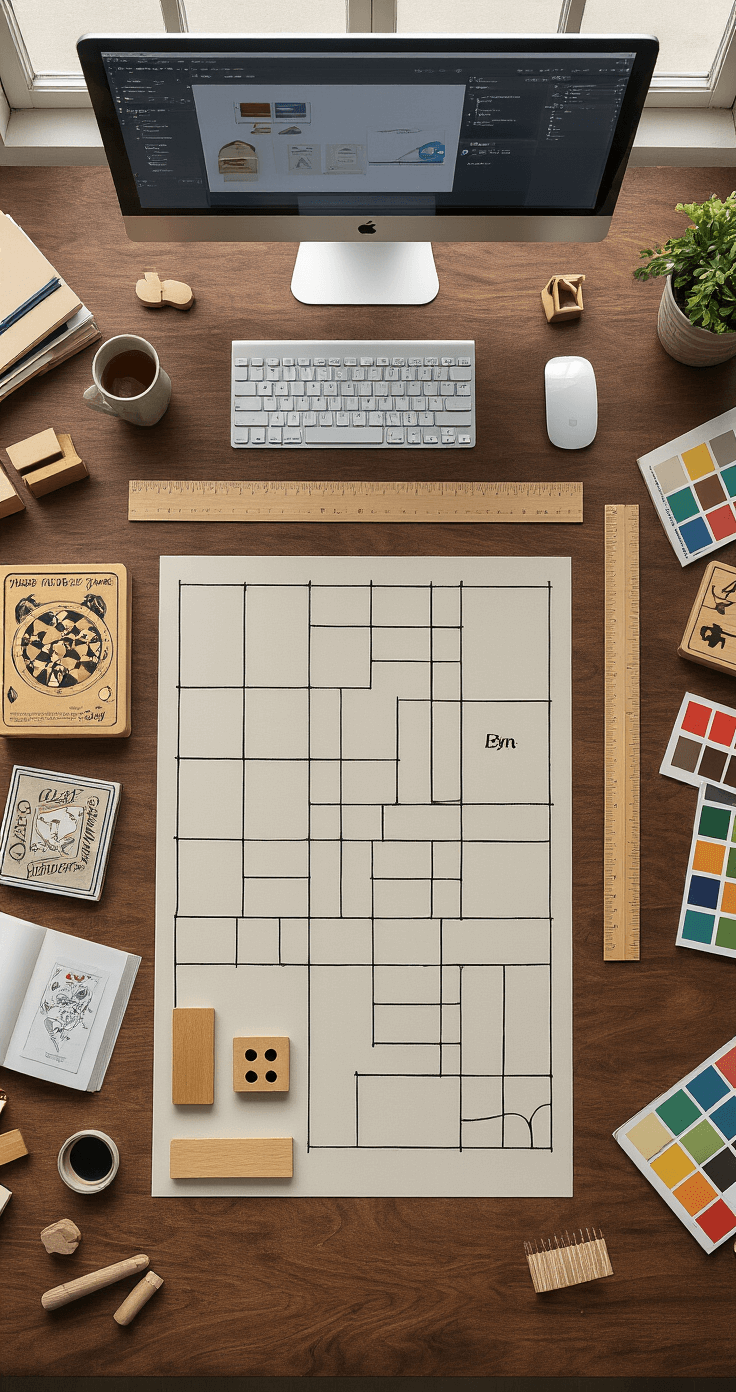
The sketchbook I use has grid paper, which keeps everything proportional without making me feel like I’m back in geometry class.
Board Construction Methods That Won’t Break Your Bank
You’ve got three main paths here, and each has its place depending on your budget and ambition level.
The Scrappy Start: Hand-Drawn Magic
This is where I tell everyone to begin. No shame in the cardboard game.
Grab these basics:
- Cardboard (cereal boxes work great)
- Colored markers
- Ruler and pencil
- Clear contact paper for durability
I’ve playtested games made from pizza boxes that were more entertaining than $60 retail releases. The ideas matter more than the production value at this stage.
Digital Design: Level Up Your Game
Once you’ve proven your concept works, digital design lets you create something that doesn’t look like a kindergarten art project.
Software options that won’t make you cry:
- Canva (seriously underrated for board game design)
- Inkscape (free and powerful)
- Adobe Illustrator (if you’ve got the budget)
Canva’s 20,000+ customizable board game templates saved my sanity more times than I can count. You can spend hours tweaking layouts without starting from absolute zero.
Print your designs on cardstock and mount them on foam core boards for a professional feel that costs under $20.
Professional Fabrication: When You’re Ready to Impress
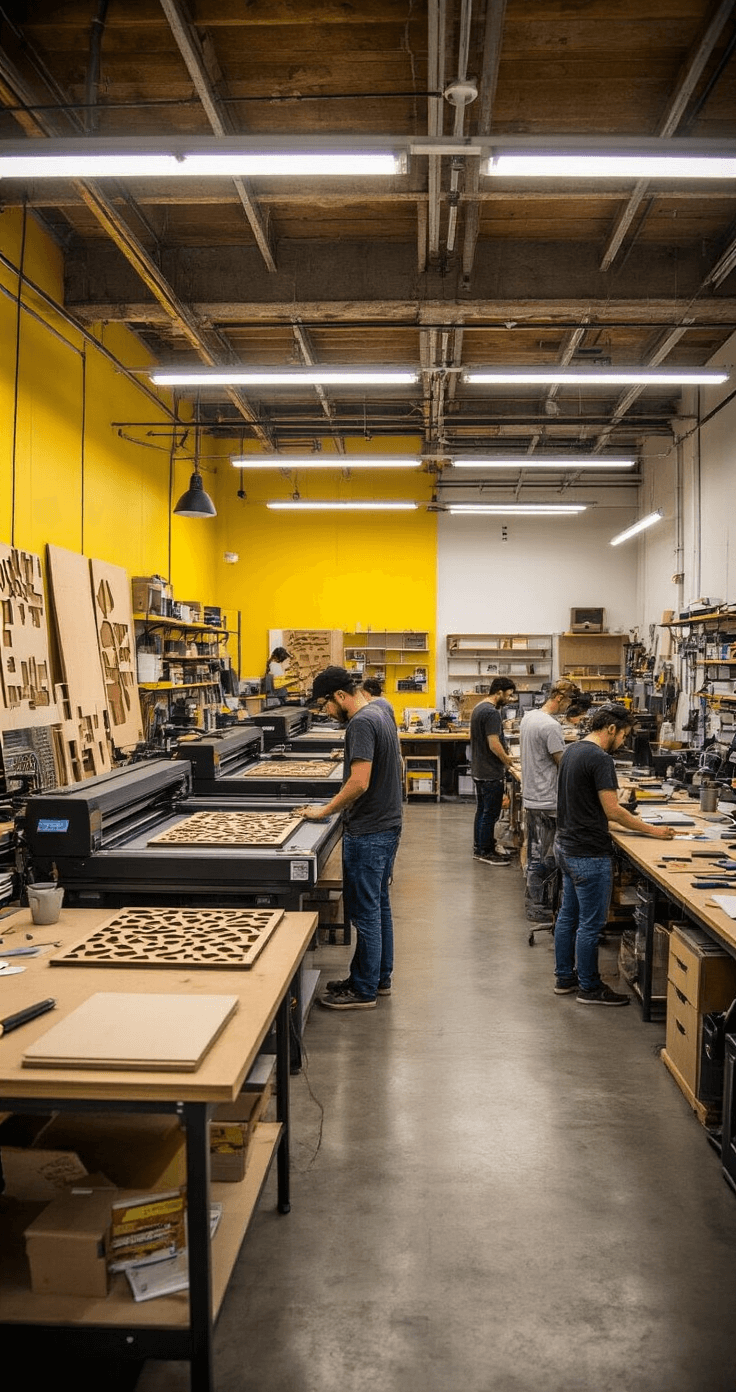
Laser cutting sounds fancy and expensive, but it’s more accessible than you think. Local makerspaces often have laser cutters you can rent by the hour.
Materials that work beautifully:
- 1/4 inch plywood for substantial boards
- Acrylic for transparent overlays
- Cardboard for prototyping (yes, they can laser cut cardboard)
The precision you get from laser cutting transforms your game from “homemade hobby” to “where can I buy this?”

Design Templates and Tools That Speed Everything Up
Let’s talk about working smarter, not harder.
Canva’s game templates cover everything from classic monopoly-style boards to hex-based strategy layouts. I use them as starting points, then customize until they match my vision.
Template categories worth exploring:
- Classic square path boards
- Hex-based territory maps
- Card game layouts
- Dice and token designs
- Instruction manual templates
For serious production runs, BoardGamesMaker.com handles everything from boards to custom dice. No minimum orders means you can get professional components for just your family and friends.
Their custom