This post may contain affiliate links. Please see my disclosure policy for details.
Gaming desks aren’t just fancy furniture – they’re the foundation of every serious gaming setup, and honestly, I wish someone had told me this before I spent three years hunched over a wobbly IKEA desk that gave me the posture of a question mark.
My neck hurt constantly, my cables looked like spaghetti after a tornado, and my monitors teetered on the edge like they were planning their escape.
Sound familiar?
What Makes Gaming Desks Actually Different (Spoiler: A Lot)
Contents
I used to think gaming desks were just marketing nonsense, like “gaming chairs” with racing stripes that cost $400.
I was wrong.
Here’s what actually sets them apart:
- Surface space that doesn’t quit – We’re talking room for dual or triple monitor setups, your keyboard, mouse, controllers, snacks (yes, snacks count), and maybe even your cat if they insist
- Cable management built right in – Grommets, trays, clips, and channels that turn your cable nightmare into something almost beautiful
- Height that actually works for YOUR body – Not just whatever height the factory decided
- Weight capacity that laughs at your gaming PC – These things support 200+ pounds without breaking a sweat
My regular desk? It started sagging after I added my second monitor.
My gaming desk? Holds my entire battlestation like it’s nothing.

The Ergonomic Thing Nobody Talks About (Until Their Back Screams)
I’m going to get real here.
After a 6-hour gaming session on my old desk, I’d stand up like a 90-year-old man who forgot his cane.
Gaming desks solve this with:
- Curved edges that support your forearms naturally instead of cutting into them
- Proper depth (usually 24-30 inches) so your monitors sit at the right distance
- Adjustable height mechanisms that let you switch between sitting and standing
- Space underneath for your legs to actually fit comfortably
The adjustable height thing changed my life.
Standing for 20 minutes every hour during marathon sessions stopped my lower back from staging a full rebellion.

My Gaming Desk Shopping Nightmare (Learn From My Mistakes)
I bought three desks before I got it right.
Mistake #1: Going Too Small
I measured my monitors. I measured my keyboard.
I forgot about literally everything else.
Your gaming desk needs to fit:
- All your monitors (plus room to adjust them)
- Your keyboard AND mouse pad (not just the keyboard)
- Your speakers or headphone stand
- Your drink (you WILL knock it over if there’s no dedicated space)
- Possibly your streaming equipment
- Room for your arms to move
Mistake #2: Ignoring Cable Management
My second desk looked great in photos.
Zero cable management features.
Within a week, it looked like the underside of a server rack had a baby with a bird’s nest.
Look for these features:
- Multiple cable grommets (those round holes)
- Cable management trays underneath
- Velcro strips or clips included
- Enough clearance under the desk to route cables properly

Mistake #3: Cheap Construction
I tried to save money with a particleboard desk.
It lasted eight months before the monitor mount pulled through the surface like wet cardboard.
Invest in:
- Solid wood, engineered wood, or quality laminate surfaces
- Steel or heavy-duty metal frames
- Weight ratings of at least 200 pounds
- Thick desktop surfaces (at least 0.75 inches)

The Shape Situation: L-Shaped vs Rectangular vs Corner
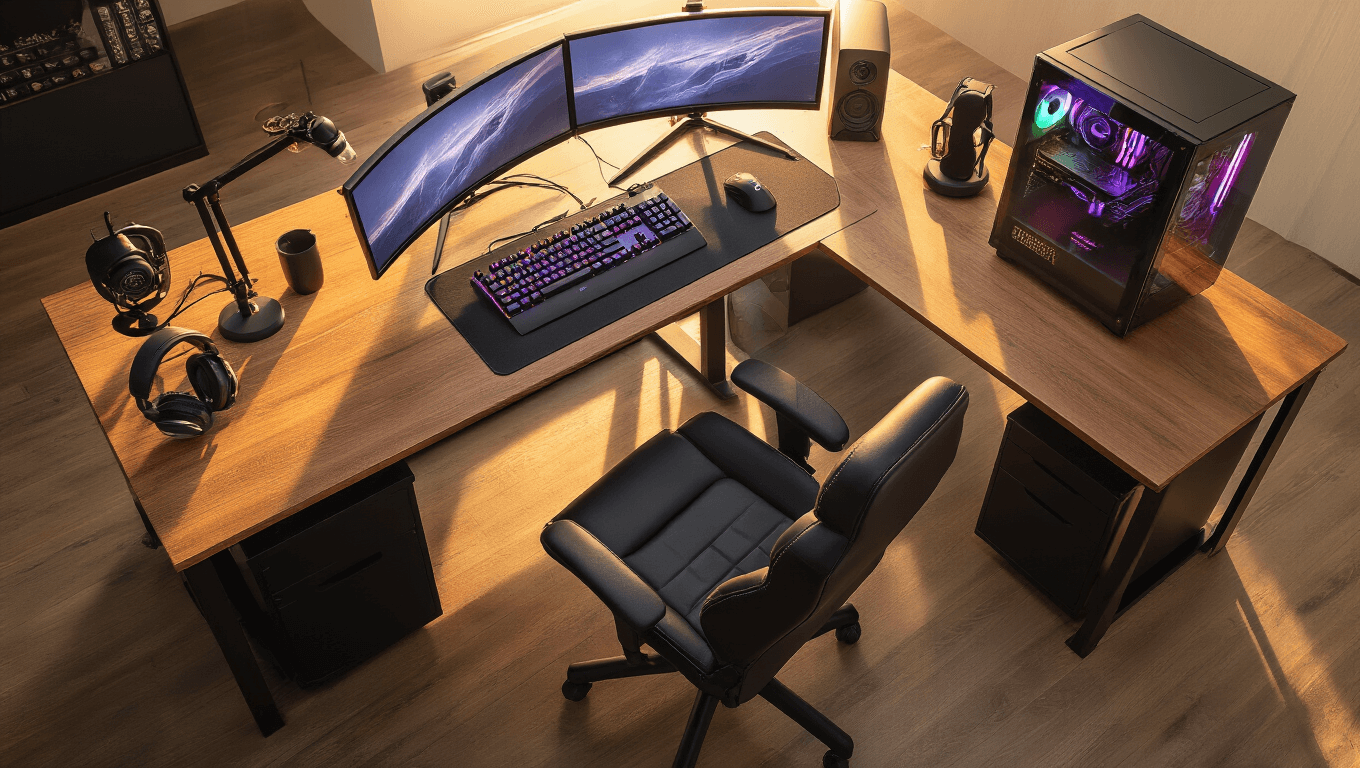
L-Shaped Desks (My Personal Favorite)
I switched to an L-shaped gaming desk last year and holy hell, the difference.
Pros:
- Corner placement maximizes room space
- Separate areas for gaming and work/streaming
- Everything stays within arm’s reach
- More surface area without taking up the whole wall
Cons:
- Needs corner space (obviously)
- Harder to move
- More expensive usually
Rectangular Desks
The classic choice.
Pros:
- Fits against any wall
- Usually cheaper
- Easier to move
- Simple setup
Cons:
- Limited surface area
- Everything fights for space
- Can feel cramped with multiple monitors
Corner Desks
The awkward middle child.
They work if you have a specific corner space, but L-shaped desks do the same thing better in my experience.