
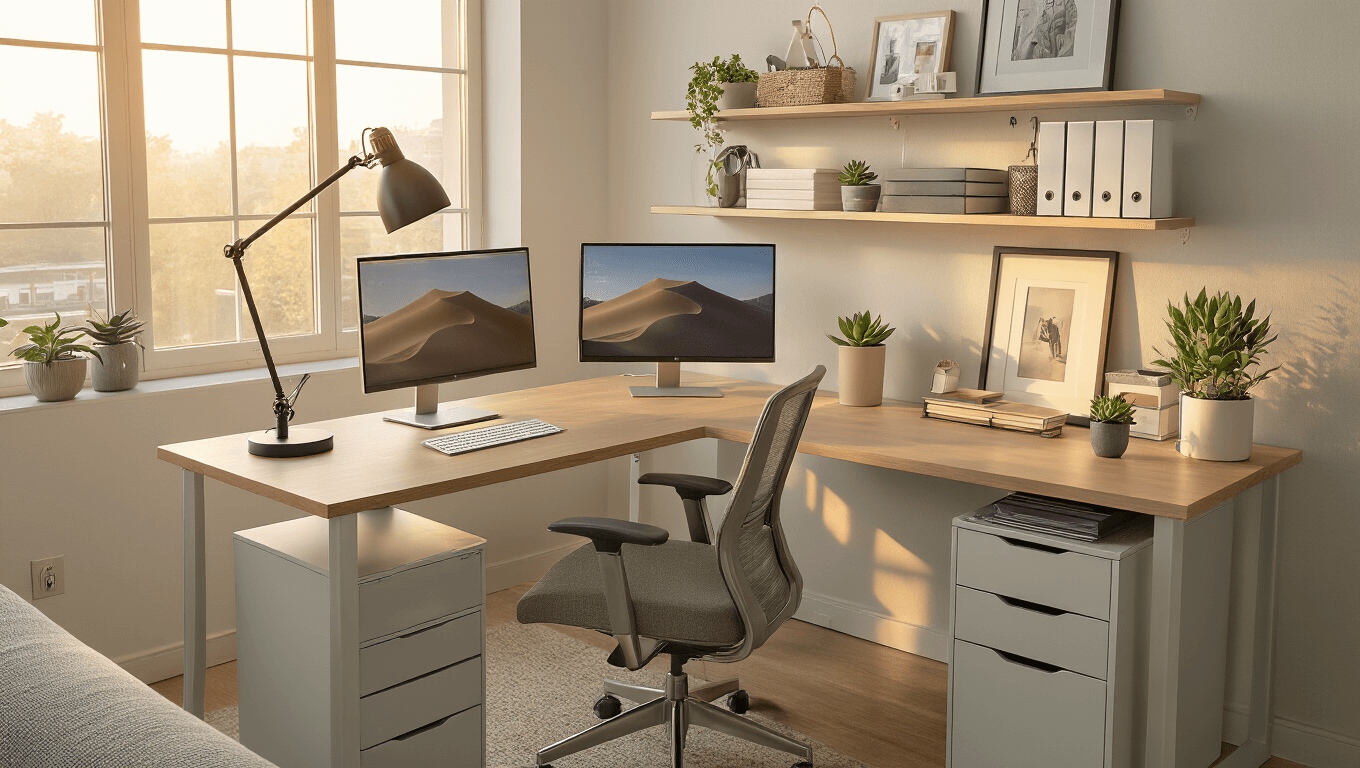
This post may contain affiliate links. Please see my disclosure policy for details.
How to Create the Perfect Office Desk Setup That Actually Works for You
Contents
Office desk styling has become my obsession over the past five years, and trust me, I’ve made every mistake in the book.
You know that feeling when you sit down at your desk and immediately want to get up again? When your workspace feels more like chaos than productivity central? Or when you see those gorgeous Pinterest office setups and wonder how anyone actually works at something that perfect?
I get it completely.
Why Your Current Desk Setup Isn’t Working
Let me tell you something I learned the hard way.
Your desk isn’t just furniture – it’s your productivity command center.
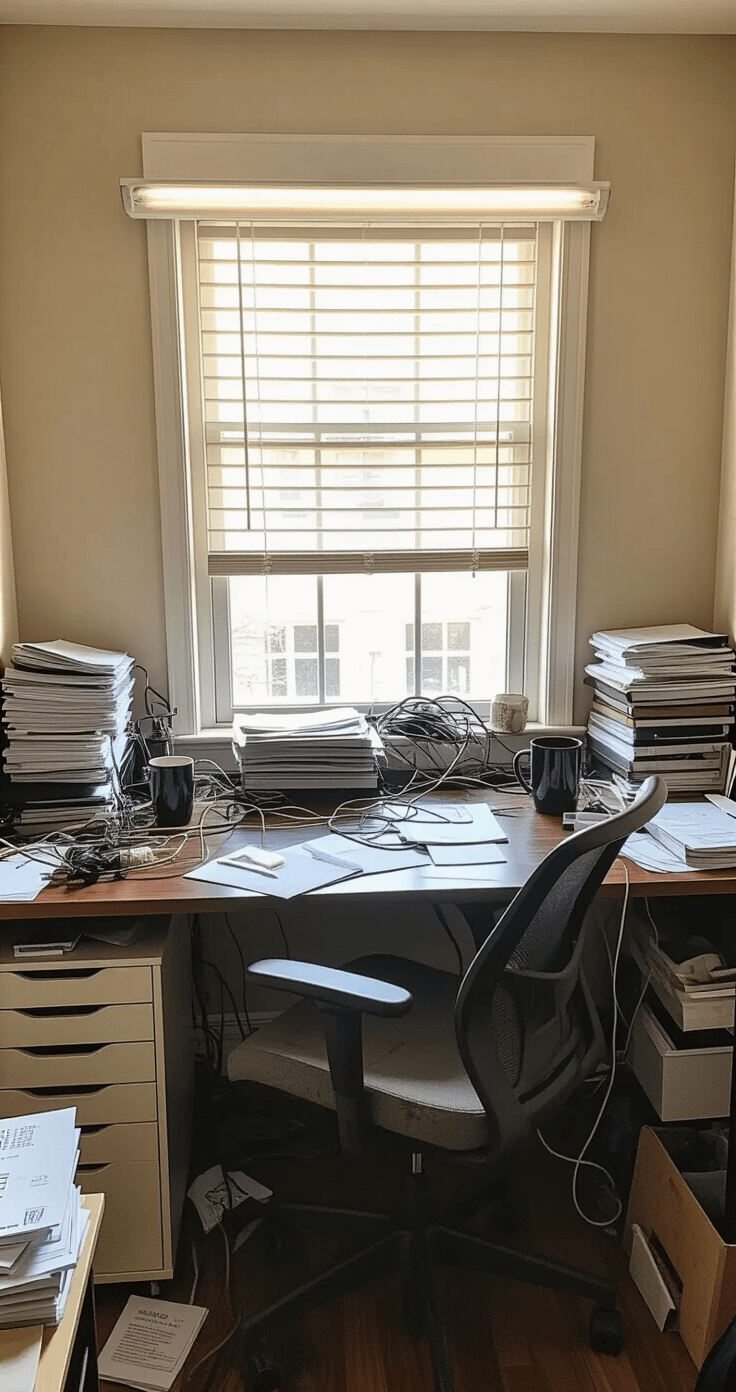
I spent three years working from a wobbly IKEA table with cables snaking everywhere like angry pythons. My back ached, my mind felt scattered, and don’t even get me started on trying to find anything.
The turning point came when I realized I was treating my workspace like an afterthought instead of the foundation of my daily success.
The Secret Formula: Function First, Beauty Second
Here’s what the Instagram influencers won’t tell you:
The most gorgeous desk setup means nothing if you can’t actually work at it.
I’ve tested dozens of configurations, interviewed productivity experts, and yes, made plenty of expensive mistakes. The magic happens when you nail these three elements:
- Ergonomic positioning that saves your neck and back
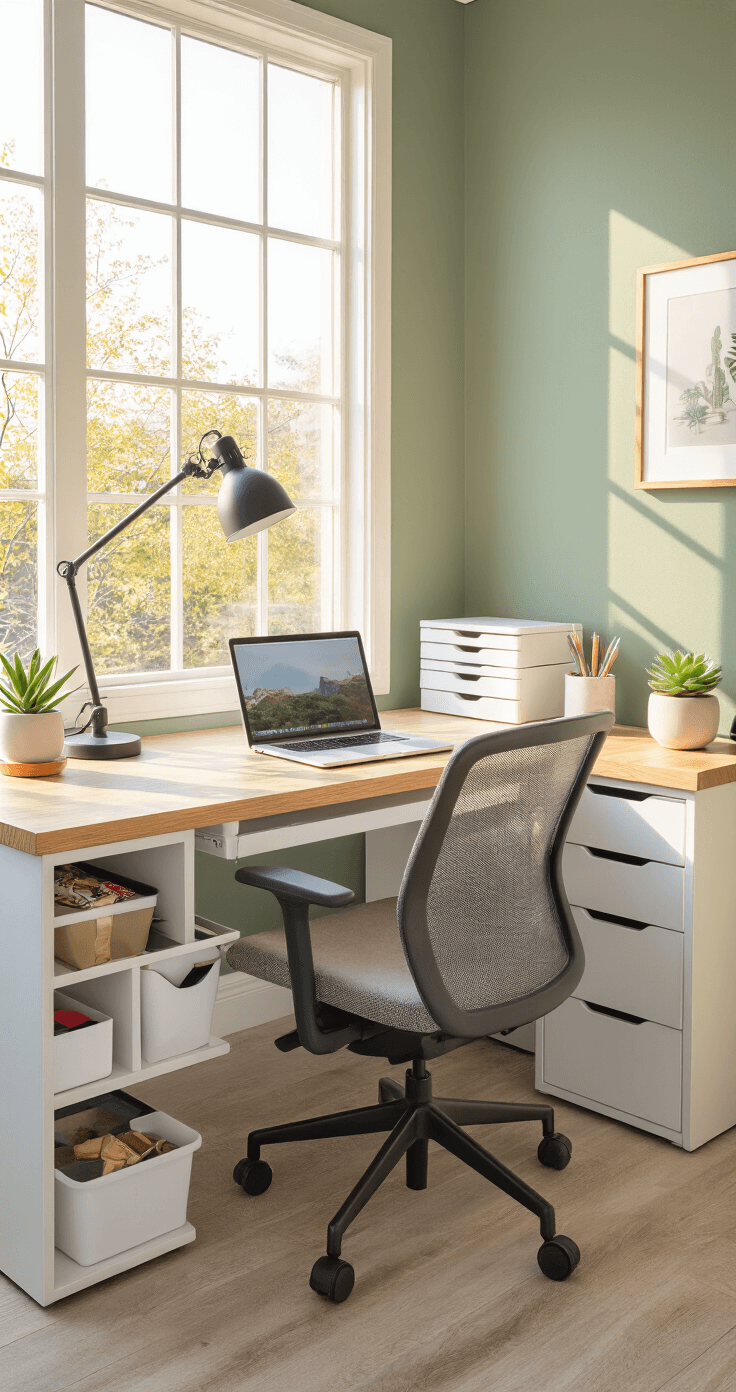
- Smart storage systems that keep essentials within arm’s reach
- Visual harmony that makes you want to sit down and create
Essential Desk Components That Make or Break Your Setup
The Foundation: Choosing Your Perfect Desk
Size matters more than style.
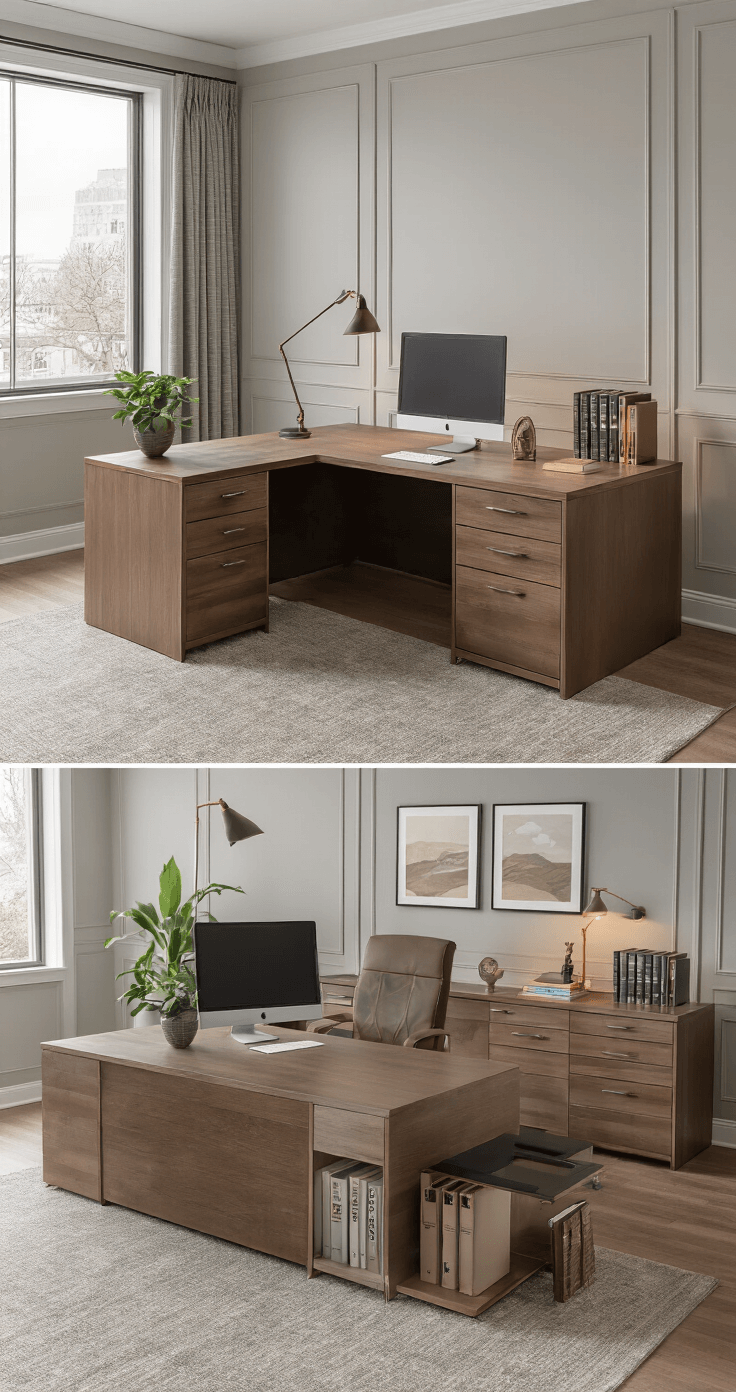
I learned this after cramming a massive executive desk into my tiny home office. Sure, it looked impressive, but I felt like I was working inside a fortress.
- Small spaces (25-40 sq ft):
- Compact writing desk with built-in storage
- Wall-mounted floating desk to save floor space
- Corner desk that maximizes awkward angles
- Medium spaces (40-60 sq ft):
- Standard computer desk with drawers
- L-shaped configuration for multiple work zones
- Standing desk converter for health benefits
- Large spaces (60+ sq ft):
- Executive desk with expansive surface area
- U-shaped setup with dedicated zones
- Multiple work stations for different tasks
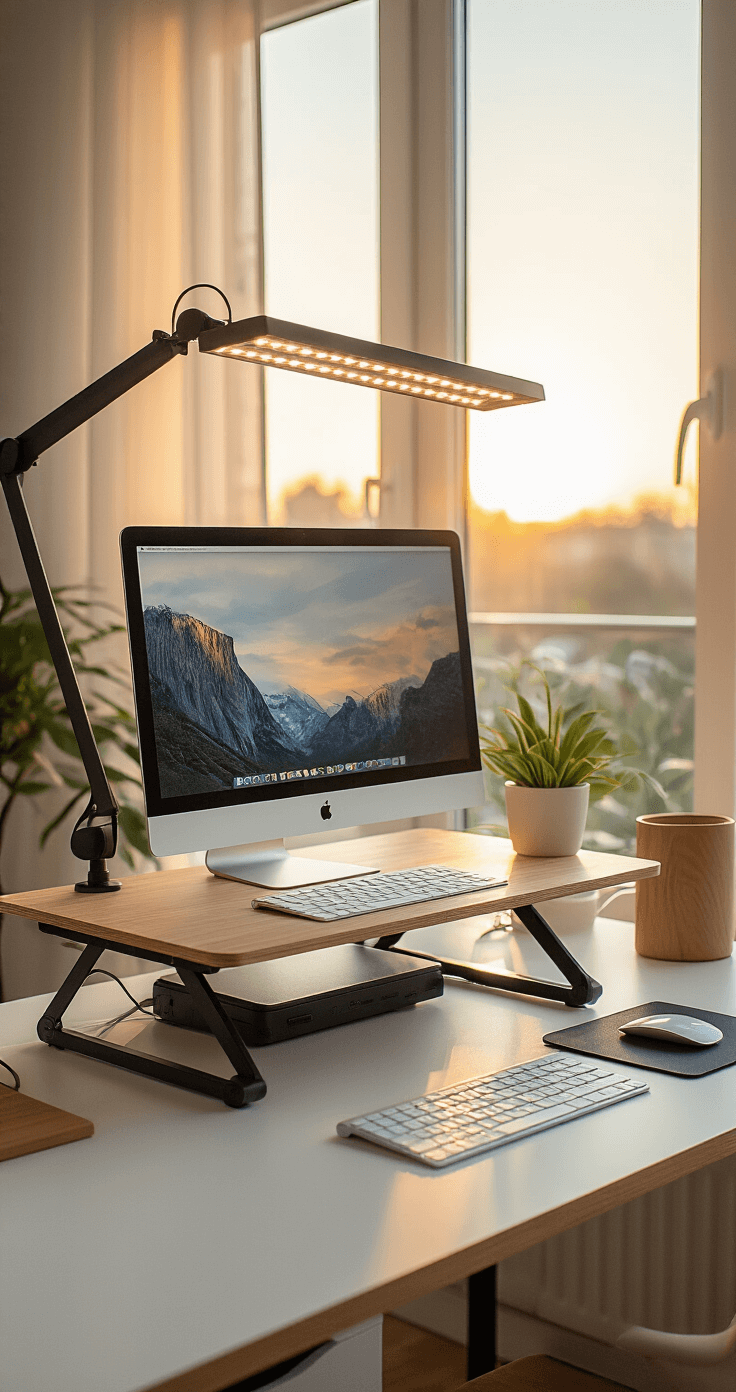
Lighting: The Game-Changer Nobody Talks About
Bad lighting will sabotage even the most expensive setup.
I used to squint at my screen under harsh overhead fluorescents, wondering why I felt exhausted by noon. The solution completely transformed my work experience.
Essential lighting layers:
- Task lighting: LED desk lamp with adjustable brightness
- Ambient lighting: Soft background illumination
- Accent lighting: Decorative elements that add warmth
Position your primary light source at a 45-degree angle to eliminate shadows and screen glare. Trust me on this one – your eyes will thank you.
The 10-Minute Styling System That Actually Works
Stop overthinking and start with these basics:
Step 1: Clear Everything Off (Yes, Everything)
I know it seems extreme, but hear me out. You need to see your desk as a blank canvas before you can create something beautiful and functional.
Wipe down the surface, untangle those cables, and put everything in boxes temporarily. This five-minute reset changes everything.
Step 2: Create Your Productivity Zones
Most people randomly scatter their supplies and wonder why they feel scattered too.
Divide your desk into three distinct areas:
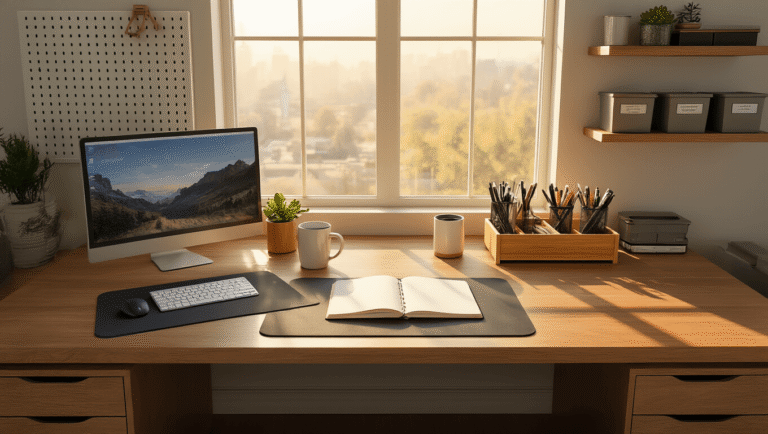
- Primary work zone: Computer, notebook, immediate tools
- Storage zone: Files, reference materials, supplies
- Personal zone: Photos, plants, inspiring objects
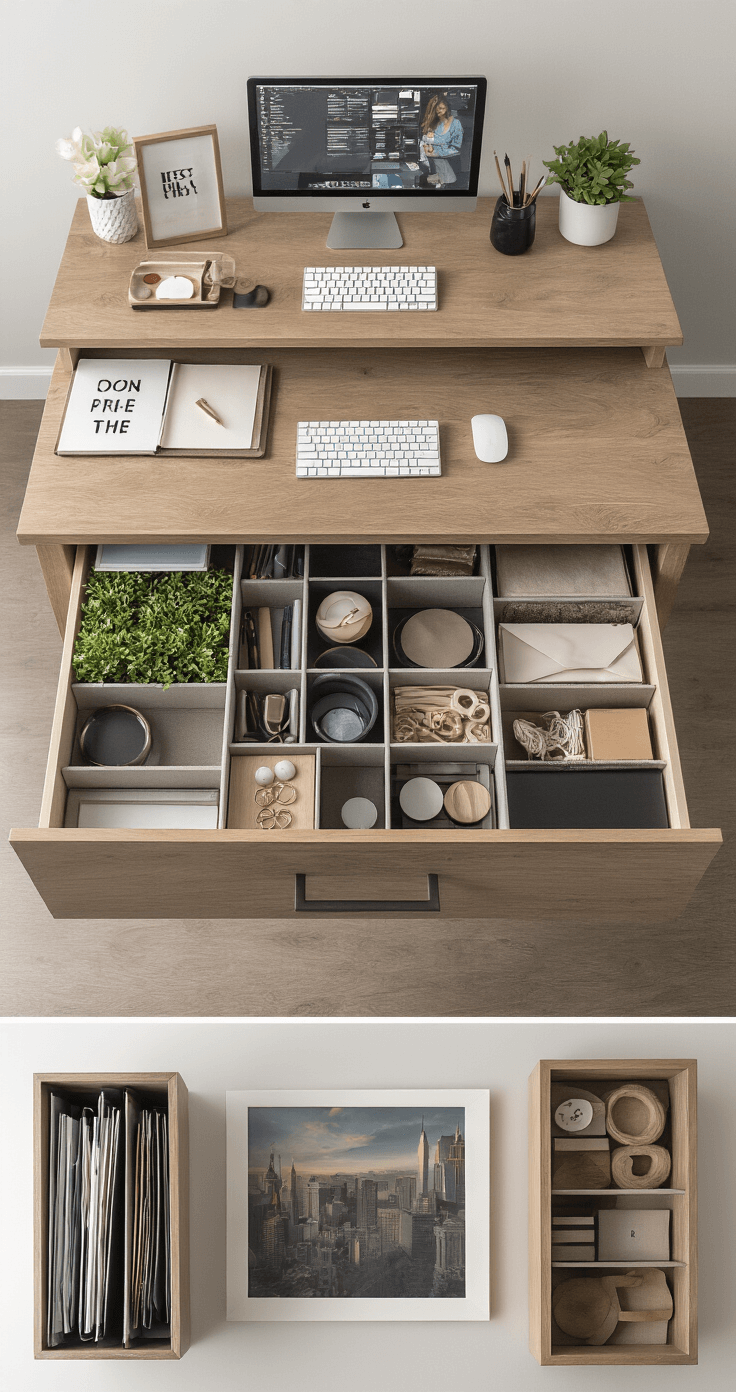
Step 3: Add Storage That Makes Sense
Beautiful chaos is still chaos.
I used to have stunning desk accessories that looked amazing but held nothing I actually needed. Now I focus on storage that works as hard as it looks good.
Smart storage solutions:
- Desktop organizers with multiple compartments
- Drawer dividers for small supplies
- Vertical file holders for papers and notebooks
- Cable management systems to tame the cord monster
Color Psychology for Your Workspace
Colors affect your mood and productivity more than you realize.
I experimented with different color schemes for months and discovered some fascinating patterns in my own work habits.
Energizing palettes:
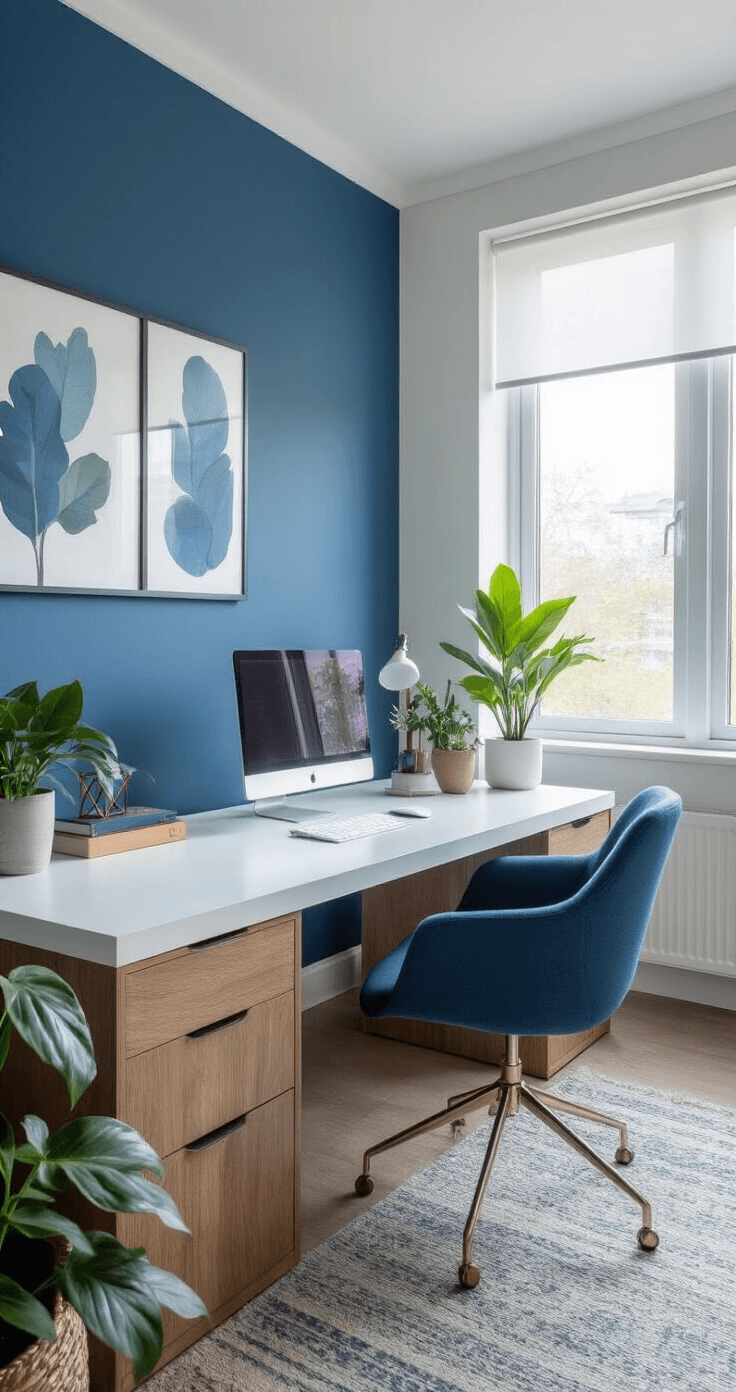
- Bold blues enhance focus and mental clarity
- Warm whites create clean, spacious feelings
- Natural wood tones add grounding, organic energy
Cal
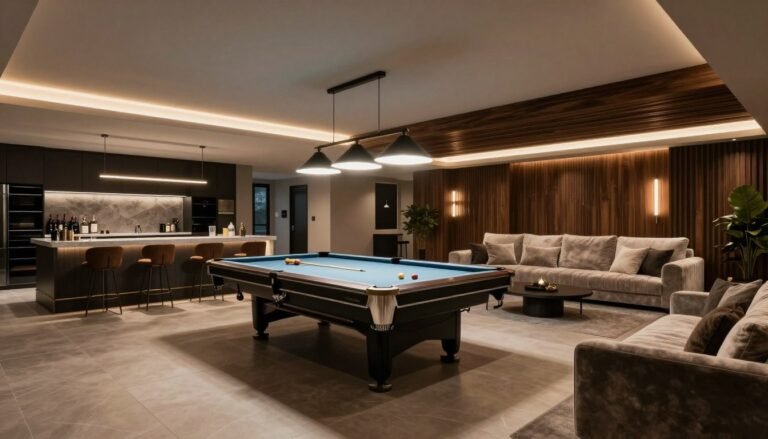



[…] Useful drawer and open cubby help tame desk clutter. […]