
This post may contain affiliate links. Please see my disclosure policy for details.
Small Desk Setup Ideas That Actually Work (Without Breaking Your Budget)
Creating an organized small desk setup doesn’t require much space—just smart strategy and the right tools.
I get it. You’re staring at your cramped workspace wondering how on earth you’re supposed to fit everything you need into this tiny corner. Your desk looks like a paper tornado hit it, and you can’t find anything when you actually need it.
I’ve been there too. My first apartment had a “desk” that was basically a TV tray shoved against the wall. But here’s what I learned: small spaces can be incredibly functional when you know the tricks.
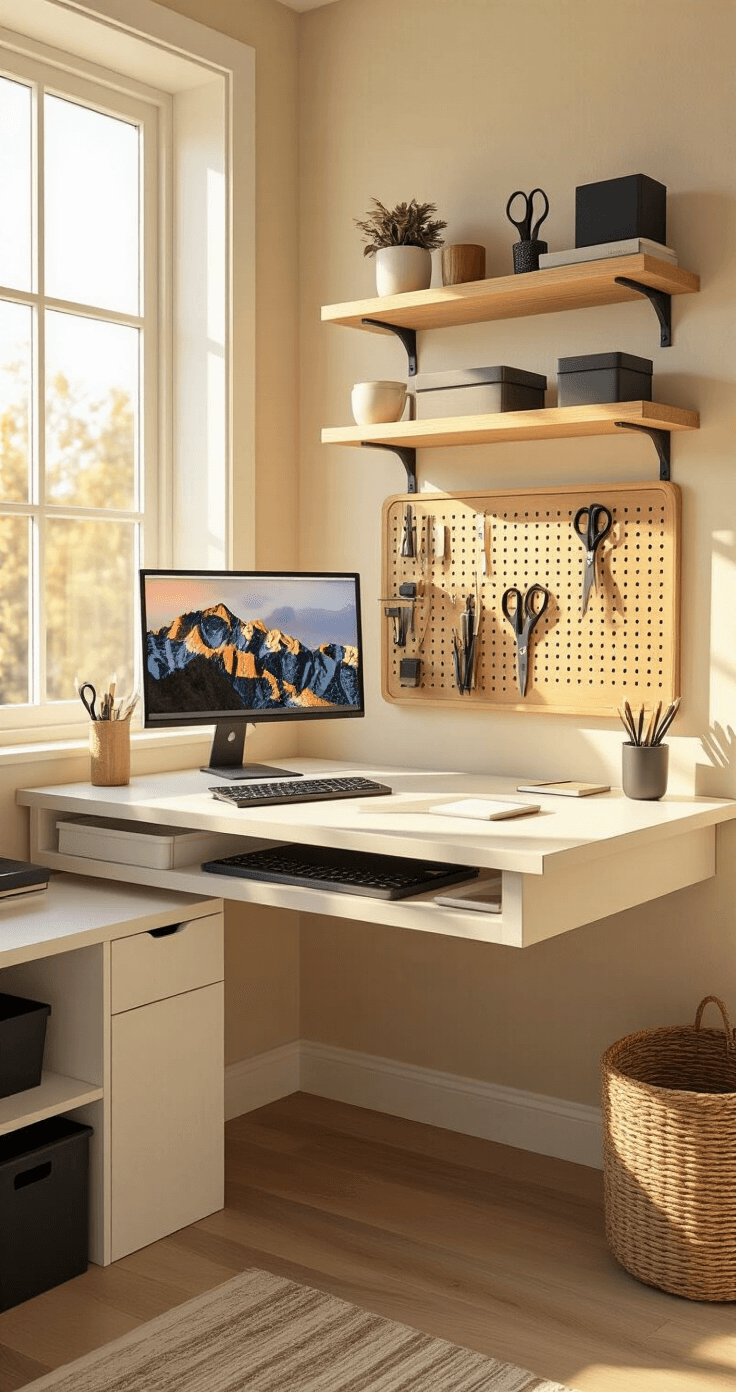
Build Up, Not Out: Vertical Storage That Changes Everything
The biggest mistake I see people make with small desks? They try to spread everything horizontally. Wrong move.
Your wall space is your best friend.
I discovered this when I was working from my studio apartment during the pandemic. My desk was maybe two feet wide, but the wall above it was completely empty. Game changer.
Here’s what actually works:
- Wall-mounted shelves – Install them 18-24 inches above your desk surface
- Pegboards – These aren’t just for garages anymore
- Monitor stands with storage – Lift your screen and create instant storage underneath
- Floating desk organizers that attach directly to your wall
I installed a simple pegboard above my desk last year. Cost me $15 and transformed my entire workspace. Now my scissors, tape, and charging cables all hang neatly within reach.
Pro tip: Use command strips if you’re renting. No holes, no problems with your security deposit.
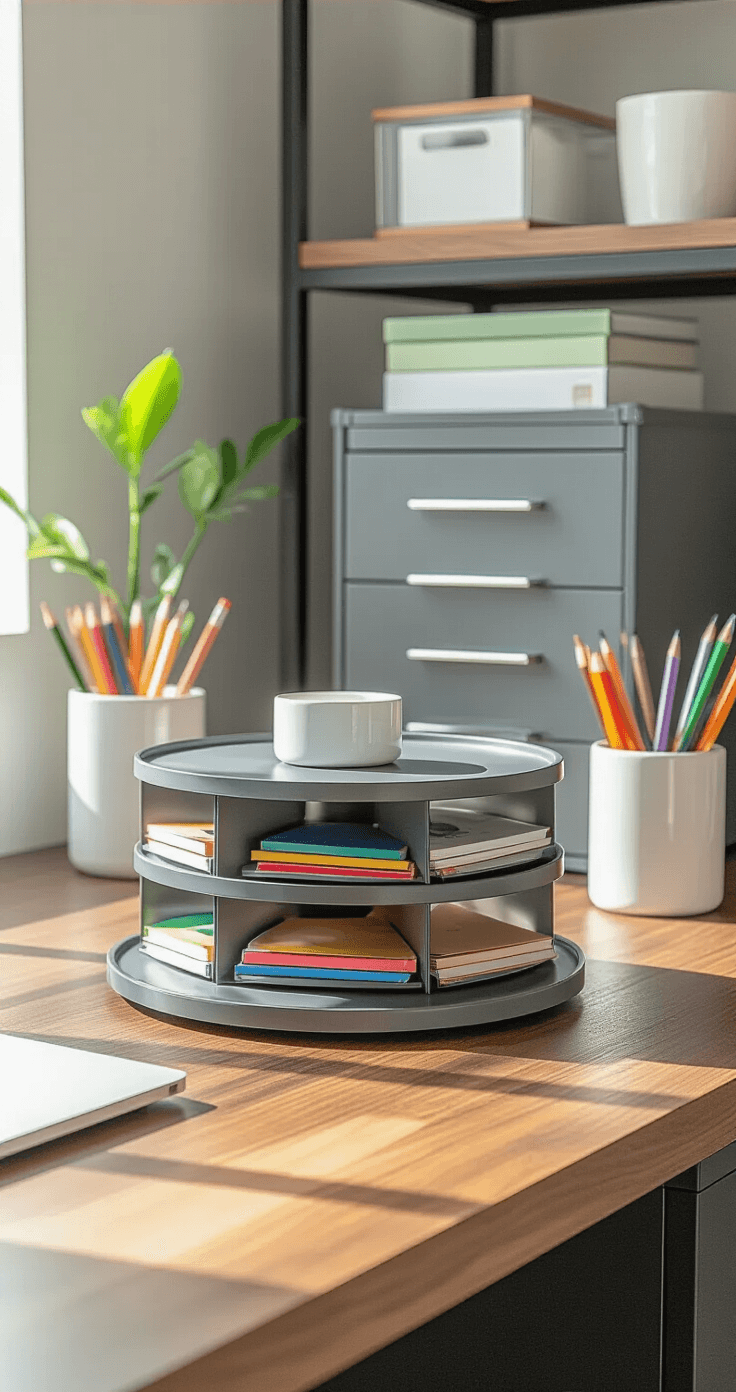
Desktop Organizers That Don’t Eat Your Space
Let’s talk about desktop organizers. Most of them are bulky disasters that take up more room than they save.
But a few types actually work:
- Rotating desk organizers – Spin to find what you need
- Slim pencil cups – Skip the wide ones
- Stackable letter trays – Perfect for papers and notebooks
- Magnetic containers that stick to metal surfaces
I use a rotating organizer that’s about the size of a coffee mug. It holds pens, highlighters, paper clips, and sticky notes. Takes up maybe 4 square inches of desk space but stores everything I grab daily.
The key: Only keep things you use multiple times per week on your actual desk surface.
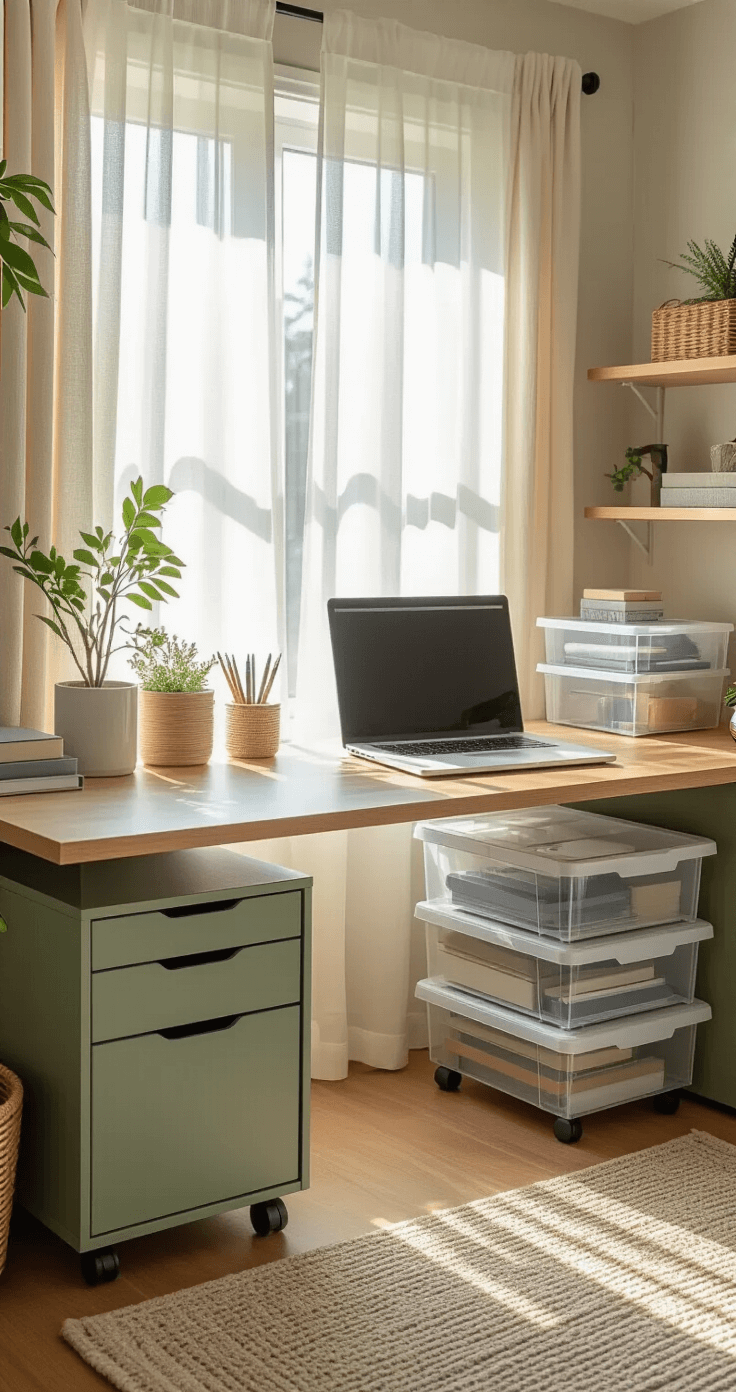
Drawer Alternatives When Your Desk Has None
My current desk has zero drawers. Absolutely none. So I had to get creative.
Here’s what saved my sanity:
- Under-desk drawer units on wheels
- Clear plastic stackable drawers – I can see everything inside
- Desk-side filing cabinets that double as extra surface space
- Hanging organizers that attach to your desk edge
The rolling drawer unit was a revelation. I can pull it out when I need something, then push it back under my desk. Out of sight but totally accessible.
Warning: Avoid those fabric hanging organizers. They look cute but they’re flimsy and everything falls out.
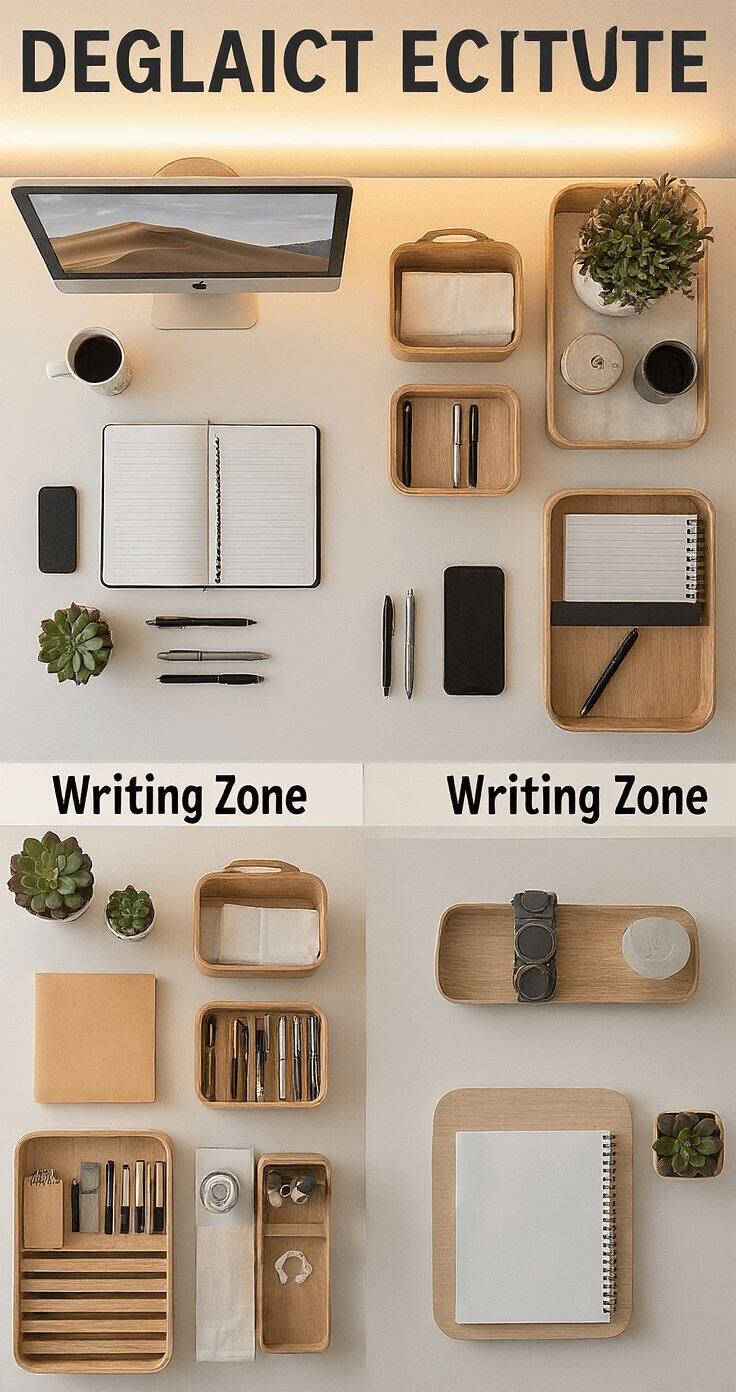
Zone Your Desk Like a Pro
This is where most people go wrong. They just randomly place stuff wherever it fits.
Create specific zones:
- Computer zone – Monitor, keyboard, mouse pad
- Writing zone – Notebooks, pens, paper
- Supply zone – Tape, scissors, stapler
- Personal zone – Phone, water bottle, small plant
I keep my computer zone on the right side of my desk. Writing zone on the left. Supply zone in a small organizer behind my monitor.
This system means I’m not constantly reaching across my workspace or shuffling things around. Everything has a home.
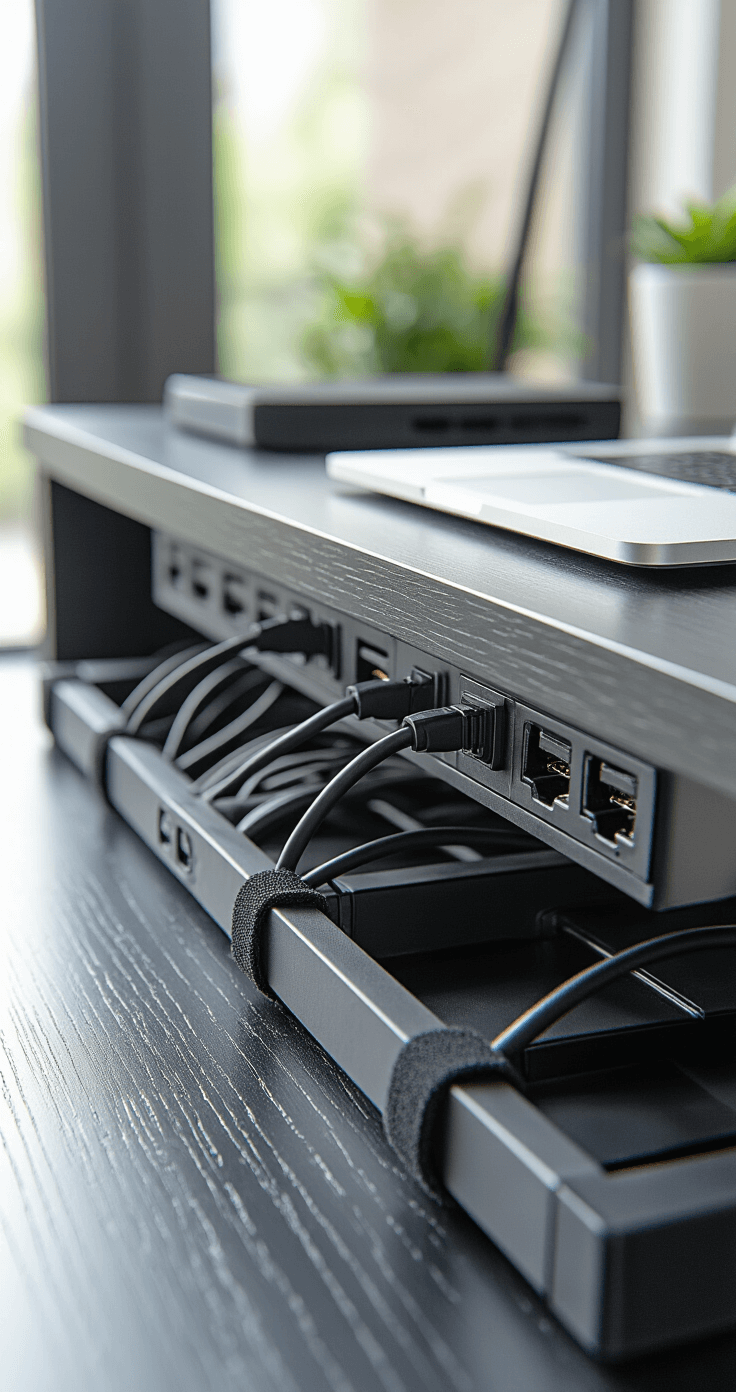
Tame Those Cables Before They Take Over
Cable management on a small desk is crucial. Nothing makes a space look messier than cords everywhere.
My cable solutions:
- Adhesive cable clips along desk edges
- Under-desk cable trays to hide power strips
- Velcro cable ties to bundle loose cords
- Wireless charging pads to eliminate phone cables
I spent one Saturday afternoon dealing with my cable situation. Used about $20 worth of cable management supplies. Now my desk looks clean and professional instead of like a tech store exploded.
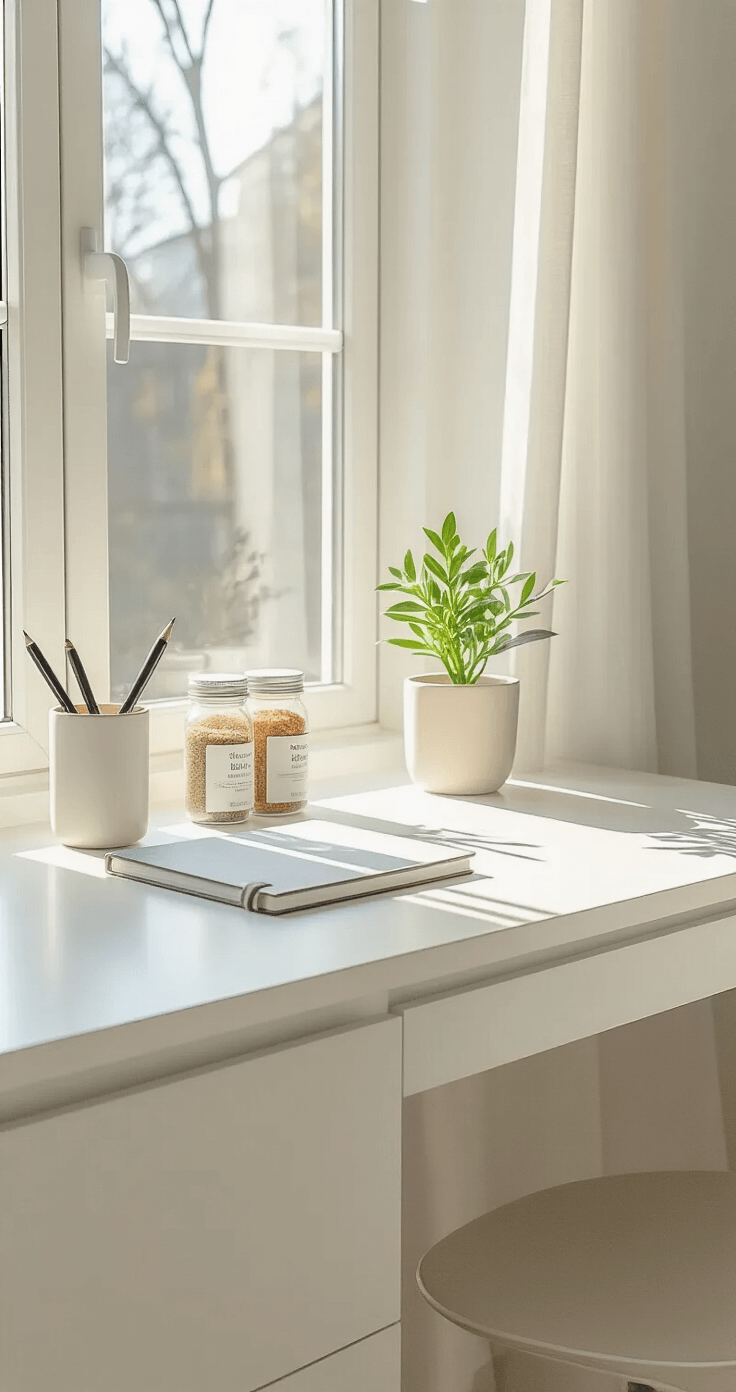
The Magic of Minimal
Here’s something that took me years to learn: less stuff equals more space.
Revolutionary, right?
I used to keep everything “just in case.” Seventeen pens (most didn’t work). Stacks of paper I might need someday. Gadgets I used twice.
Now I follow the one-week rule: If I don’t use something for a full week, it doesn’t belong on my desk.