
This post may contain affiliate links. Please see my disclosure policy for details.
How Standing Desks Changed My Workday (And Might Change Yours Too)
Contents
Standing desks transformed how I work, and I’m betting you’re curious whether they’re worth the hype.
My lower back used to scream at me every afternoon around 3 PM. I’d shift in my chair, trying to find a comfortable position that didn’t exist. Then I switched to a standing desk, and honestly, it felt like someone hit the reset button on my spine.
Why Your Back Is Begging You to Stand Up
Look, I’m not going to sugarcoat this. Sitting all day is wrecking your body.
When you’re hunched over a keyboard for eight hours straight, your spine loses its natural curve. Your discs compress. Your muscles tighten. And before you know it, you’re walking around like someone twice your age.
Standing desks flip the script on all of this.
Here’s what actually happens when you stand while working:
- Your spine straightens naturally without you even thinking about it
- Blood flows better through your legs instead of pooling in your ankles
- Your core muscles engage (yeah, like a mini workout you didn’t sign up for)
- Your hip flexors stop screaming from being compressed all day
I noticed the difference within the first week. That nagging ache between my shoulder blades? Gone by day three.
The Health Stuff Nobody Talks About
Everyone mentions the back pain thing. But standing desks do way more than that.
Your heart will thank you. When you stand, your cardiovascular system actually has to work a bit harder. That’s good news—it keeps blood moving, reduces pressure on your arteries, and lowers your risk of heart disease.
One study found that swapping 90 minutes of sitting for standing improved vascular function and dropped triglyceride levels. That’s significant.
Your blood sugar stays more stable. After lunch, when you’d normally crash into a carb coma, standing helps your body process glucose better. Less insulin resistance means fewer energy crashes and better long-term metabolic health.
You burn more calories without trying. I’m not saying a standing desk replaces the gym. But burning an extra 50-100 calories per hour adds up. Over a month, that’s several thousand calories you wouldn’t have burned sitting down.
I invested in a quality standing desk about six months ago, and my Fitbit shows I’m hitting 3,000 more steps per day just from shifting my weight and moving around while I work.
Choosing the Right Standing Desk (Without Getting Overwhelmed)
The standing desk market is wild right now. Too many options, too much marketing nonsense.
Here’s what actually matters:
Height Range
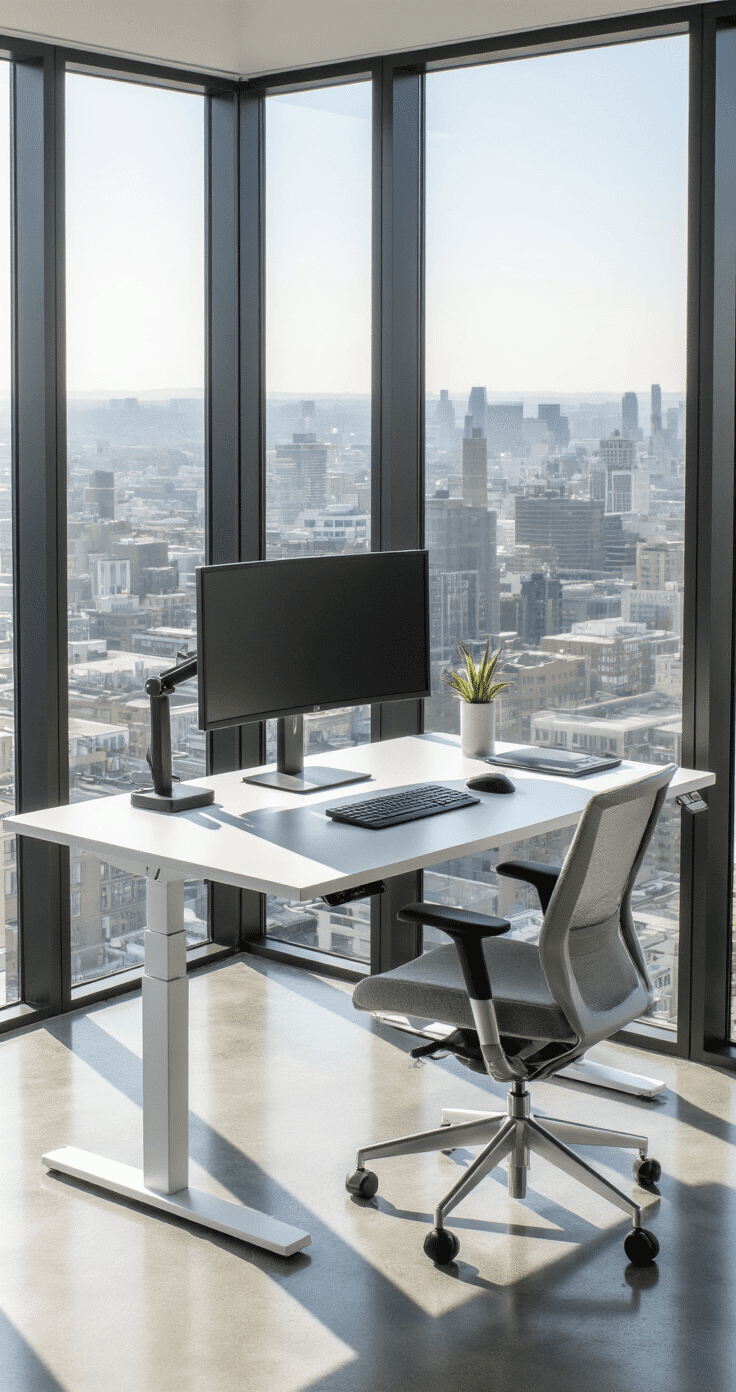
Your desk needs to go low enough for sitting and high enough for standing. Most decent desks adjust from about 23 inches to 48 inches.
I’m 5’10”, and my sweet spot for standing is 42 inches. For sitting, I drop it to 28 inches.
Quick rule: When standing, your elbows should bend at 90 degrees when your hands rest on the keyboard. When sitting, same thing.
Motor Quality
Single-motor desks are cheaper. They’re also wobbly as hell when you’re typing.
I learned this the hard way with my first desk. Every keystroke sent ripples across my monitor. Drove me absolutely mad.
Dual-motor standing desks cost more, but they’re rock solid. The motors work together to lift evenly, and the whole thing feels stable even when you’re leaning on it.
Desktop Size and Shape
Think about your actual workspace needs.
Standard rectangular desks work fine if you’ve got:
- One monitor
- A laptop
- Basic desk supplies
- Not a lot of sprawl
L-shaped standing desks make sense when you need:
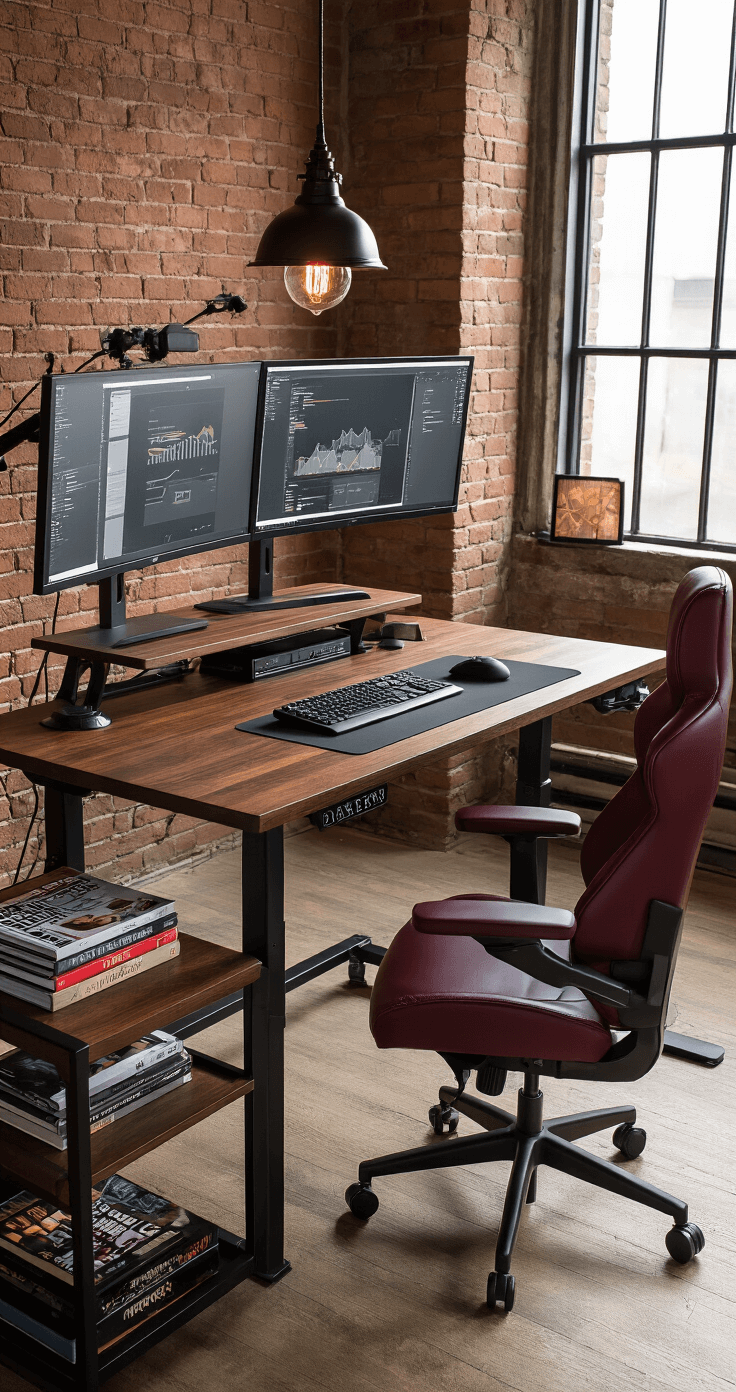
- Multiple monitors (I run three, and the corner space is perfect)
- Room for both computer work and paperwork
- Space to spread out reference materials
- A dedicated area for video calls
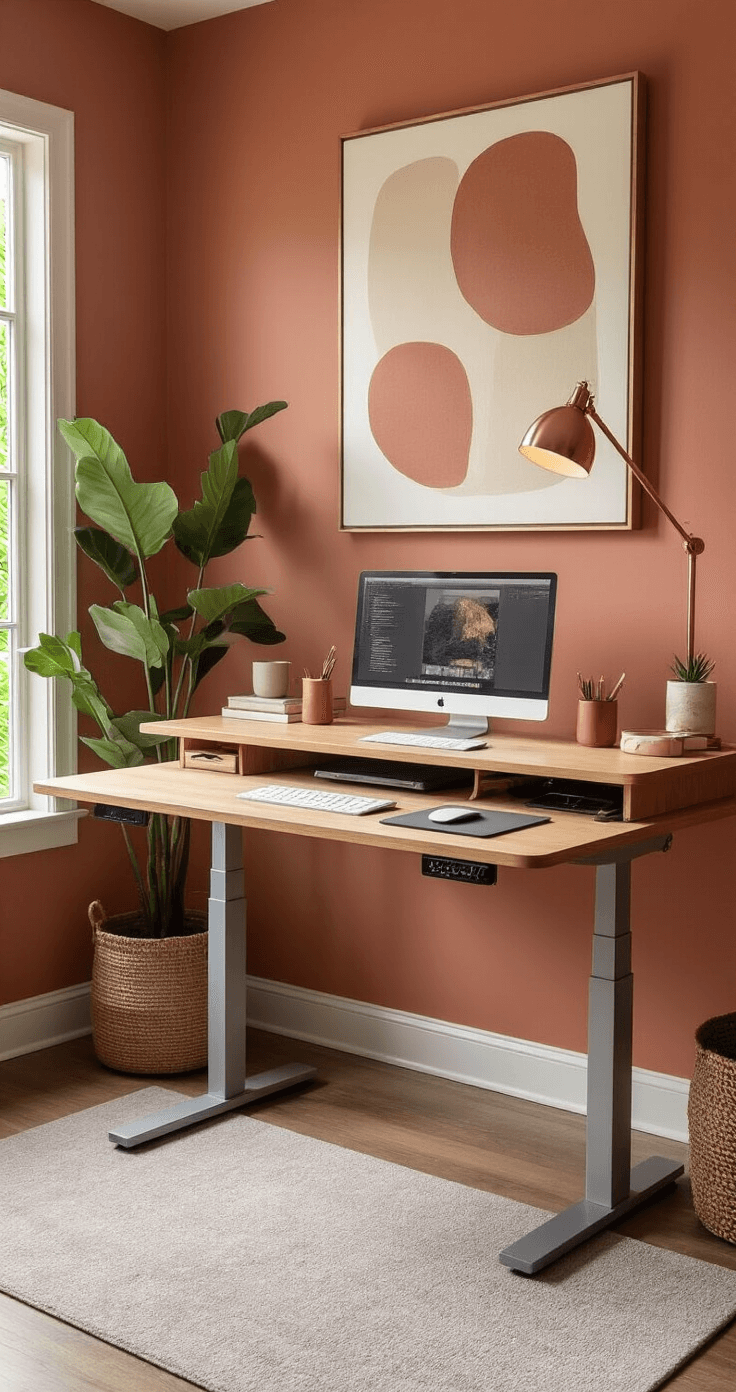
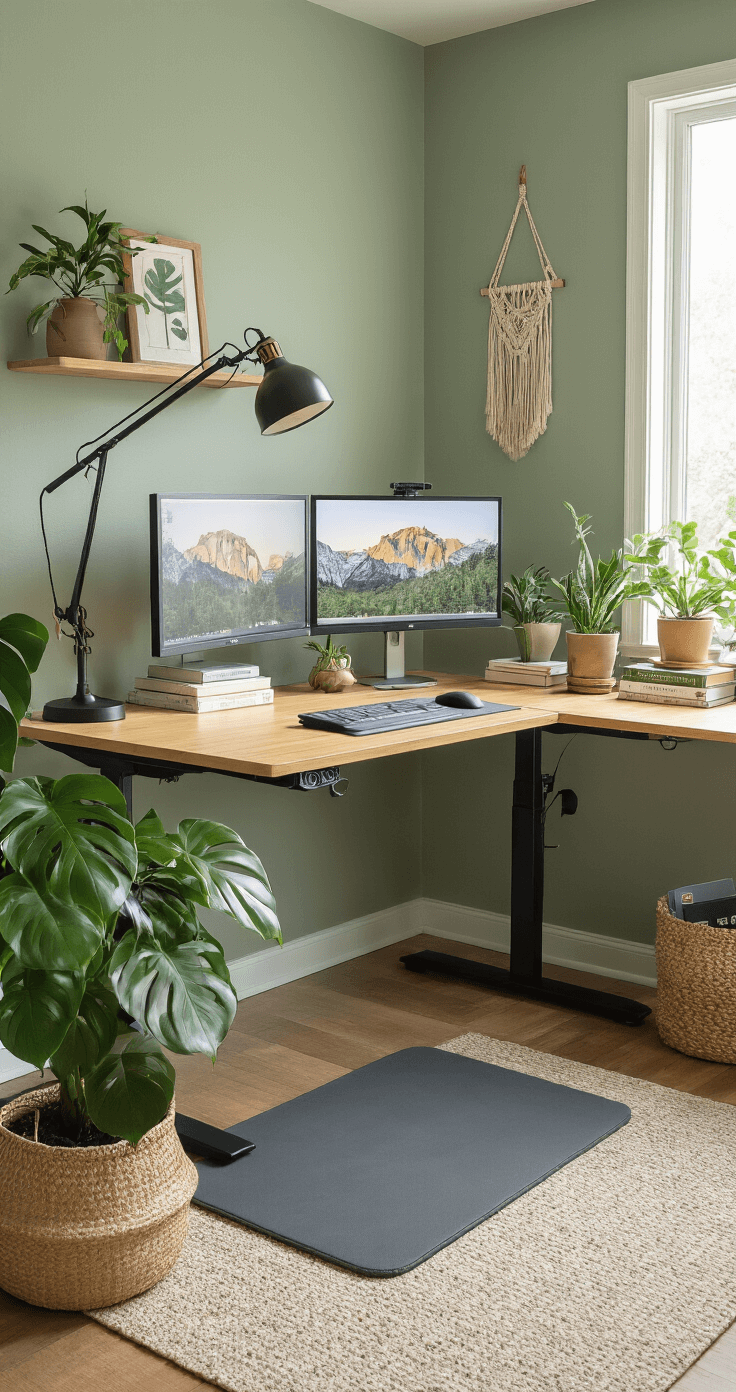
I switched to an L-shaped standing desk last year, and my productivity jumped. Having that extra real estate means I’m not constantly shuffling papers around or minimizing windows.
Control Panel
One-touch presets are non-negotiable for me now.
My first desk had a basic up-down button. Every time I wanted to switch positions, I’d stand there holding the button, watching the height display, trying to remember where I liked it.
Now I hit “1” for sitting, “2” for standing. Done in three seconds.
Material Matters More Than You Think
Solid wood tops look gorgeous and feel premium. They’re heavy (which adds stability), and they don’t flex under weight. But they cost more and can be sensitive to moisture.
Bamboo desktops are eco-friendly and surprisingly durable. I’ve had a bamboo standing desk top for two years, and it still looks brand new.
Laminate or particleboard keeps costs down. They work fine if you’re not loading them up with heavy equipment. Just don’t expect them to last a decade.