
This post may contain affiliate links. Please see my disclosure policy for details.
How I Finally Stopped My Study Desk From Looking Like a Crime Scene
Contents
- How I Finally Stopped My Study Desk From Looking Like a Crime Scene
- Why Your Desk Looks Like a Disaster Zone (And Why It Actually Matters)
- Step One: Declutter Like Your GPA Depends On It (Because It Kind of Does)
- The Cable Situation: Tackle the Wire Monster Before It Tackles You
- Color-Coding: The System That Actually Sticks
- The Calendar That Saved My Academic Life
- Going Vertical: The Secret to Doubling Your Space
- Pegboards Are Your Best Friend
- Floating Shelves for Books and Notebooks
- Desktop Risers and Second-Tier Storage
- The Storage Solutions That Actually Earn Their Keep
Study desk organization saved my sanity, and honestly, I wish someone had slapped this information into my hands years ago when I was drowning in sticky notes and couldn’t find a single working pen.
Look, I get it.
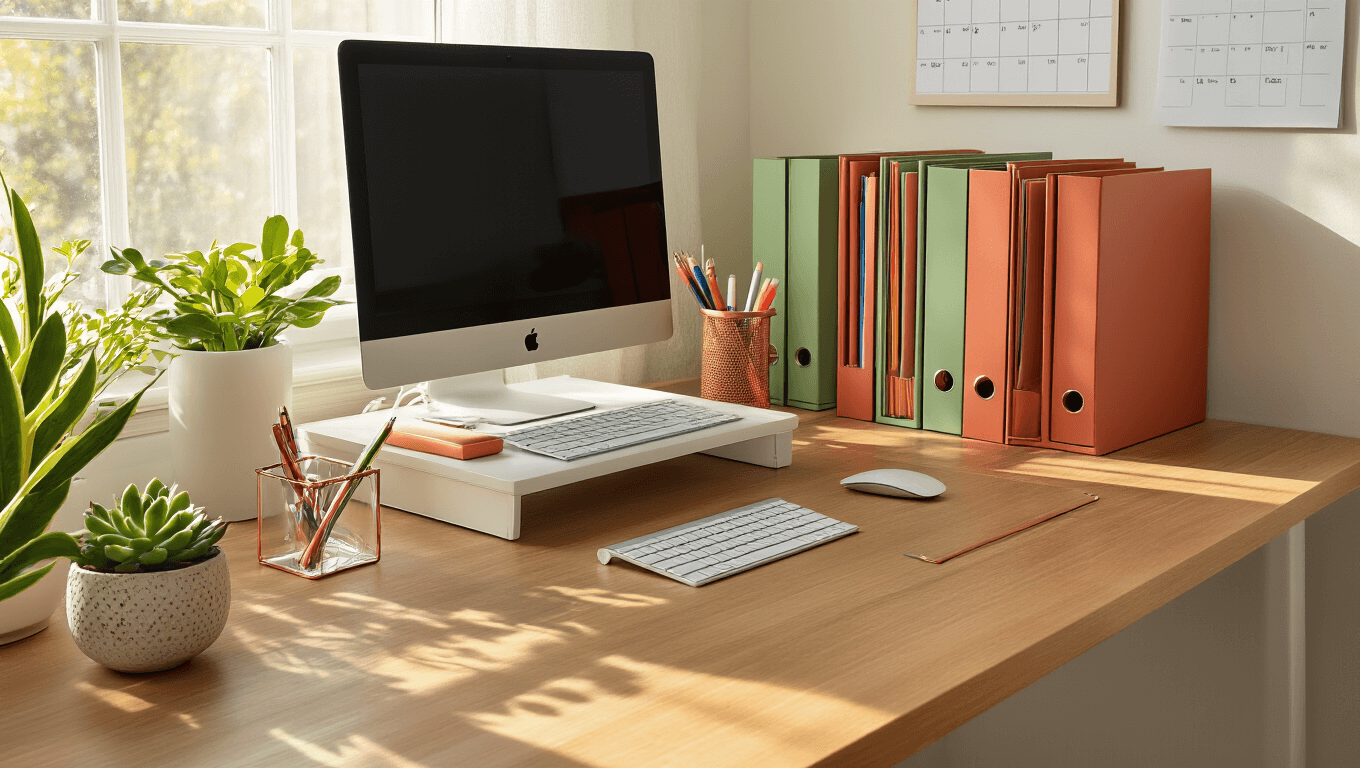
Your desk probably looks like mine used to—papers everywhere, three half-empty coffee mugs playing hide-and-seek behind your monitor, cables tangled like angry snakes, and you’re pretty sure there’s a textbook somewhere under that avalanche but you’re afraid to dig for it.
I’m here to tell you it doesn’t have to be this way.
Why Your Desk Looks Like a Disaster Zone (And Why It Actually Matters)
Here’s the thing nobody tells you: a messy desk isn’t just ugly—it’s actively sabotaging your brain.
Every time you sit down to study, your eyes scan all that clutter.
Your brain tries to process it.
You waste mental energy before you’ve even opened your first textbook.
I used to think I worked better in chaos.
Spoiler alert: I was lying to myself.
The day I organized my desk was the day I realized I’d been studying on hard mode for absolutely no reason.
Step One: Declutter Like Your GPA Depends On It (Because It Kind of Does)
The brutal truth: you need to throw stuff away.
I know that eraser from 2019 has sentimental value, but does it actually work?
Does that broken highlighter spark joy, or does it just spark guilt every time you see it?
Here’s my decluttering method:
- Pick up every single item on your desk
- Ask yourself: “Have I used this in the last month?”
- If no: trash it, donate it, or relocate it
- If yes: it earns a designated spot (more on this in a second)
The areas right next to your computer need to be sacred ground.
I keep mine completely clear except for whatever project I’m actively working on.
This isn’t me being obsessive—it’s about accessing what you need without playing desk Jenga every five minutes.
Start with a good desk organizer that actually fits your space and style.
The Cable Situation: Tackle the Wire Monster Before It Tackles You
Can we talk about cables for a second?
They multiply like rabbits and tangle like they’re getting paid for it.
I used to have this rat’s nest of chargers, USB cables, and mystery cords I was too afraid to unplug.
Here’s what actually works:
- Get cable management clips and stick them to the back of your desk
- Route each cable through its own path
- Label everything with tape and a marker—yes, really
- Use a cable tray underneath your desk to hide the excess
The difference is night and day.
Suddenly you can plug in your phone without unplugging your lamp and causing a desktop domino effect.
Color-Coding: The System That Actually Sticks
I tried every organizational system under the sun.
Alphabetical filing? Forgot the system within a week.
Chronological? Couldn’t remember when I got anything.
Then I discovered color-coding, and honestly, it changed everything.
Here’s my setup:
- Red folders = urgent assignments and deadlines
- Blue folders = current coursework and notes
- Green folders = completed work and reference materials
- Yellow folders = personal projects and side work
Your brain processes colors faster than words.
You can grab what you need in half a second instead of reading twelve identical manila folders.
Invest in colorful file folders and thank me later.
The Calendar That Saved My Academic Life
I used to keep everything in my head.
Big mistake. Huge.
Turns out human brains aren’t designed to be walking Outlook calendars.
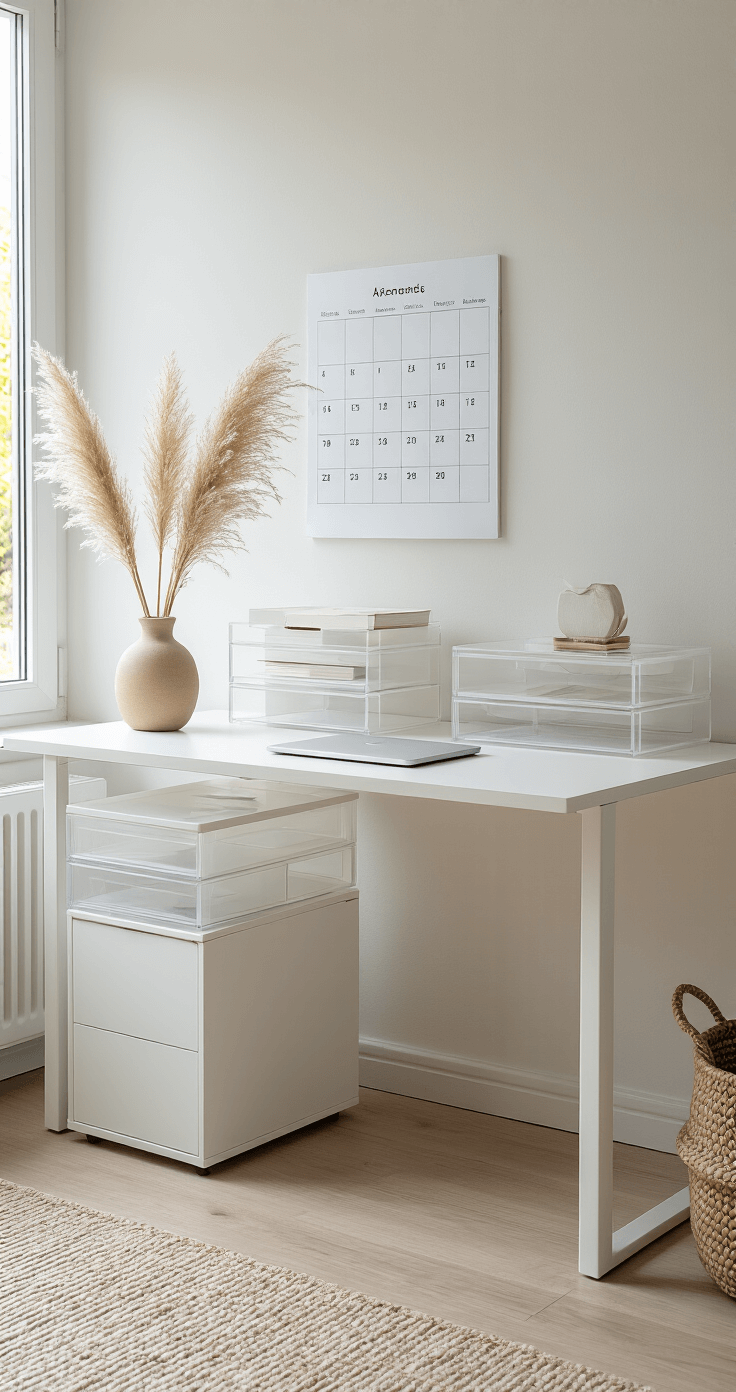
Get a physical calendar or board and put it where you can’t ignore it.
I mounted a wall calendar right above my desk.
Every assignment goes on it immediately.
Every deadline gets highlighted.
Every exam gets a countdown.
No more “wait, that’s due TODAY?” panic attacks at 11 PM.
Going Vertical: The Secret to Doubling Your Space
Most people only think horizontally about desk space.
That’s like using half your brain—technically possible but wildly inefficient.
Your walls are prime real estate.
Here’s what I did:
Pegboards Are Your Best Friend
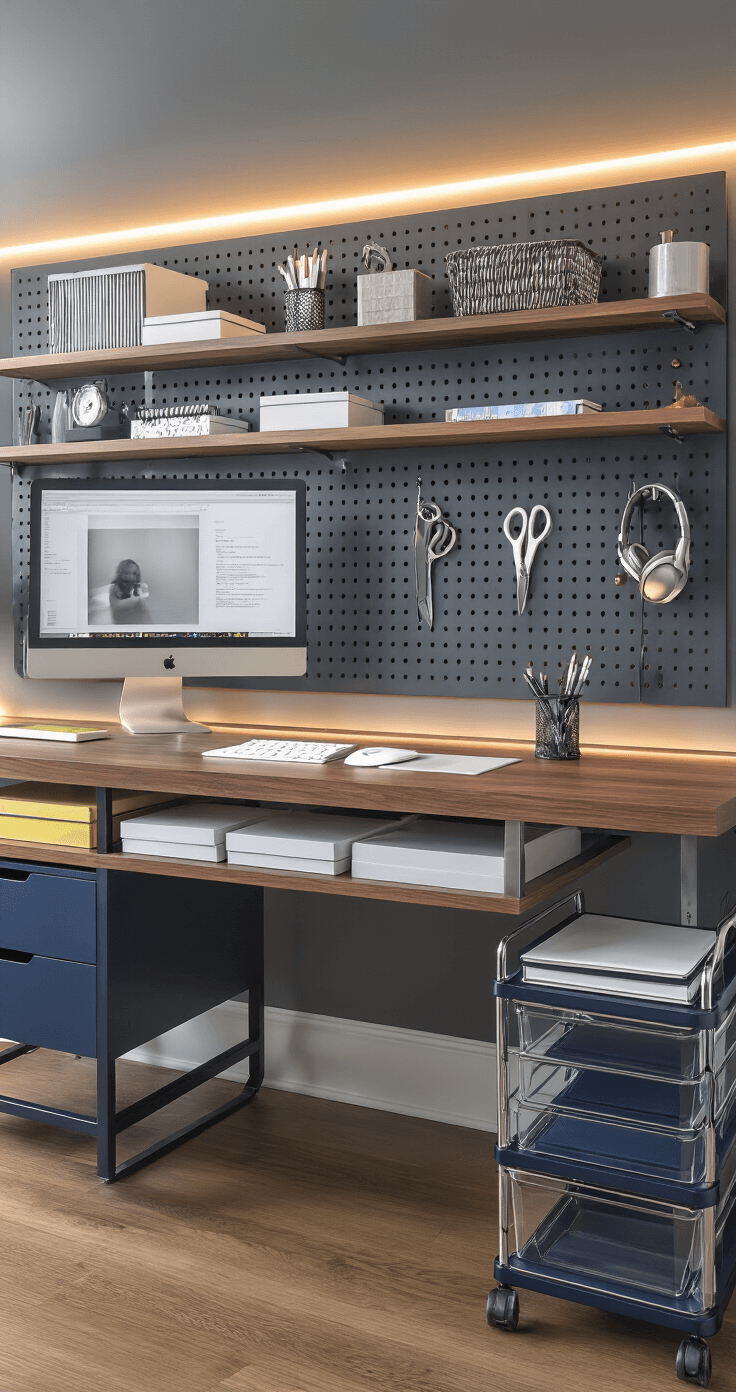
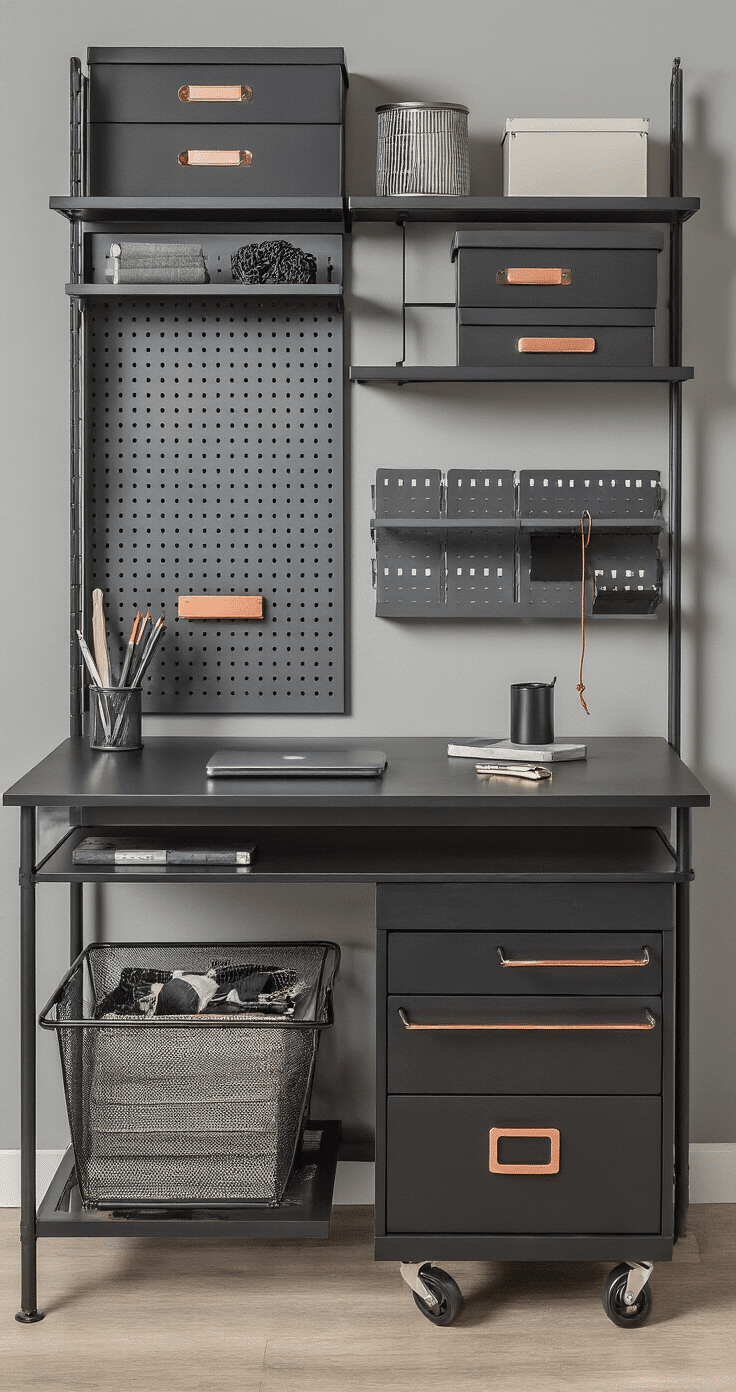
I mounted a pegboard system above my desk.
Now my frequently-used supplies hang right there—scissors, tape, pens, headphones, whatever.
It’s like having a command center.
Everything visible, nothing cluttering my actual work surface.
Floating Shelves for Books and Notebooks
My textbooks used to live in sad piles on my desk.
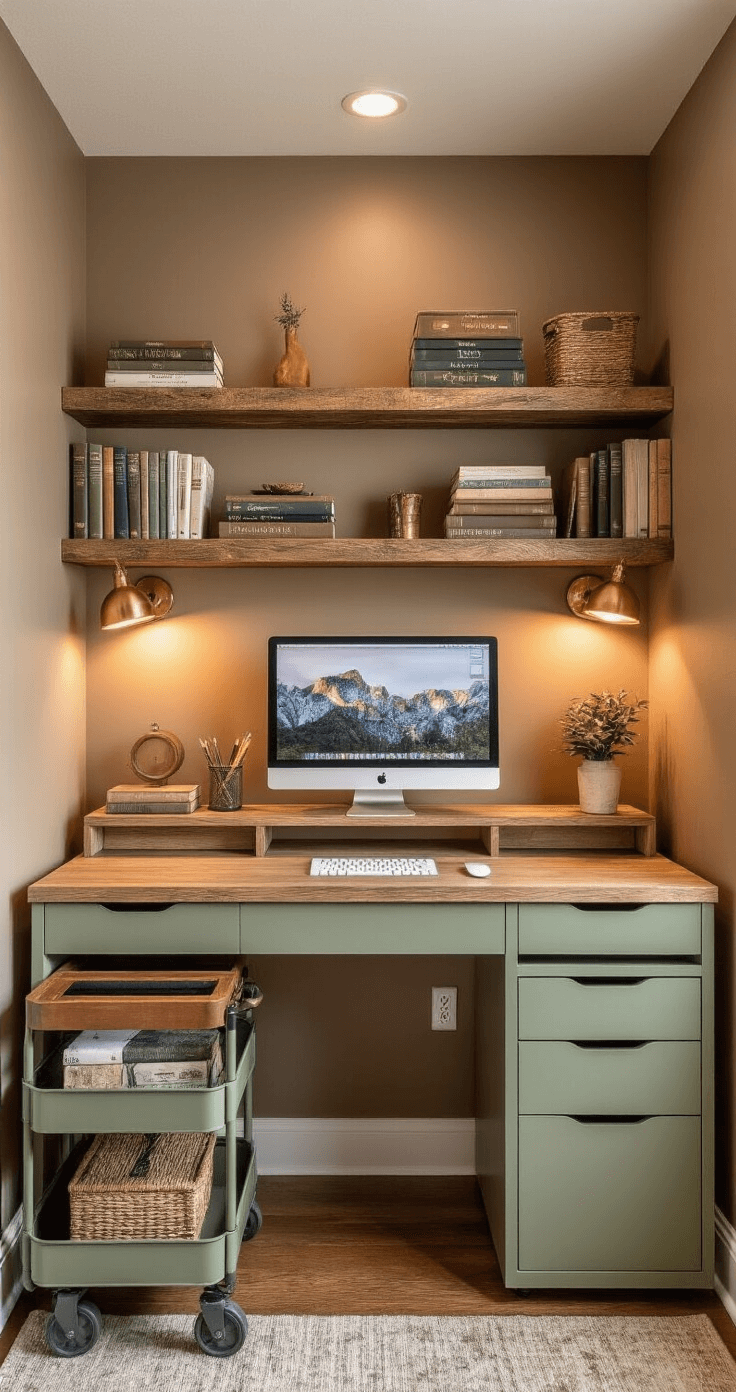
Now they’re on floating shelves above my workspace.
Still accessible, no longer in my way.
Desktop Risers and Second-Tier Storage
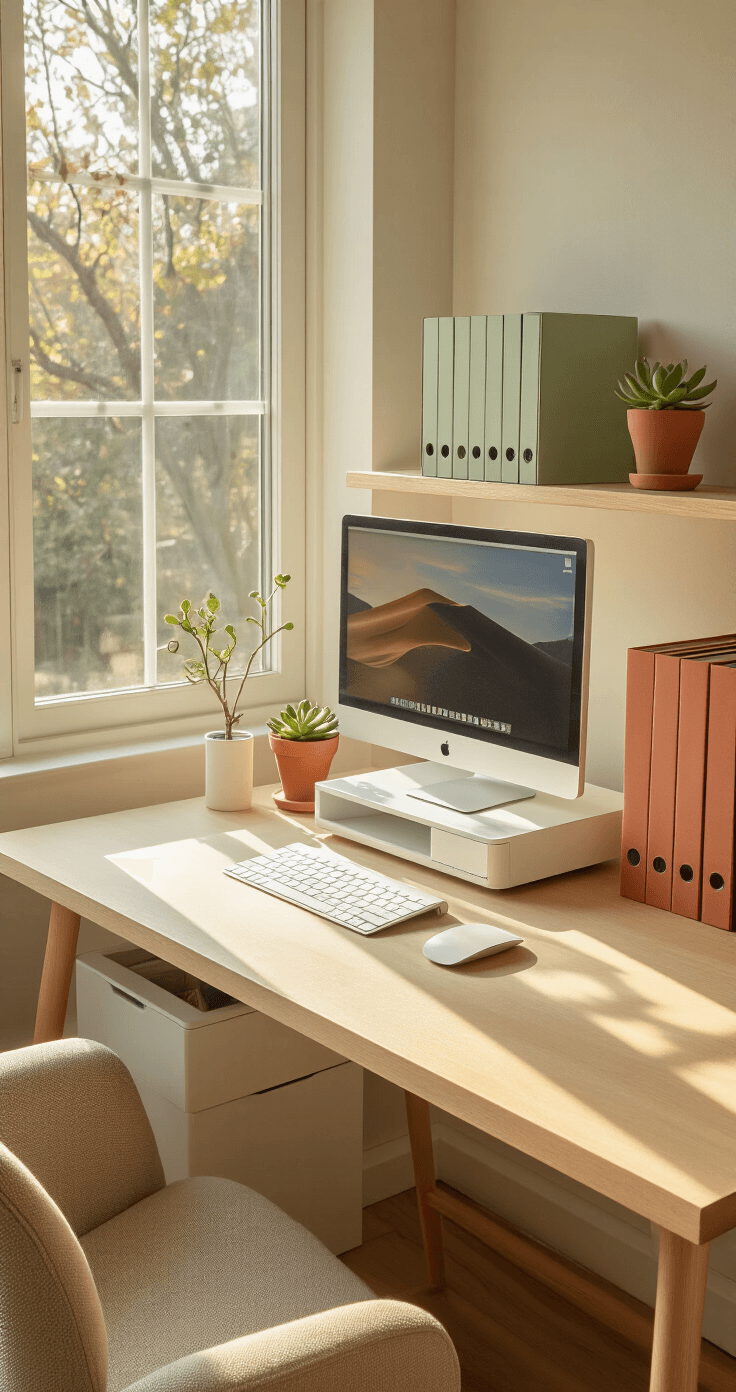
I use a monitor stand that creates storage space underneath.
Keyboard goes under it when I’m writing by hand.
Notebooks stack there when I’m on the computer.
It’s like having a desk with two floors.
The Storage Solutions That Actually Earn Their Keep
Not all organizers are created equal.