This post may contain affiliate links. Please see my disclosure policy for details.
How I Finally Mastered My Teacher Desk Setup (And Stopped Losing Important Papers)
Contents
Teacher desk organization drove me absolutely mad during my first year in the classroom—sticky notes everywhere, permission slips vanishing into thin air, and three half-empty coffee mugs hiding behind stacks of ungraded assignments.
Sound familiar?
Your desk shouldn’t be a dumping ground or a source of daily stress. It should work for you, not against you.
Where Should You Actually Put Your Desk?
I’ve moved my desk four times in three years. Here’s what I learned the hard way.
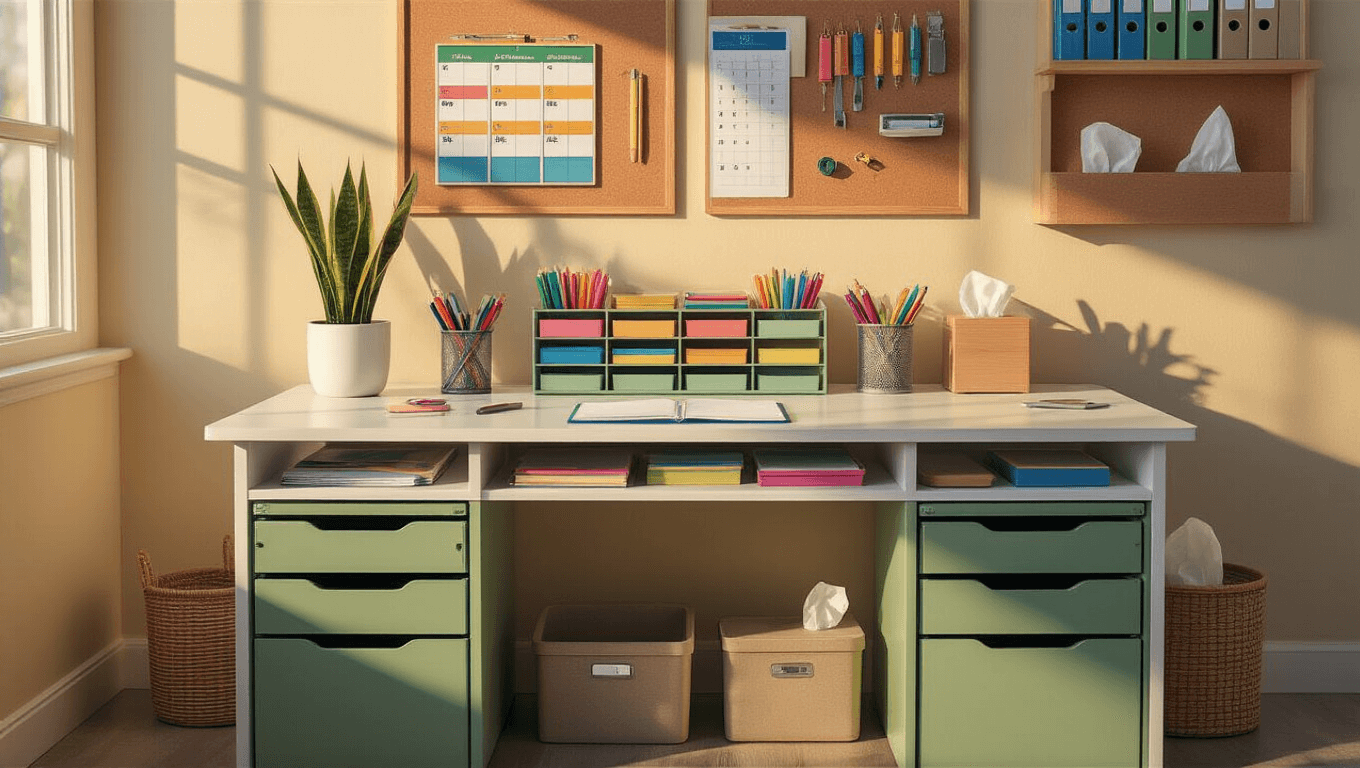
Front corner placement gives you sightlines to the entire room while students work independently. You can scan for raised hands, wandering eyes during tests, or that kid who’s definitely on their phone under the desk.
But here’s the thing—some of us don’t actually need a traditional desk at all.
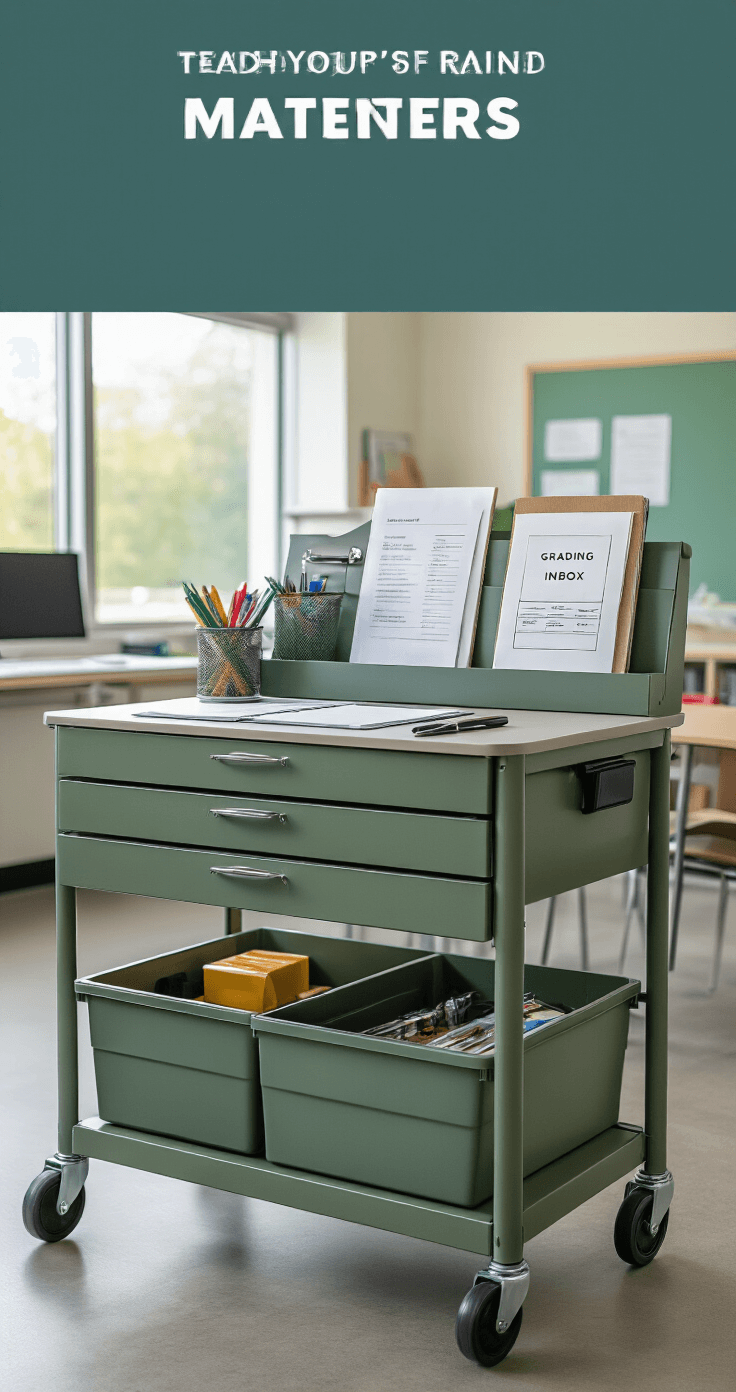
I watched a veteran teacher use a rolling storage cart and a clipboard for an entire school year. She reclaimed 15 square feet of classroom space that became a cozy reading nook instead.
Alternative setup options:
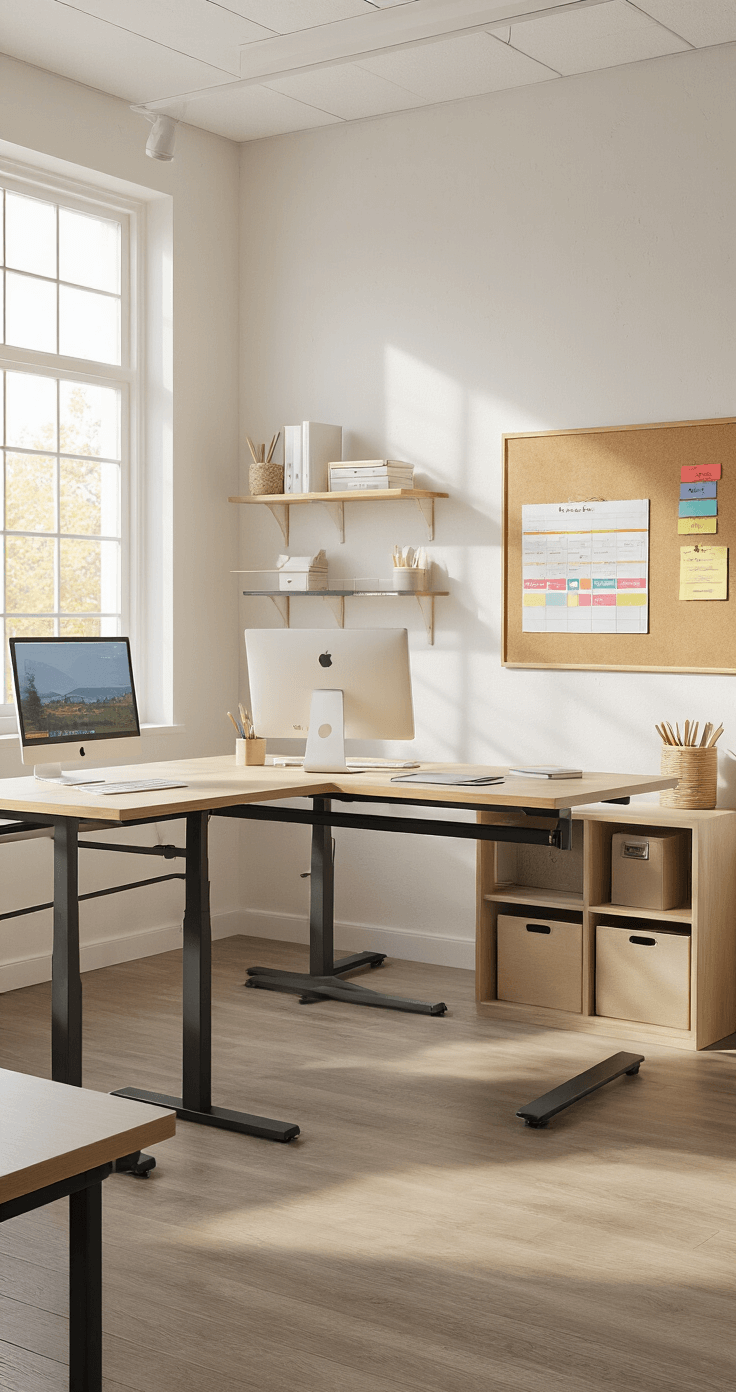
- Standing desk near the wall for quick check-ins
- Small table that doubles as a conference spot for student meetings
- Mobile cart system that travels with you around the room
- No desk at all—just strategic storage stations
Whatever you choose, make sure two people can move around it comfortably. Students will need to reach you, and you’ll need an escape route when that parent shows up unannounced.
The Supplies That Actually Need Desk Real Estate
Let me save you some trouble.
Keep within arm’s reach:
- Stapler and tape (you’ll use these 47 times per day)
- Pens that actually work—test them monthly
- Post-it notes in three sizes
- Hand sanitizer (the industrial-size pump bottle)
- Tissues (always tissues)
Don’t keep on your desk:
- Student work you’re not grading right now
- Outdated memos from 2019
- Broken pencils “you’ll sharpen later”
- That decorative item your aunt gave you that you hate
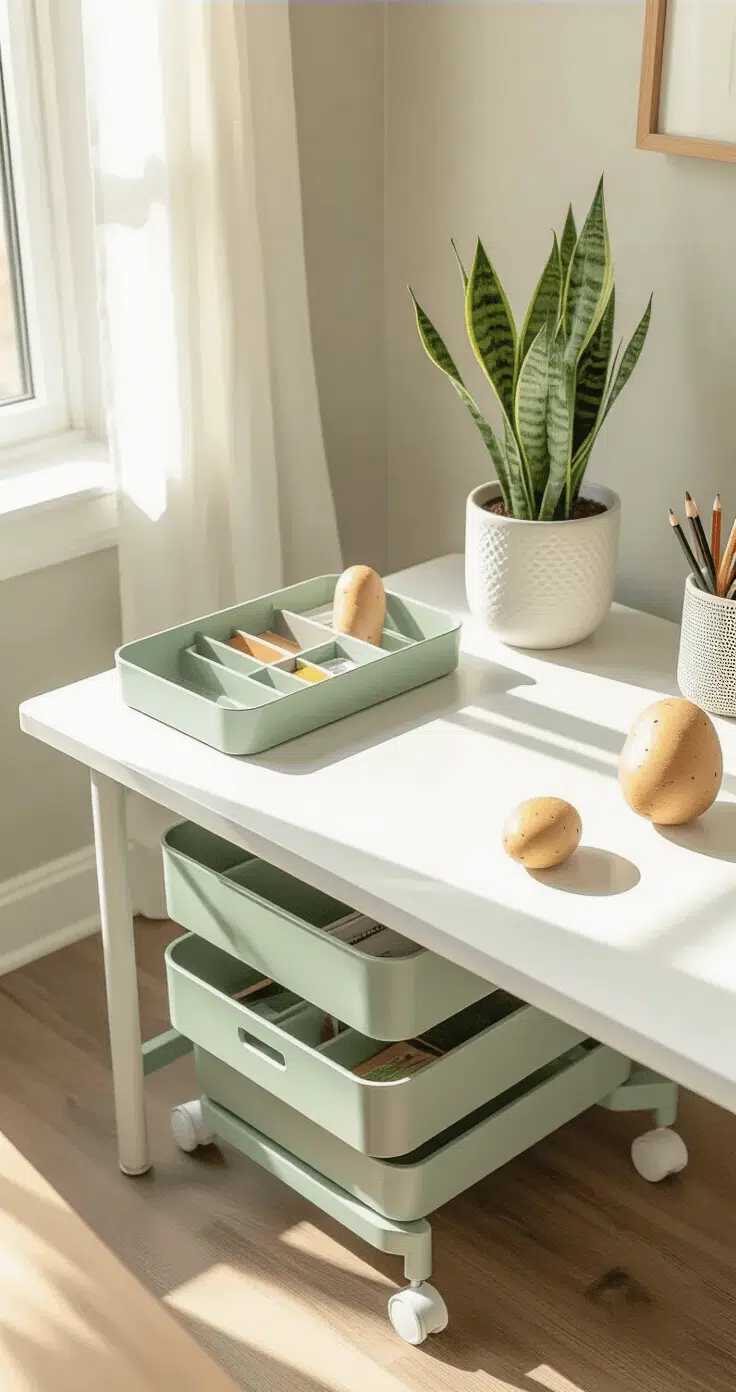
I use a desktop organizer with separate compartments. Game changer. Everything has a home, which means I can find my stapler without excavating three layers of paper.
Vertical Space Is Your Secret Weapon
Your desk has maybe four square feet of surface area. The wall behind it? That’s where the magic happens.
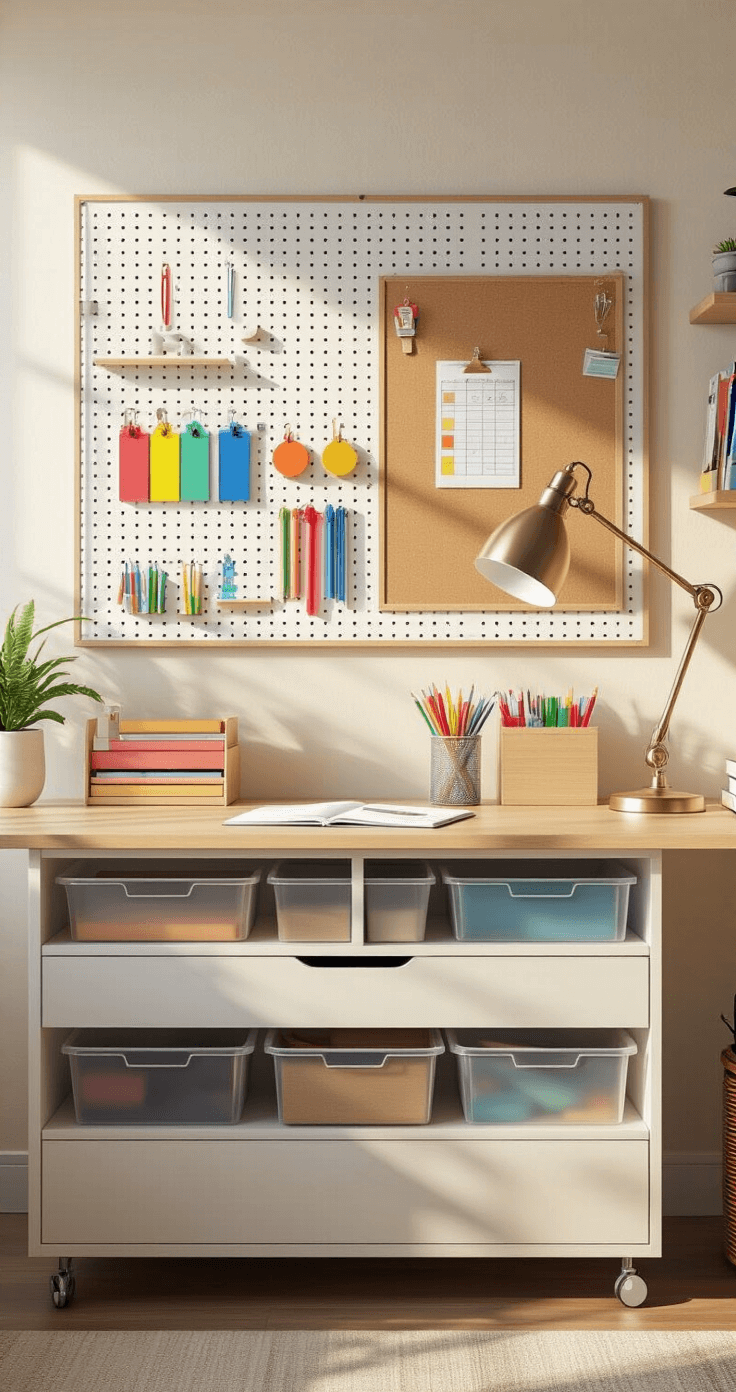
Mount a pegboard and suddenly you’ve got room for scissors, markers, your hall pass lanyard, and those weird magnetic clips that hold your weekly schedule.
Wall-mounted solutions that work:
- Floating shelves for reference books and binders
- Cork board for current unit plans and tomorrow’s agenda
- Magazine holders mounted sideways for folders
- Command hooks for keys and lanyards
I keep my three-hole punch on a pegboard hook. Sounds silly, but finding that thing used to eat up ten minutes of my planning period.
The Rolling Cart Revolution
Best forty dollars I ever spent at Target.
A three-tier rolling cart lives next to my desk.
Top tier: Current unit materials and today’s handouts
Middle tier: Grading inbox and my favorite pens
Bottom tier: Emergency supplies—bandaids, safety pins, granola bars
When I’m teaching, I roll it to the front of the room. During independent work, it’s my mobile command center. I can circulate and still have everything I need without running back to my desk fourteen times.
Paper Flow Systems That Don’t Suck
This is where most of us crash and burn.
The paper avalanche buries good intentions faster than you can say “differentiated instruction.”
My current system (that actually works):
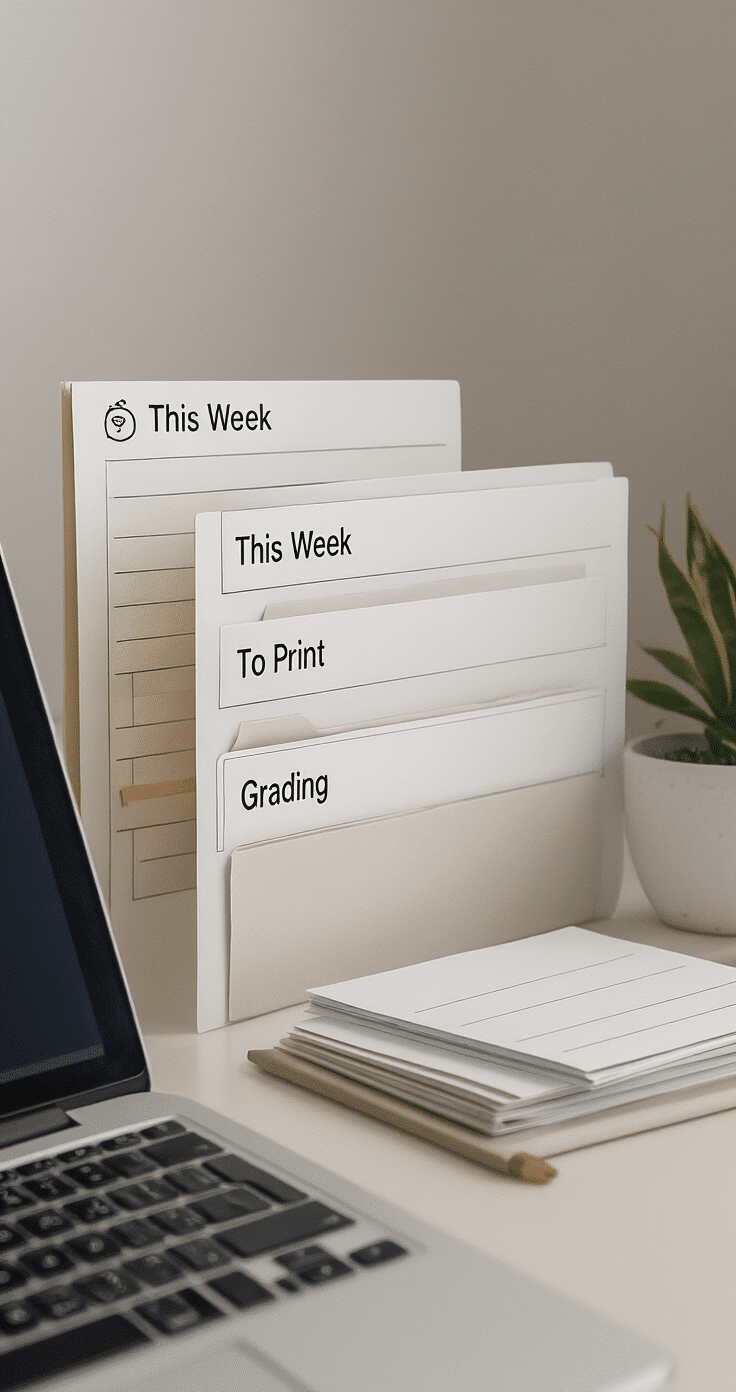
Create three clear zones using desk trays or folders:
- TO GRADE – Goes in, gets graded, leaves immediately
- TO FILE – Papers that need sorting once per week
- TO RETURN – Graded work organized by class period
Nothing else touches my desk surface. Field trip forms? Wall pocket. Parent contact logs? Binder on the shelf. Random newsletter from the office? Recycling bin.
The moment something doesn’t fit these three categories, it goes somewhere else immediately. No “temporary” piles. Temporary piles are where good organizational systems go to die.
The Teacher Toolbox Approach
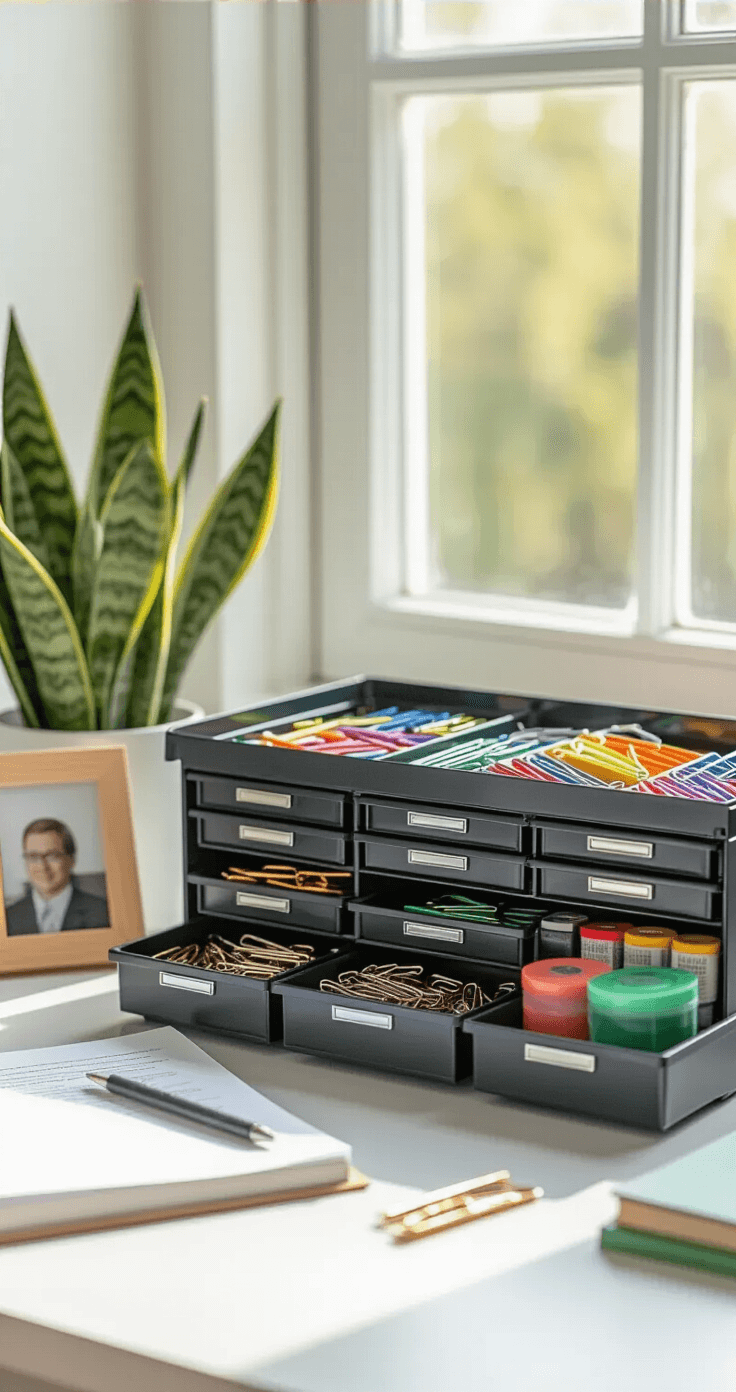
Remember those plastic organizers with tiny drawers that your dad kept screws and nails in?
That’s your new best friend.
I keep mine on the corner of my desk with:
- Paperclips (because they migrate)
- Binder clips in multiple sizes
- Thumbtacks
- Extra staples
- Birthday candles (don’t judge me)
- That one Allen wrench for the broken desk