
This post may contain affiliate links. Please see my disclosure policy for details.
Work Desk Decor: Transform Your Workspace Into a Productivity Powerhouse
Contents
Work desk decor isn’t just about making your workspace look pretty—it’s about creating an environment that actually helps you think better, work smarter, and maybe even enjoy those long stretches at your computer.
I’ve spent years tweaking my desk setup, and I can tell you right now: the difference between a bland, lifeless workspace and one that energizes you is massive.
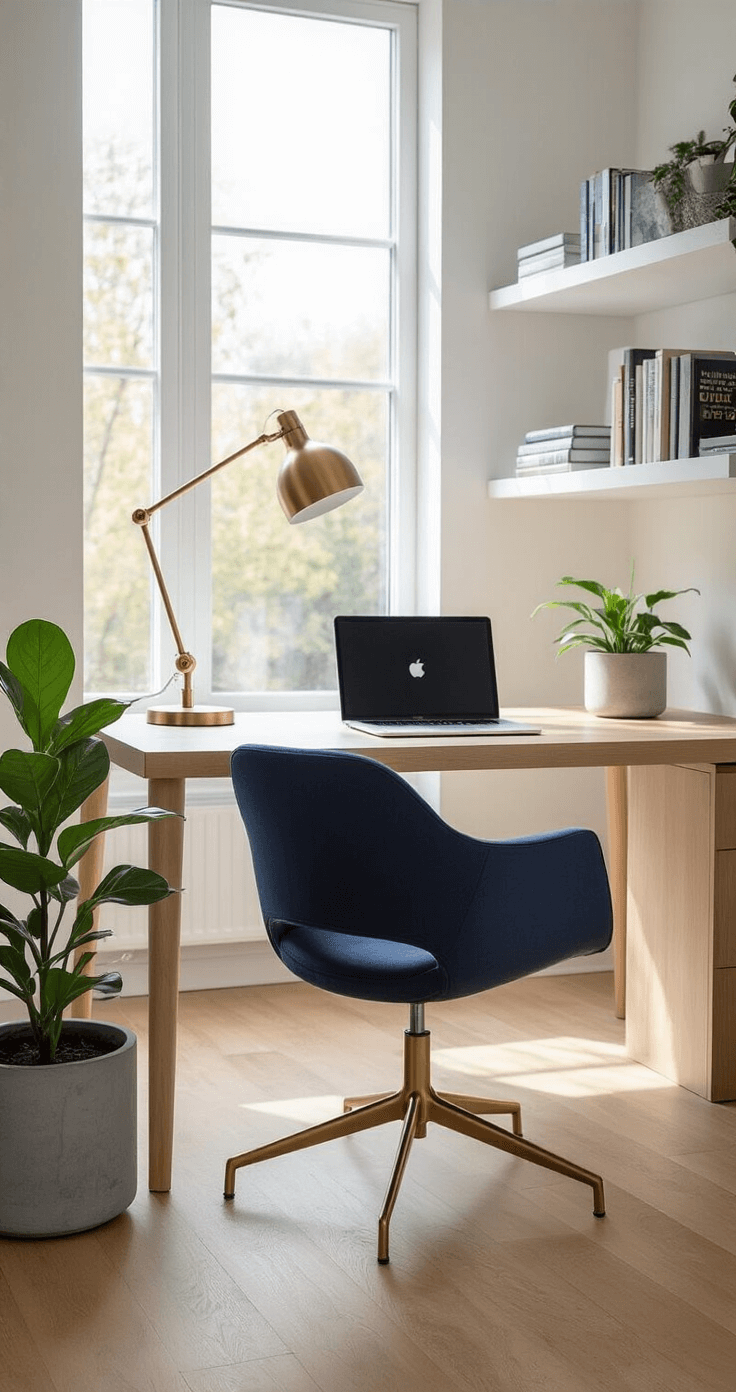
Why Your Desk Setup Actually Matters (More Than You Think)
Look, I get it. You’re busy. The last thing you want to worry about is whether your pen holder matches your mouse pad.
But here’s the thing—you’re staring at this space for hours every single day. Your desk isn’t just furniture; it’s the stage where your best work happens.
A cluttered, uninspiring desk drains your energy. A thoughtfully decorated one? It can actually boost your mood, sharpen your focus, and make those Monday mornings slightly less painful.
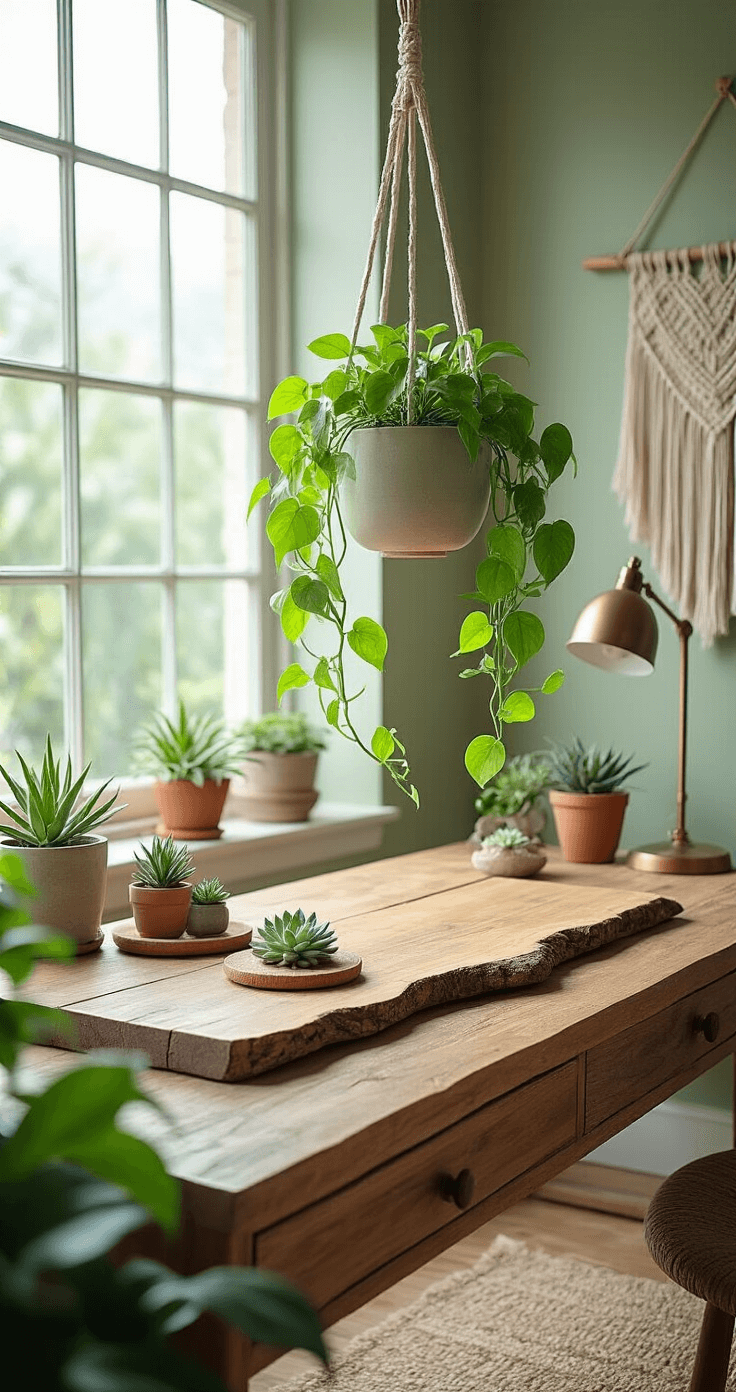
Start With Plants (Yes, Really)
I never considered myself a “plant person” until I stuck a small succulent on my desk three years ago.
That tiny plant changed everything.
Plants aren’t just decorative—they’re functional mood boosters:
- Reduce stress and improve air quality
- Add life to sterile office environments
- Require minimal care if you choose the right ones
- Cost almost nothing but deliver massive visual impact
My top picks for desk plants:
- Succulents: Nearly impossible to kill. Perfect for forgetful waterers like me.
- Pothos (Devil’s Ivy): Trailing vines that look elegant and thrive on neglect.
- Snake Plants: Vertical, sculptural, and incredibly low-maintenance.
- Small Cacti: Add personality without taking up precious desk space.
Grab a modern planter that matches your style—ceramic, concrete, or even quirky animal-shaped ones. Place it where you’ll see it when you glance up from your screen.
That momentary connection with something living? It matters more than you’d think.
Color Psychology Isn’t Woo-Woo—It’s Strategy
Color affects your brain whether you realize it or not.
I learned this the hard way when I painted my home office bright red (bad idea for concentration, excellent for afternoon headaches).
Here’s what actually works:
Cool colors for focus:
- Blues: Promote calm and concentration
- Greens: Reduce eye strain and create balance
- Purples: Spark creativity without overwhelming
Warm colors for energy:
- Yellow: Optimism and mental clarity
- Orange: Energy without aggression
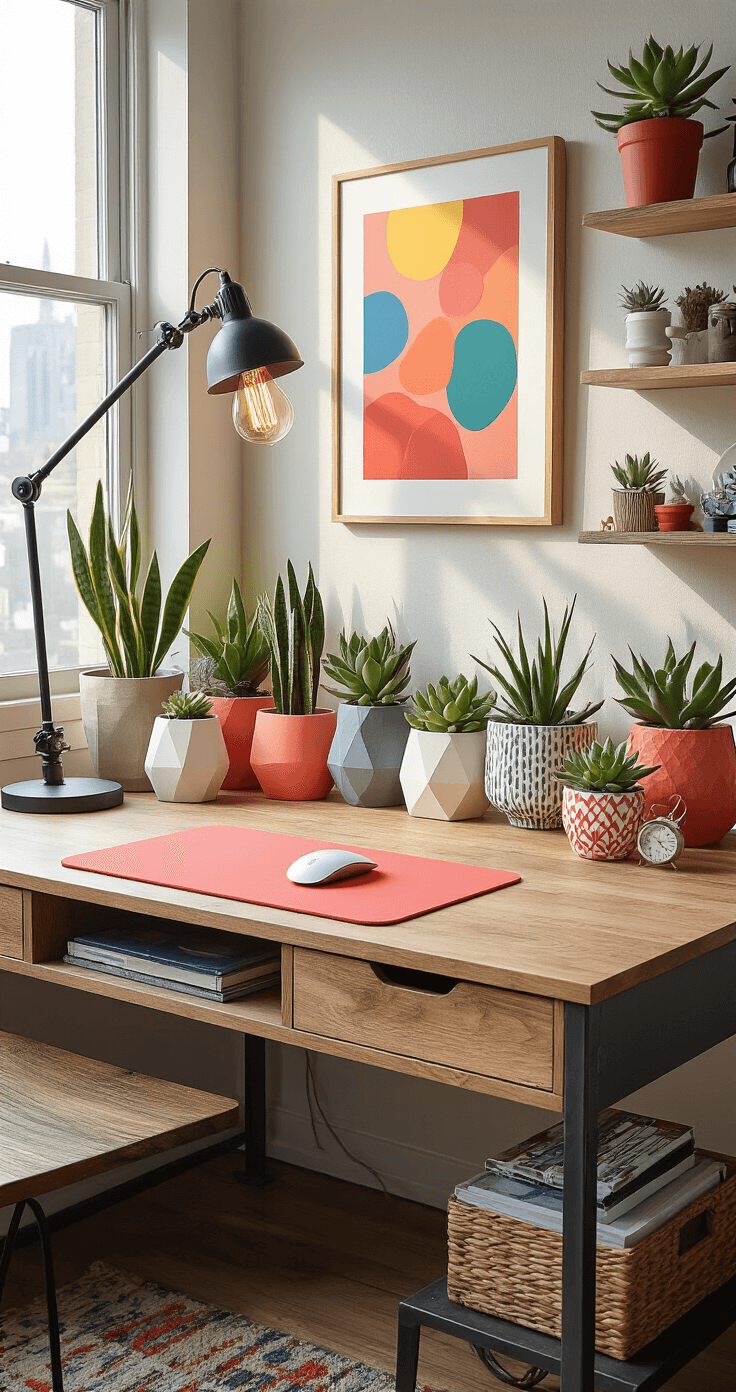
- Coral: Warmth and approachability
You don’t need to repaint your walls. Start small.
Add a vibrant desk lamp in your chosen color. Pick up sticky notes, file folders, or a mouse pad that adds your accent color.
My current setup? Navy blue and warm brass. Professional enough for video calls, interesting enough to keep me engaged.
Organization: Because Chaos Kills Creativity
I used to believe that “messy desk, creative mind” nonsense. Then I spent twenty minutes looking for a document I needed immediately.
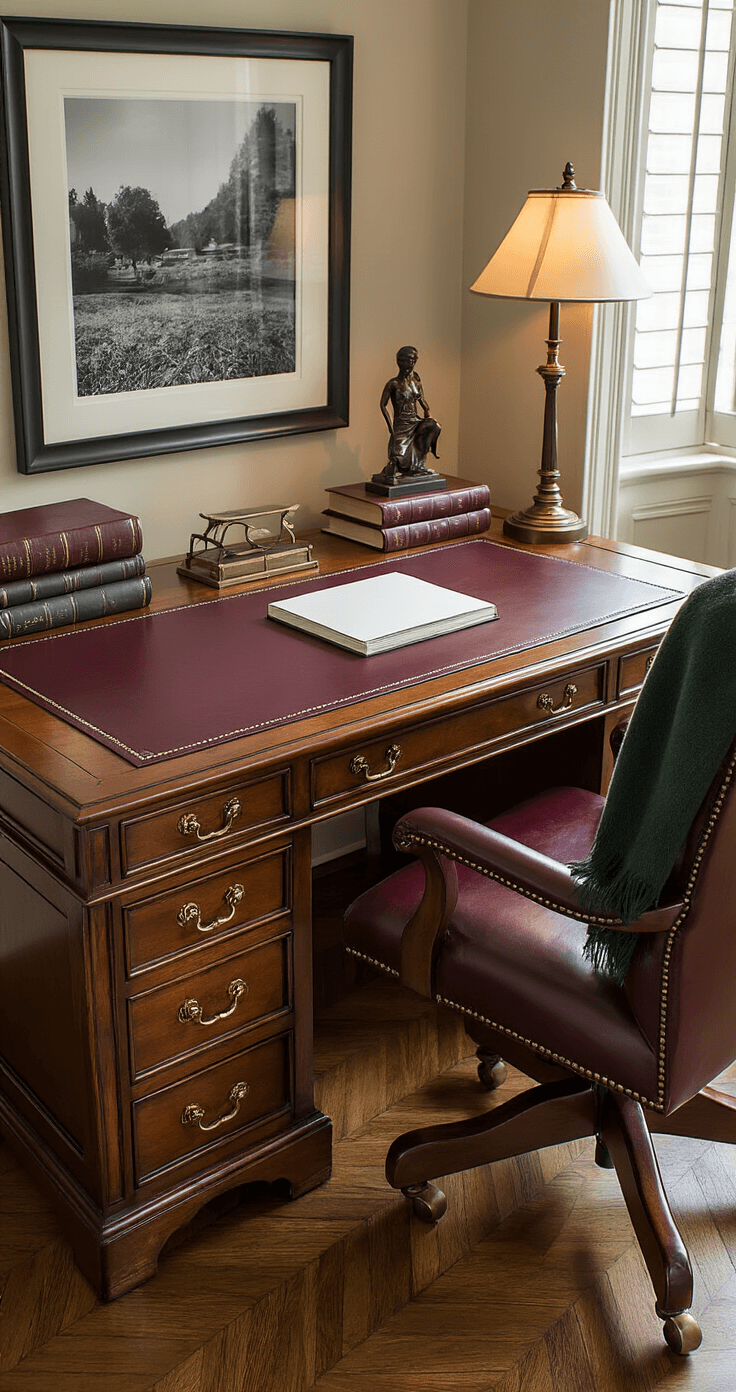
Organizational desk decor serves double duty—it looks good AND saves your sanity.
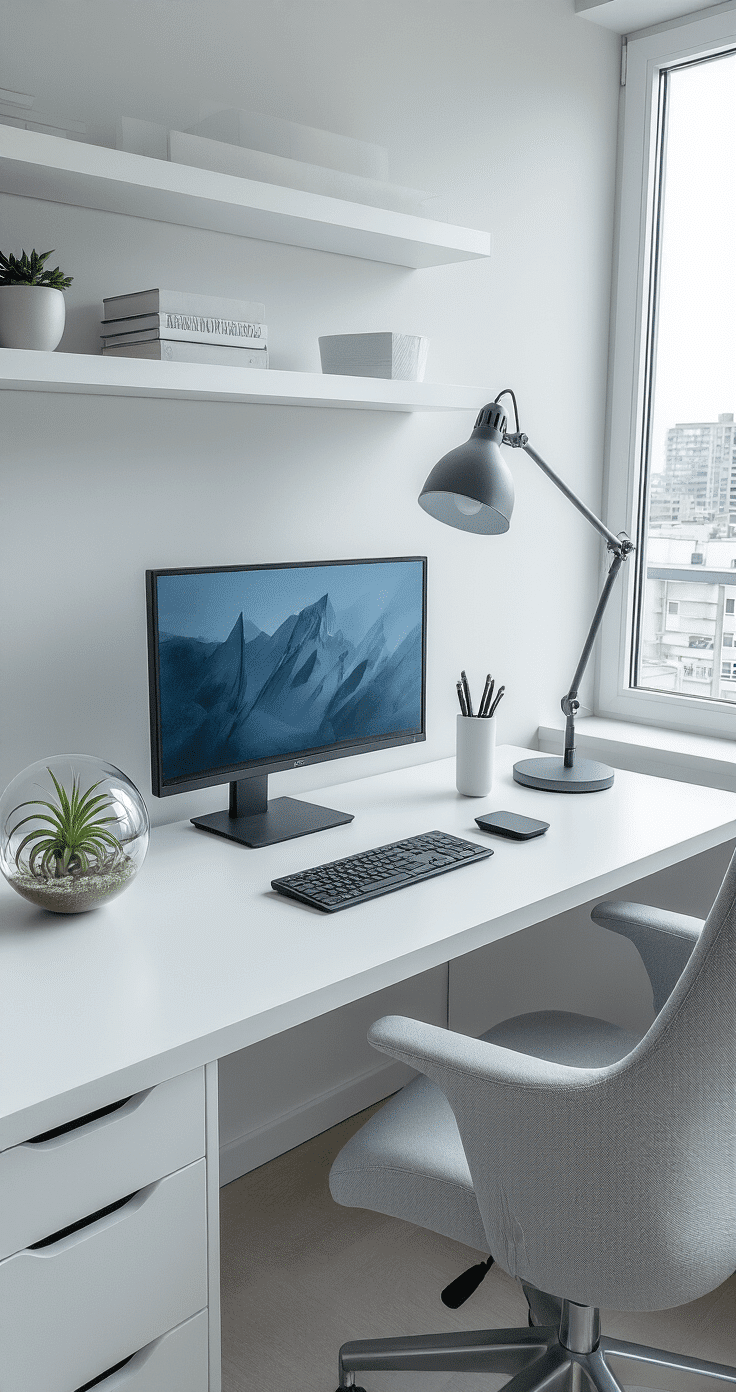
Floating shelves
are game-changers:
- Install them at eye level (around 5 feet up)
- Display books, small plants, or meaningful objects
- Keep your desktop surface clear
- Create visual interest on blank walls
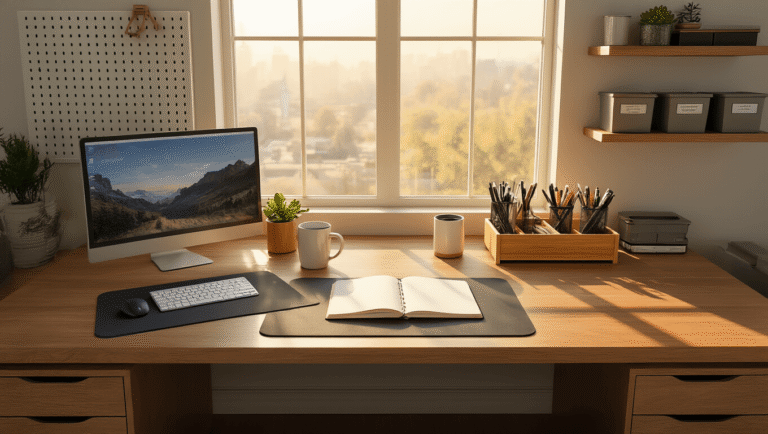
Desktop organizers
that actually work:
- Tiered letter trays for active projects
- Pen holders with multiple compartments
- Small drawer units for supplies you need daily
- Cable management boxes (seriously, wrangle those cords)
I recently added a bamboo desk organizer to my setup. Natural materials like bamboo or wood add warmth that plastic never will.
The cable situation
deserves its own paragraph. Tangled wires look terrible and collect dust. Use velcro cable ties, clips that attach to your desk edge, or run everything through a management sleeve. Your space will instantly look 300% more professional.
Lighting: Set the Mood, Protect Your Eyes
Harsh overhead fluorescent lights are the enemy of good work.
Layered lighting makes all the difference:
Task lighting
: A quality LED desk lamp with adjustable brightness and color temperature. Cool light (5000K) for focused work, warm light (3000K) for late afternoons.
Ambient lighting
: String lights aren’t just for dorm rooms. Tasteful fairy lights or LED strips behind your monitor create gentle backlighting that reduces eye strain.
Natural light
: Position your desk perpendicular to windows when possible. Direct sunlight creates glare; indirect light is perfect.
I added a Himalayan salt lamp to my desk last year (yes, trendy, but bear with me). The warm glow during evening work sessions creates a calming atmosphere that harsh white light never could.