
This post may contain affiliate links. Please see my disclosure policy for details.
Why Your Desk Choice Actually Matters More Than You Think
Contents
- Why Your Desk Choice Actually Matters More Than You Think
- Computer Desks: Built for the Digital Worker
- Executive Desks: When You Need to Mean Business
- L-Shaped and Corner Desks: The Multitasker’s Dream
- Standing Desks: Because Sitting Is Slowly Killing Us
- Writing Desks: Simple, Clean, Focused
- Workstation Desks: Office Spaces and Shared Environments
- Small Space Solutions That Actually Work
- Large Space Options: Go Big When You Can
- Materials Matter More Than You’d Think
I used to think any flat surface would do.
Big mistake.
The wrong desk gave me shoulder pain, cluttered chaos, and a constant feeling of being behind on everything.
Your desk affects your posture, your focus, and honestly, whether you dread sitting down to work each morning.
Computer Desks: Built for the Digital Worker
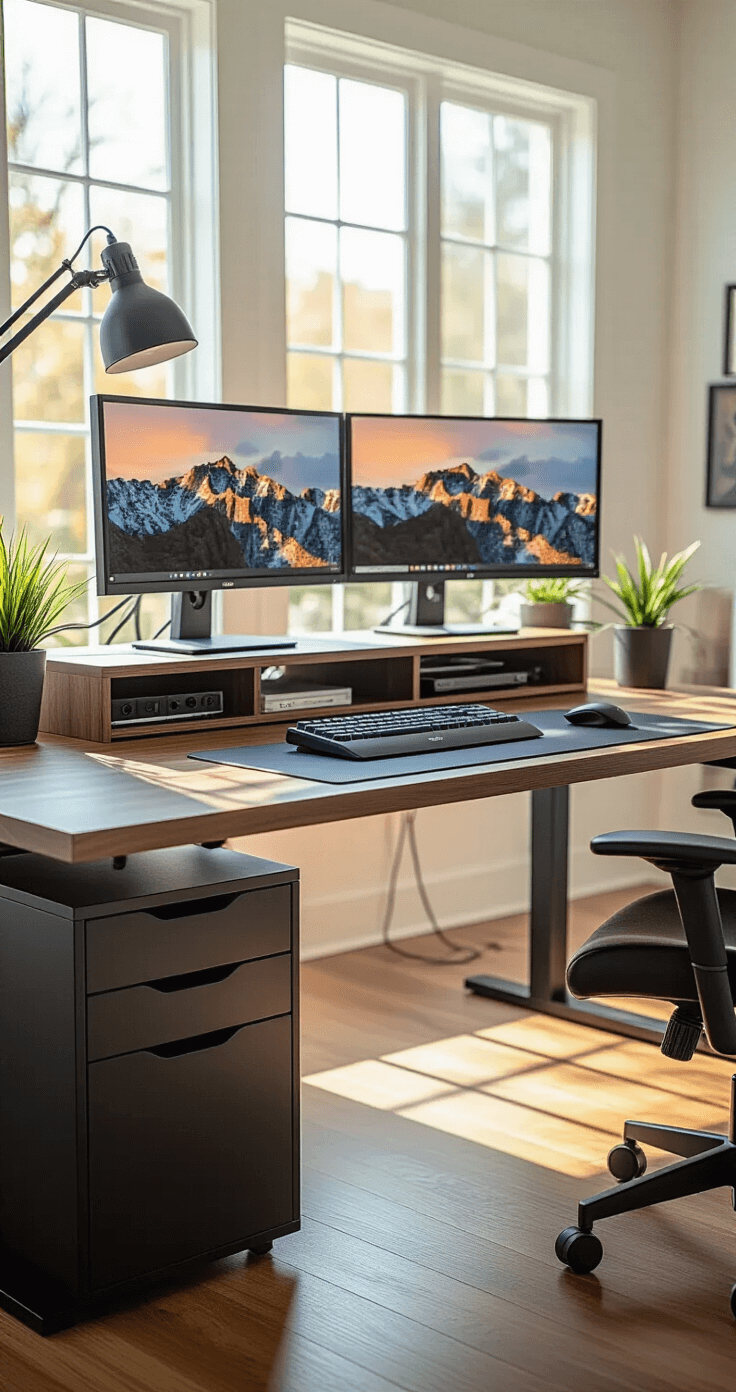
Computer desks are my go-to recommendation if you’re staring at screens most of your day.
Here’s what makes them different:
- Cable management systems that actually hide your wire nightmare
- Keyboard trays that keep your arms at the right angle
- Built-in storage for all the random tech accessories we accumulate
I switched to a proper computer desk three years ago and immediately noticed the difference.
No more cables tangling around my feet like angry snakes.
No more stacking books under my monitor to get the height right.
These desks are bulkier than minimalist writing desks, but there’s a reason—they’re engineered for the equipment you actually use daily.
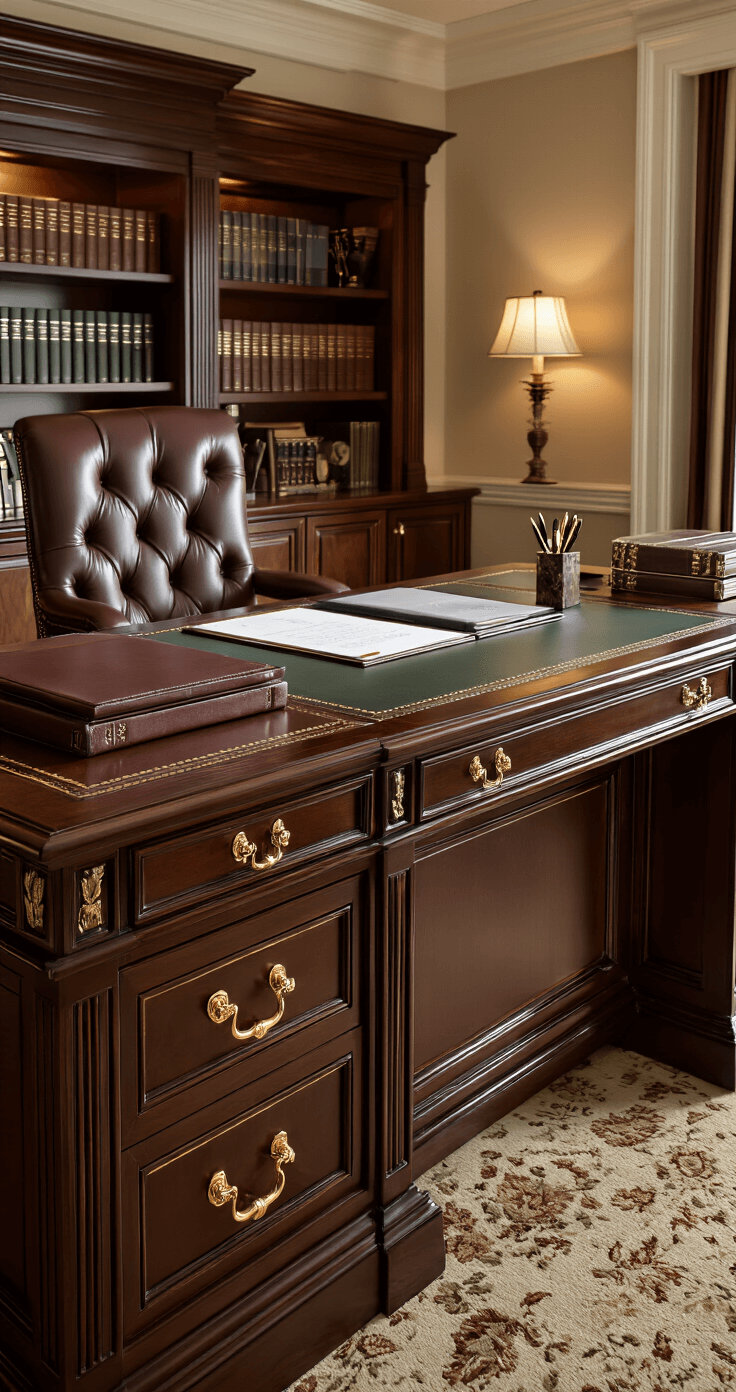
Executive Desks: When You Need to Mean Business
Executive desks are the heavyweight champions of the desk world.
I’m talking substantial surface area, multiple drawers, and enough presence to make your home office feel legitimate.
You need one if:
- You meet with clients from your office
- You manage physical files and documents regularly
- You spread out papers for review and signing
- You want people to take you seriously when they walk into your space
These are the largest desks you’ll find, and an executive desk commands attention.
Fair warning: measure your space twice before ordering.
I once helped a friend squeeze one through a doorway at a 47-degree angle while sweating profusely.
L-Shaped and Corner Desks: The Multitasker’s Dream
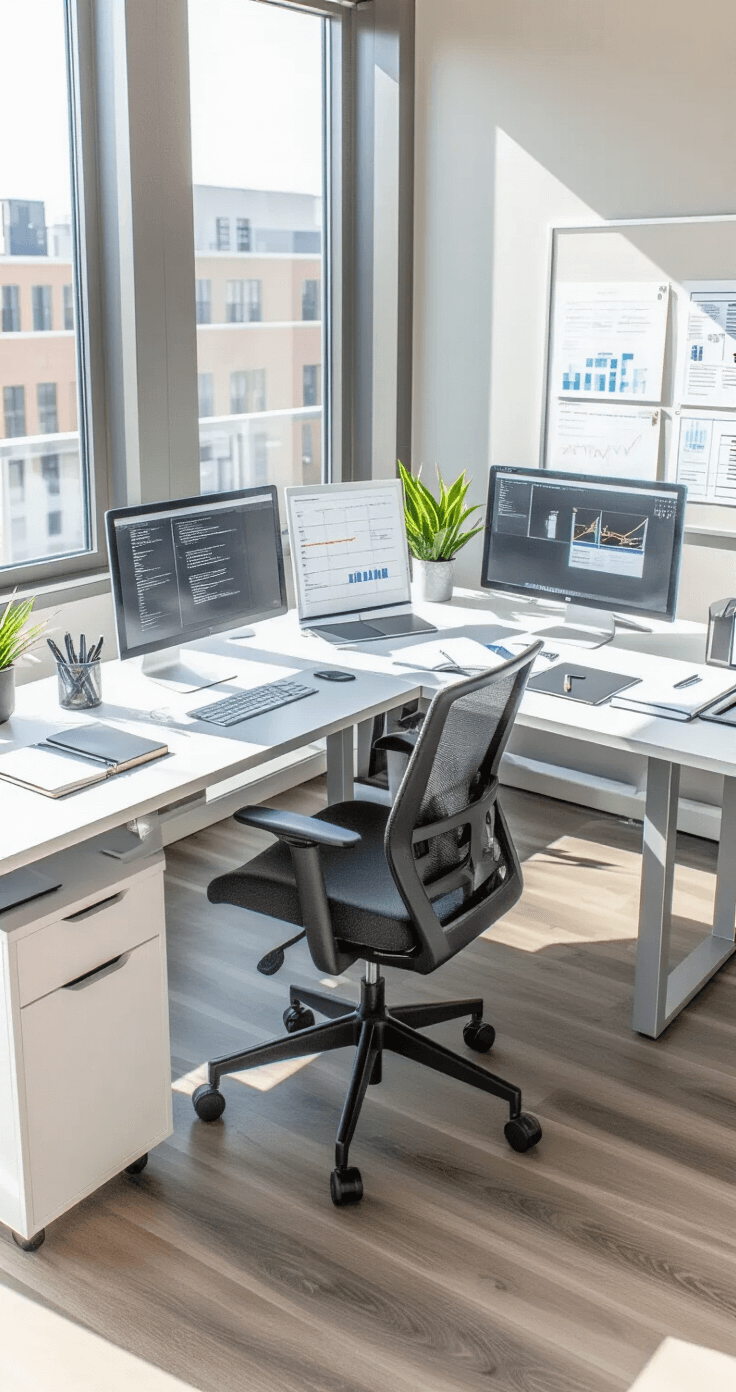
L-shaped desks changed my entire workflow.
Seriously.
One side holds my monitor and keyboard.
The other side? Reference books, my notebook, a place to spread out project materials.
They fit snugly into corners, which means you’re using space that usually just collects dust and forgotten charging cables.
Benefits I’ve experienced personally:
- Separate zones for different tasks without leaving your chair
- More surface area without dominating the room
- Better organization because everything has its designated side
An L-shaped corner desk works especially well if you toggle between computer work and paperwork throughout the day.
You just swivel your chair instead of constantly rearranging your workspace.
Standing Desks: Because Sitting Is Slowly Killing Us
Standing desks sounded gimmicky to me until my doctor mentioned my posture during a routine checkup.
Not fun.
Now I alternate between sitting and standing throughout the day, and my lower back thanks me.
The adjustable models let you switch positions, which is key because standing all day isn’t the solution either.
What to look for:
- Smooth height adjustment (electric is easier than manual cranking)
- Stability at full height (wobbling is infuriating when you’re trying to focus)
- Memory presets so you’re not measuring every time
- Weight capacity that handles your monitor setup
I started with 30 minutes standing, then sitting for an hour, gradually building up.
A quality adjustable standing desk is an investment, but my afternoon energy slump basically disappeared.
Writing Desks: Simple, Clean, Focused
Writing desks are the minimalists of the desk family.
Smaller, cleaner lines, no built-in storage compartments or cable holes.
Perfect if you:
- Work primarily with laptops and minimal equipment
- Value aesthetics and clean spaces
- Live in a small apartment where every square foot counts
- Want a desk that doubles as a decorative piece
I keep one in my guest room that functions as both a workspace and accent furniture.
It doesn’t scream “office” the way a massive computer desk does.
Less bulky means easier to move around too—I’ve rearranged mine at least six times without throwing out my back.
Workstation desks are designed for open-plan offices or shared home spaces where multiple people need to work.
They typically include dividers or panels that create semi-private zones.
I’ve seen these work brilliantly in family homes where two people both work remotely.
Each person gets their defined space without needing separate rooms.
The dividers also reduce visual distractions when your partner is on a video call while you’re trying to concentrate.
Small Space Solutions That Actually Work
Not everyone has a sprawling home office.
I certainly didn’t when I started freelancing from a studio apartment.
For truly cramped spaces, consider:
- Floating desks mount directly to your wall with no legs underneath.
- Murphy desks fold up against the wall completely when you’re done working.
- Lap desks are portable surfaces you can use anywhere.
- Lectern desks are tall, narrow, and take up minimal floor space while providing a standing work surface.
A wall-mounted floating desk saved me when I lived in 400 square feet and still needed to work from home.
Large Space Options: Go Big When You Can
Got the room? Use it.
U-shaped desks surround you with workspace on three sides.
Maximum surface area, maximum organization possibilities.
I’ve worked at one in a corporate office, and everything I needed was within arm’s reach.
Bench system desks are long, continuous surfaces that can accommodate multiple people or create distinct work zones for one person.
Dual-sided desks let two people face each other while working.
These work well for collaborative teams or partners who want to share space but maintain individual work areas.
Materials Matter More Than You’d Think
Desks come in every material imaginable, and each has tradeoffs.