
This post may contain affiliate links. Please see my disclosure policy for details.
How to Add a Desk to Your Living Room Without Making It Look Like an Office Exploded
Adding a desk to your living room feels like inviting a work colleague to crash on your couch permanently.
I get it.
You’re staring at your beautifully curated living space, wondering how on earth you’ll squeeze in a workspace without turning your sanctuary into a sad cubicle.
Maybe you’re working from home now and your kitchen table has become a war zone of coffee rings and scattered papers.
Or perhaps you need a spot for paying bills without commandeering the dining room every month.
Whatever brought you here, adding a desk to your living room is entirely possible without sacrificing style or sanity.
I’ve done this myself three times across different apartments and one house, learning painful lessons about what works and what turns your living room into an awkward hybrid space that satisfies nobody.
Let me walk you through this.
Why Your Living Room Might Actually Be Perfect for a Desk
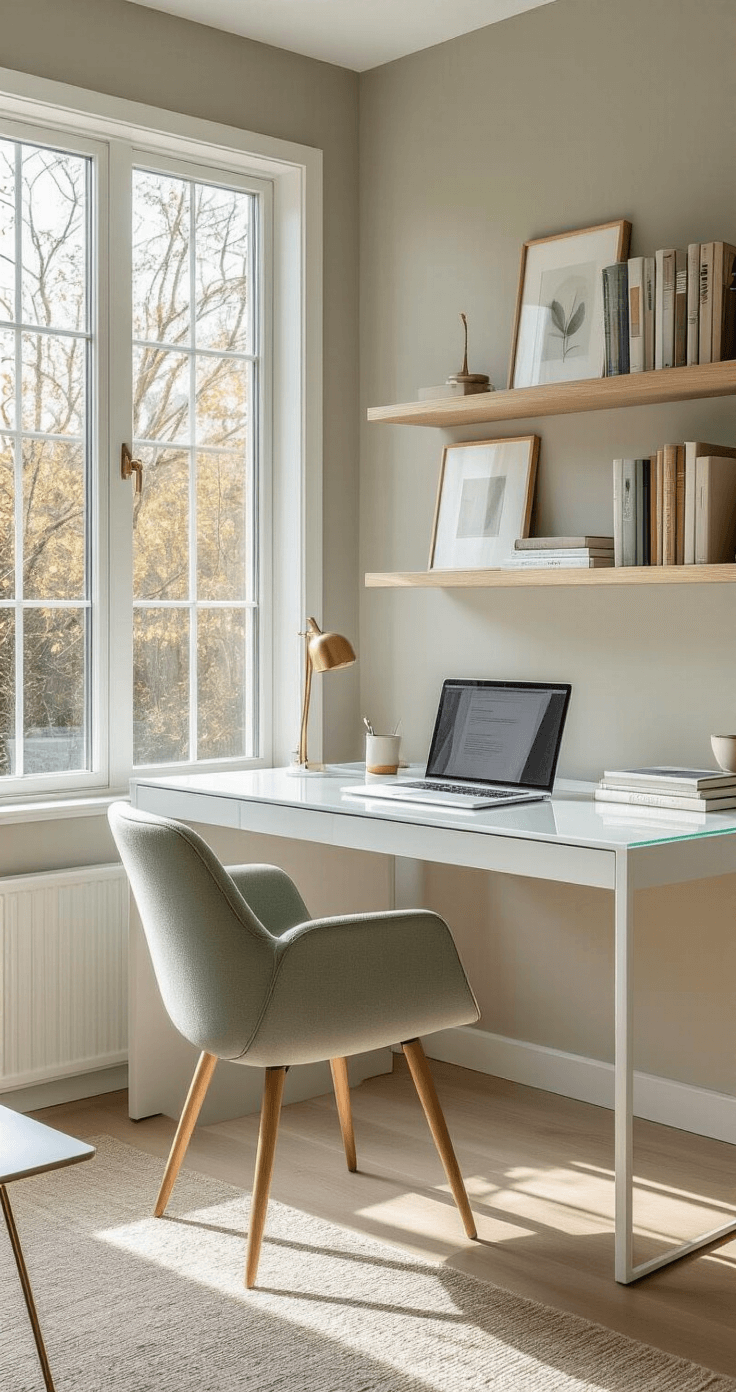
Living rooms get natural light.
They’re usually near the front of your home, away from kitchen chaos and bedroom distractions.
The space already exists—you’re just repurposing it.
I converted a corner of my living room into a workspace two years ago, and honestly, it’s become my favorite spot in the entire house.
The key is making deliberate choices instead of just shoving any old desk against a wall and calling it done.
Choosing the Right Desk Style for Your Living Room
L-shaped desks give you maximum workspace while tucking neatly into corners.
I tried one of these first, thinking bigger was better.
Wrong.
It dominated my modest-sized living room like an aircraft carrier in a bathtub.
If you’ve got a genuinely spacious living area and need serious workspace, an L-shaped desk might work beautifully.
Otherwise, consider these alternatives:
Compact writing desks blend into your décor without screaming “WORK STATION HERE.”
These beauties typically measure 36-48 inches wide, giving you enough surface for a laptop, notebook, and coffee mug without eating your entire room.
I switched to a compact writing desk after my L-shaped monster experiment, and suddenly my living room felt like a living room again.
Secretary desks fold up when you’re done working.
Talk about disappearing acts.
These traditional pieces hide your work mess behind closed doors, which is brilliant for maintaining the living room vibe during non-work hours.
Console tables that double as desks are the sneakiest option.
Nobody looks at a slim console table and thinks “office furniture.”
Place one behind your sofa or against a wall, and you’ve got workspace that completely camouflages itself.
Standing desks deserve consideration if you’re spending serious hours at this station.
I added a standing desk converter to my setup last year, and my back has forgiven me for years of slouching.
These adjustable options let you alternate between sitting and standing without committing to a permanent standing-only situation.

Size Matters More Than You Think
Measure your space.
No, seriously, actually measure it.
I cannot count how many times I’ve eyeballed a space, ordered furniture, and then discovered I’d created an obstacle course through my own living room.
Consider these dimensions:
- Desk width: 36-48 inches works for most living rooms without overwhelming the space
- Desk depth: 20-24 inches provides enough workspace without jutting too far into the room
- Clearance space: Leave at least 30 inches behind your chair for comfortable movement
- Walking paths: Maintain 36 inches for main traffic areas through the room
Sketch your living room layout on graph paper if you’re visual like me.
Or use one of those free room planning apps.
Just don’t wing it and hope for the best, because that’s how you end up with a desk blocking your TV or making guests walk sideways to reach the bathroom.
Matching Your Desk to Your Living Room Aesthetic
Your desk should look like it belongs in your living room, not like it wandered in from an office liquidation sale.
For modern living rooms:
Clean lines and minimal ornamentation work best.
Think glass tops, metal frames, or sleek wood finishes in walnut or white.
A modern minimalist desk with simple geometry disappears into contemporary spaces without creating visual clutter.
For farmhouse or rustic spaces:
Reclaimed wood, distressed finishes, and chunky legs complement your existing vibe.
I’ve seen gorgeous farmhouse desks with X-frame legs that look like they belong in a country home rather than a corporate park.
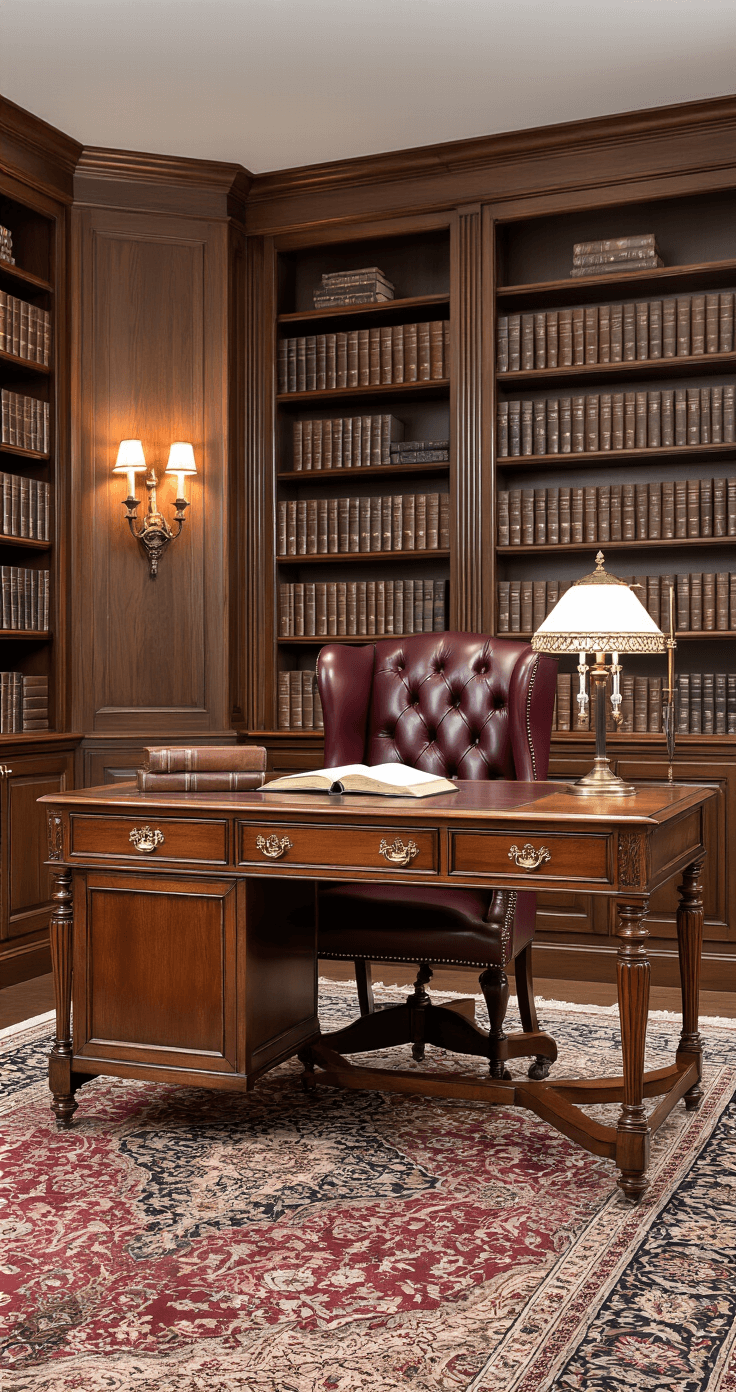
For traditional living rooms:
Rich wood tones, classic details, and substantial construction match your formal furniture.
Secretary desks or writing desks with turned legs feel at home alongside traditional sofas and armchairs.
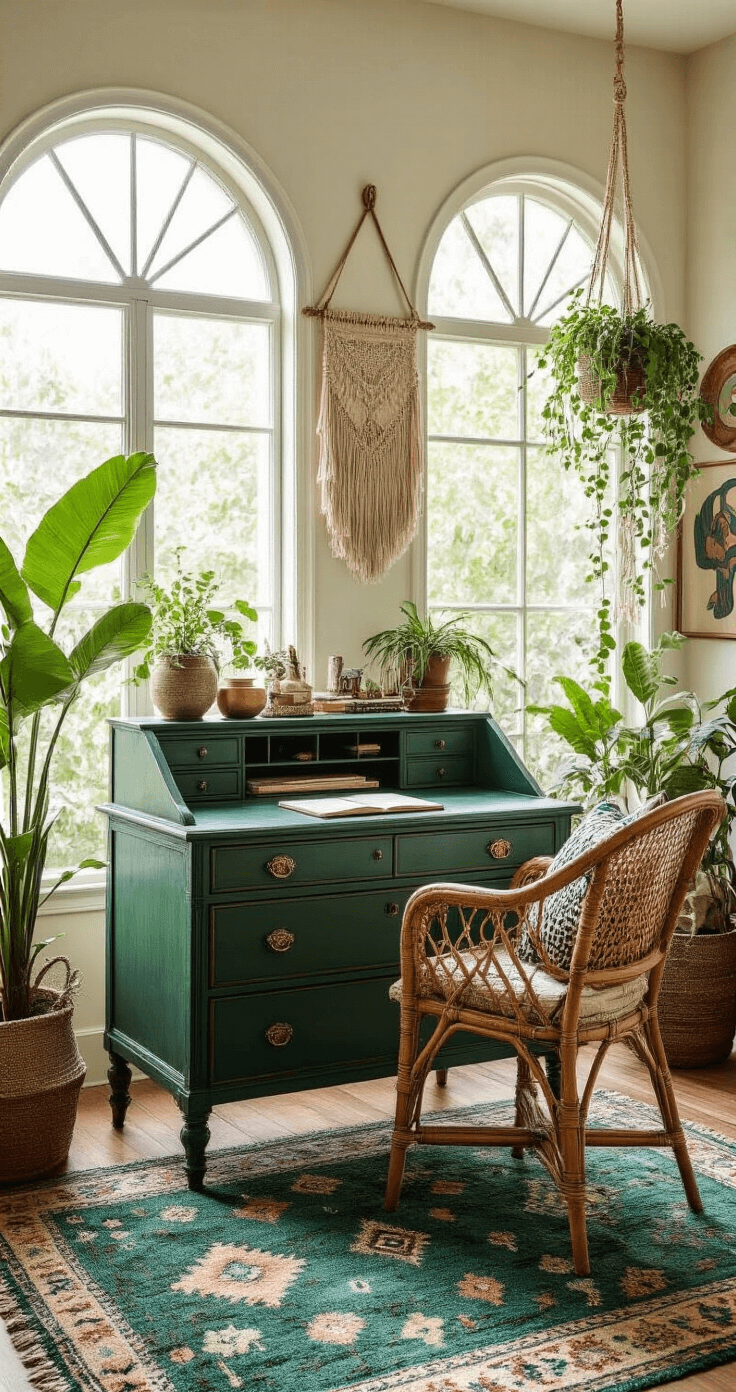
For eclectic or bohemian spaces:
You’ve got the most freedom here.
Mix vintage pieces with modern elements, or choose desks with unique character like carved details or unexpected colors.
The finish and material matter enormously.
A cheap particleboard desk with a plastic wood-grain finish will cheapen your entire room, no matter how well it fits size-wise.
Invest in real wood, quality veneers, or honest materials like metal and glass that don’t pretend to be something they’re not.
Storage Solutions That Don’t Create Clutter
Desks in living rooms face a unique challenge: your work stuff is on display to everyone who enters your home.
Nobody wants to see your bill pile, random cables, or that embarrassing stack of unread professional development books.
Look for these storage features:
- Drawers with actual dividers keep small items from becoming a jumbled mess
- Built-in shelving displays attractive books and supplies while hiding ugly necessities in baskets
- Hutches or upper storage maximize vertical space without expanding the desk footprint
- C