
This post may contain affiliate links. Please see my disclosure policy for details.
How IKEA Desk Hacks Transformed My Chaotic Home Office (And They’ll Save Yours Too)
IKEA desk hacks gave me the custom workspace I needed without the custom price tag that would’ve made my wallet weep.
Look, I get it.
You’re staring at your “home office” right now—that corner where your laptop balances precariously on a TV tray, your back screams in protest, and you’re pretty sure there’s a coffee stain from 2019 somewhere on that surface.
You need a proper desk, but here’s the problem: pre-made desks are either ridiculously expensive or they don’t fit your weird corner space or they have exactly zero storage and honestly, where are you supposed to put all those chargers?
I’ve been there, friend.
Three years ago, my “office” was a disaster zone of tangled cables and piles of paper that I swore I’d organize “next week.”
Then I discovered IKEA desk hacks, and everything changed.
Not because IKEA is magical (though those meatballs are pretty close), but because their modular system lets you build exactly what you need instead of settling for what’s available.
Why Pre-Made Desks Usually Disappoint
Let me be brutally honest about traditional desks.
Most of them fall into two categories: cheap and flimsy, or solid and stupidly expensive.
- The cheap ones wobble when you type with any enthusiasm.
- The expensive ones cost more than your first car.
- Neither fits your actual space.
- Storage is always an afterthought.
- Cable management? What cable management?
IKEA figured out something brilliant: instead of trying to design THE PERFECT DESK for everyone, they gave us the pieces to build our own perfect desk.
It’s like LEGO for adults who need to answer emails.
The IKEA Advantage: Mix, Match, and Make It Yours
IKEA offers both pre-designed desk combinations and customizable components that allow you to build a workspace tailored to your needs and space.
Translation: you can grab something off the shelf, or you can turn into a desk-building mad scientist.
I went the mad scientist route, obviously.
Here’s what you’re working with:
- Desk tops in various sizes and materials
- Solid wood options like KARLBY
- Budget-friendly particleboard versions
- Countertop pieces that weren’t even meant for desks (but work brilliantly)
- Legs and support systems
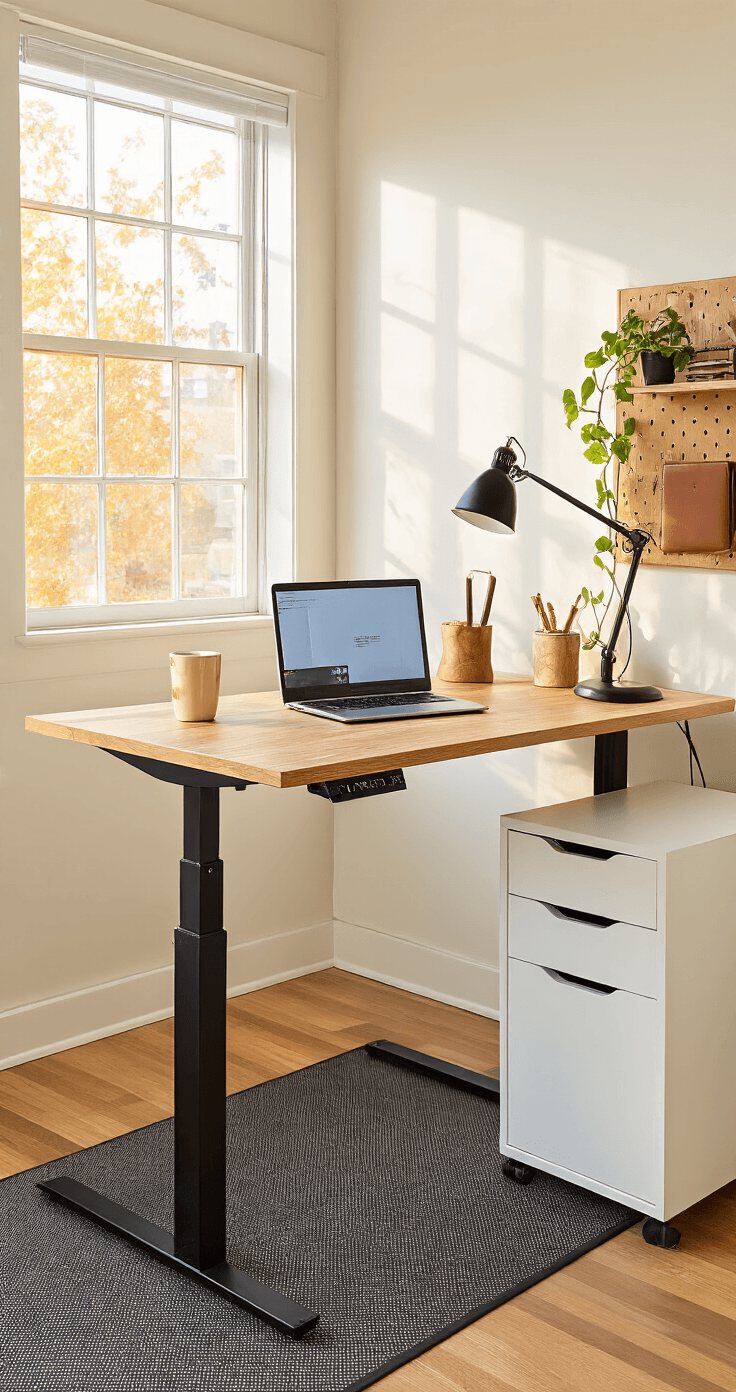
- Adjustable legs for standing desk setups
- Trestles for that industrial vibe
- Simple metal legs that disappear visually
- Storage units that double as desk supports
- Drawer units
- Cabinets
- Shelving systems
The genius is combining these pieces in ways IKEA never officially planned.
It’s not breaking the rules—it’s creative interpretation.
Storage-Based Desks: The Foundation of My Setup
Storage-based desks are among the most versatile options, and they’re what saved my sanity.
The concept is dead simple: use storage units as your desk legs.
You get a work surface AND places to shove all your stuff.
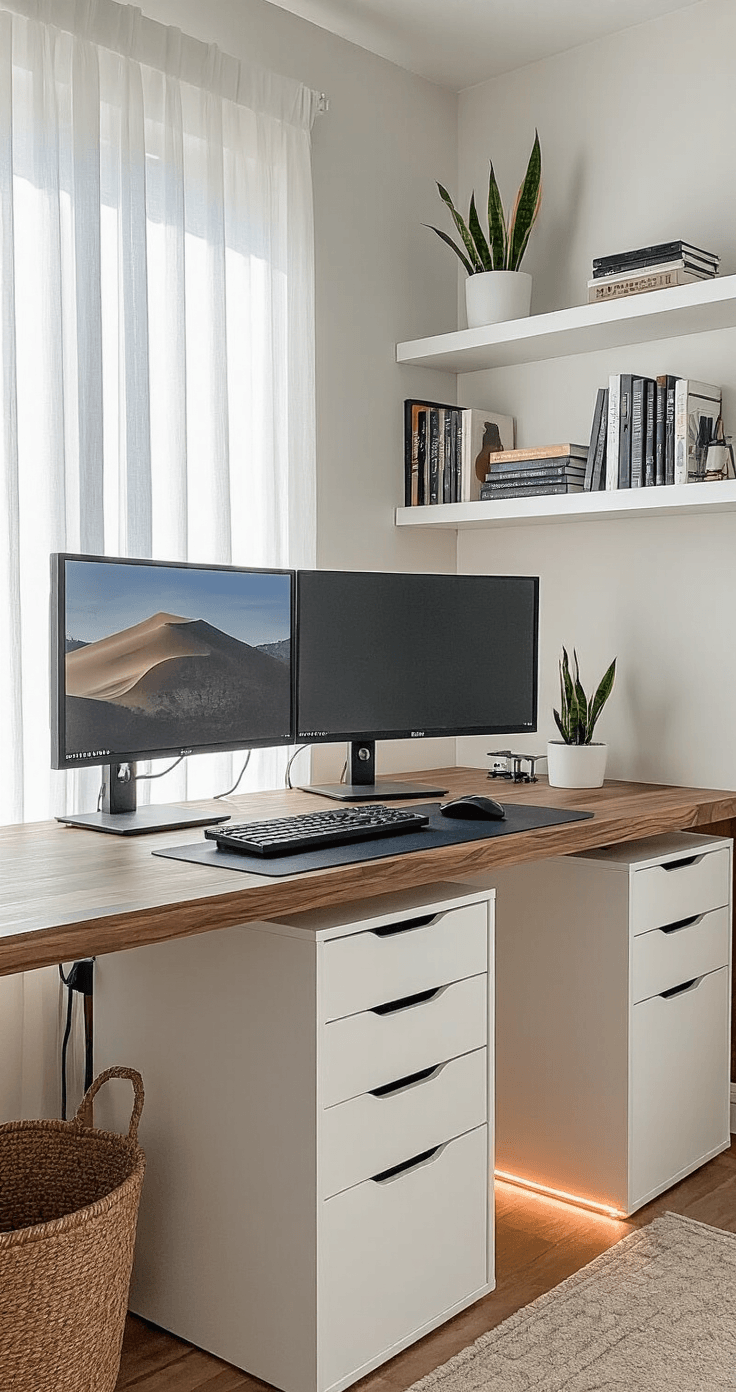
I built mine using two ALEX drawer units with a KARLBY countertop stretched across them.
Boom—instant desk with six drawers.
Here’s why this configuration is brilliant:
- Storage is literally built into your desk foundation
No more stuffing things under your desk like a squirrel hoarding nuts.
- It’s rock-solid stable
Those drawer units aren’t going anywhere, which means your desk doesn’t wobble when you’re frantically typing to meet a deadline.
- You can customize the width
Push the drawer units closer together for a compact desk, or spread them apart for a massive work surface.
- It works for multiple people
My partner and I built a double-desk setup using four ALEX units and one long countertop—we each get our own section with our own storage.
Popular Storage Unit Options
- ALEX drawers are the rockstar of desk hacks.
Everyone uses them because they work.
They come in white, gray-turquoise, and black-brown.
Five drawers give you serious storage capacity.
- HEMNES dressers if you want that traditional wooden furniture vibe.
They’re bulkier but gorgeous.
Perfect for a home office that needs to look sophisticated for video calls.
- RAST chests for the budget-conscious.
They’re unfinished pine, which means you can stain or paint them however you want.
I’ve seen people transform these into showpieces with just some paint and new drawer pulls.
- MICKE drawers are the compact option.
Smaller footprint, still functional.
Great for tight spaces or secondary workstations.
When I built my first IKEA desk hack, I paired ALEX drawers with a KARLBY countertop in walnut.
The countertop wasn’t even from the desk section—it’s literally meant for kitchens.
But guess what?
It’s solid wood, it’s gorgeous, and it gave me a 74-inch work surface that feels premium without the premium price tag.
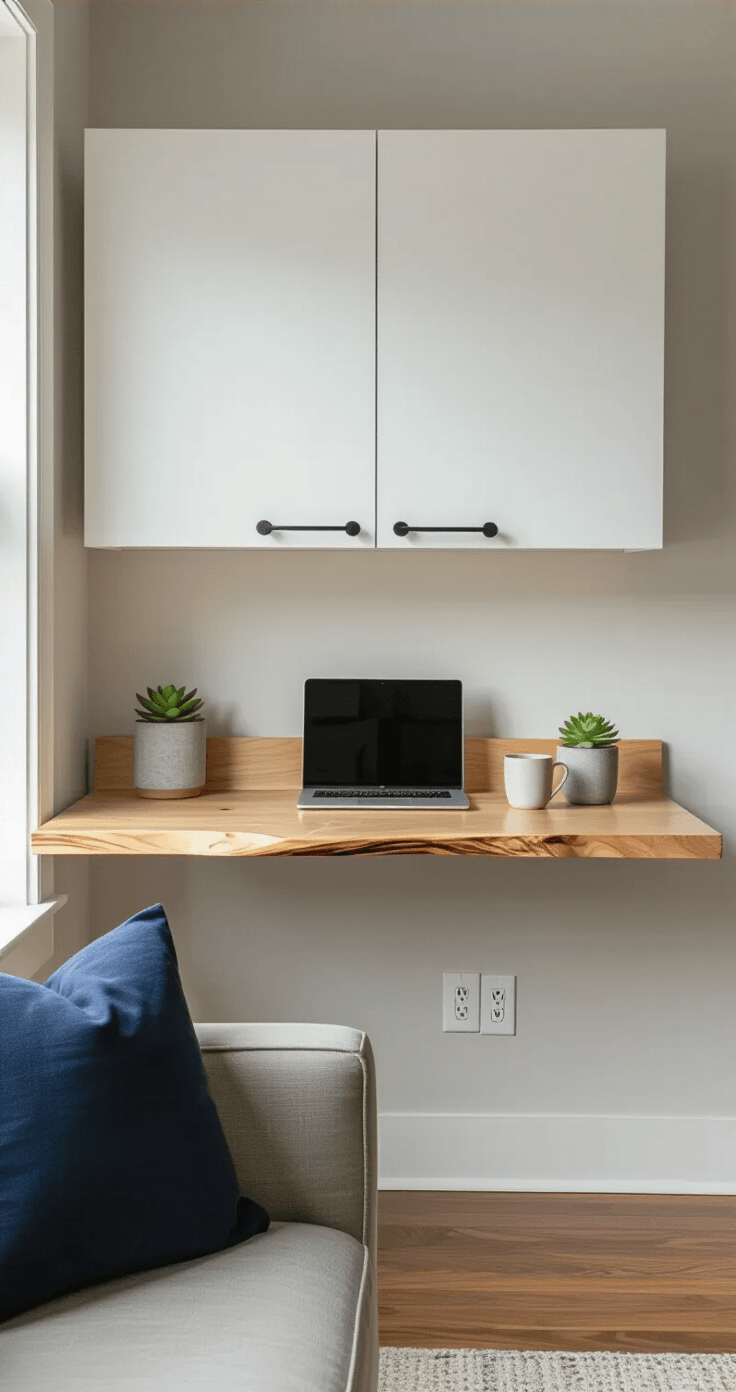
Modular Cabinet Systems: When You Need Maximum Flexibility
If drawer units feel too basic for your vision, modular cabinet systems open up a whole new world.
These systems let you build L-shaped desks, floating desks, or even wall-to-wall workstations that make you feel like you’re running a command center.
BESTA cabinets are my go-to for this approach.
- They’re designed for living room storage, but they’re perfect desk foundations.
- You can mount them on the wall for a floating desk.
- You can line them up to create an entire wall of workspace and storage.
- They come with doors, drawers, or open shelving.
I helped my sister build an L-shaped desk using BESTA units in the corner of her spare bedroom.
She mounted two sets of cabinets on the wall, then added a custom-cut piece of plywood painted to match.
Total cost: about $400.
Equivalent custom desk from a furniture store: over $1,200.
She literally saved $800 and got exactly the configuration she wanted.
IVAR shelving is the chameleon of IKEA storage.
- It’s unfinished pine that begs to be customized.
- You can stain it dark for a rustic vibe.
- You can paint it white for a Scandinavian minimal look.