
This post may contain affiliate links. Please see my disclosure policy for details.
Modern Reception Desks: Everything You Need to Know Before Buying One
Modern reception desks are the unsung heroes of your office entrance, and I learned this the hard way when clients kept walking past our old clunky desk thinking we were a storage facility.
Your reception area gets about three seconds to make an impression. That’s it. Three measly seconds before someone decides if you’re professional, approachable, or stuck in 1987.
I’ve helped dozens of businesses upgrade their reception areas, and the transformation is always dramatic. The right desk doesn’t just hold a computer—it tells your story before anyone says a word.

What Makes a Reception Desk Actually “Modern”?
Let me be brutally honest here. Slapping the word “modern” on a desk doesn’t make it modern.
Real modern reception desks share specific DNA:
Materials that mean business:
- High-gloss laminates that reflect light and make spaces feel bigger
- Tempered glass panels that scream sophistication
- Brushed metal accents that add that “we’ve got our act together” vibe
Smart design features:
- LED lighting elements built right into the structure (game-changer for dimly lit lobbies)
- Minimalist hardware that doesn’t scream for attention
- Clean lines that would make a Scandinavian designer weep with joy
Shapes that work:
- Curved profiles that soften the space
- Straight configurations that maximize every inch
- Designs that actually consider how humans move through space
I replaced our reception desk two years ago with a modern L-shaped reception desk, and the difference was instant. Clients stopped looking confused about where to check in.
The ADA Compliance Thing Nobody Talks About (But Should)
Here’s something that surprised me when I started researching: not all reception desks accommodate everyone.
ADA-compliant reception desks aren’t just legally smart—they’re human-decency smart.
These desks include:
- Lower counter sections (typically 28-34 inches high)
- Knee clearance underneath so wheelchair users can actually approach
- Clear floor space for maneuvering
I watched a potential client in a wheelchair struggle with our old desk setup, and I felt terrible. Never again. If you’re shopping for a desk, make ADA compliance non-negotiable.
Picking Your Configuration: The Real Talk
Walk into any office furniture store and you’ll face the configuration question. Let me break down what actually works versus what looks good in catalogs.
L-Shaped: The People Pleaser
Why I recommend it for most businesses:
- Fits small to medium spaces without feeling cramped
- Gives your receptionist actual working room (they’re doing more than smiling, folks)
- Creates natural division between public and private workspace
- Usually the sweet spot between price and functionality
I’ve installed more L-shaped desks than any other type, and there’s a reason. They just work.
U-Shaped: The Multitasker’s Dream
When it makes sense:
- Multiple people staff the desk simultaneously
- Your receptionist juggles seventeen tasks before lunch
- You have the square footage to spare (and I mean really spare)
When it doesn’t:
- Your lobby is smaller than a studio apartment
- Only one person ever works the desk
- You’re trying to create an open, approachable feel
A client once insisted on a U-shaped reception desk for their tiny space. It looked like they’d parked a boat in their lobby. We downsized within six months.
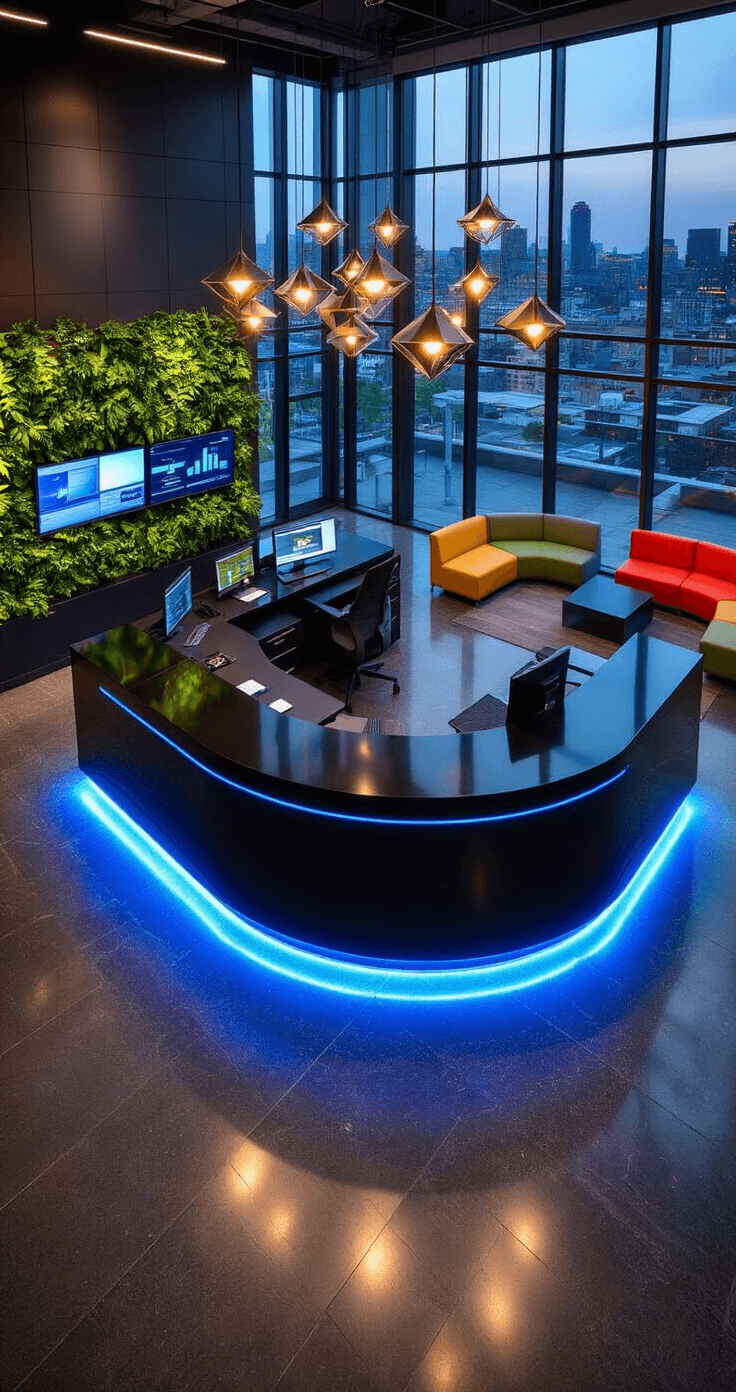
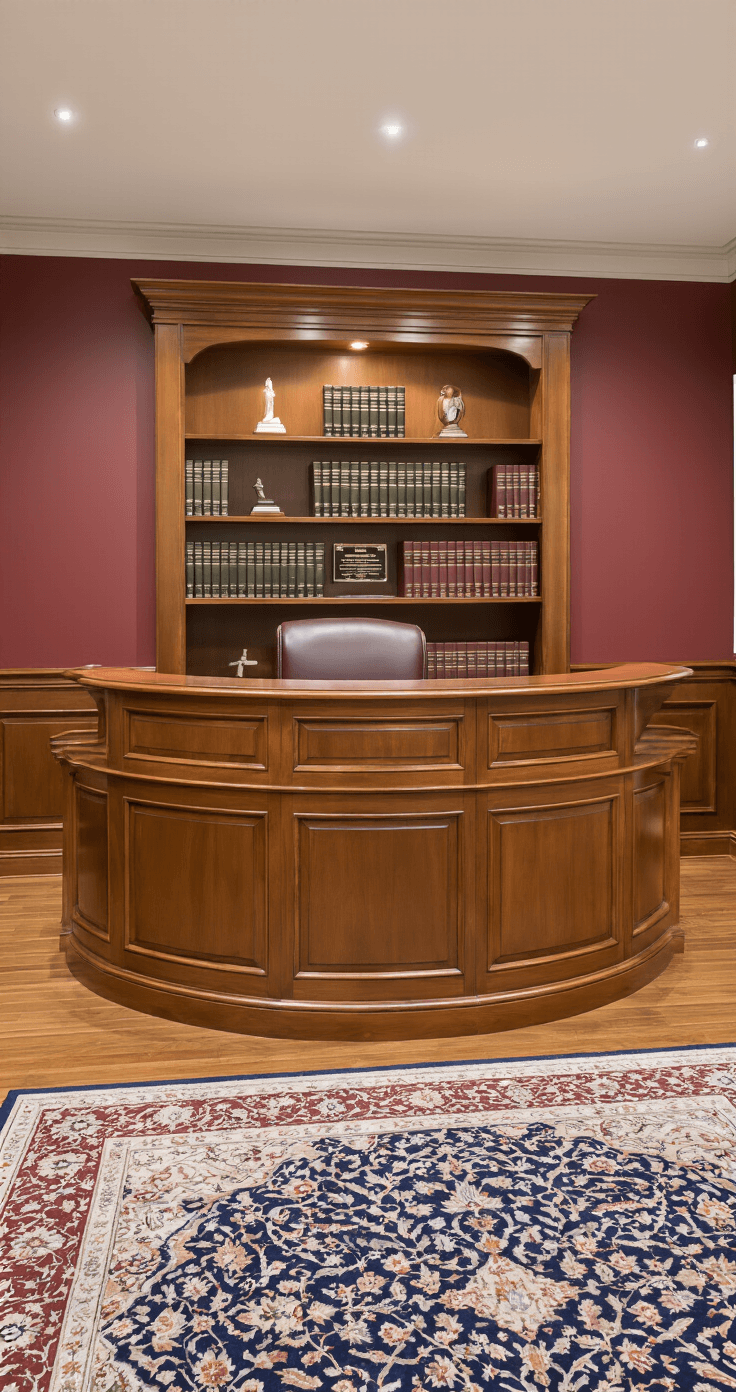
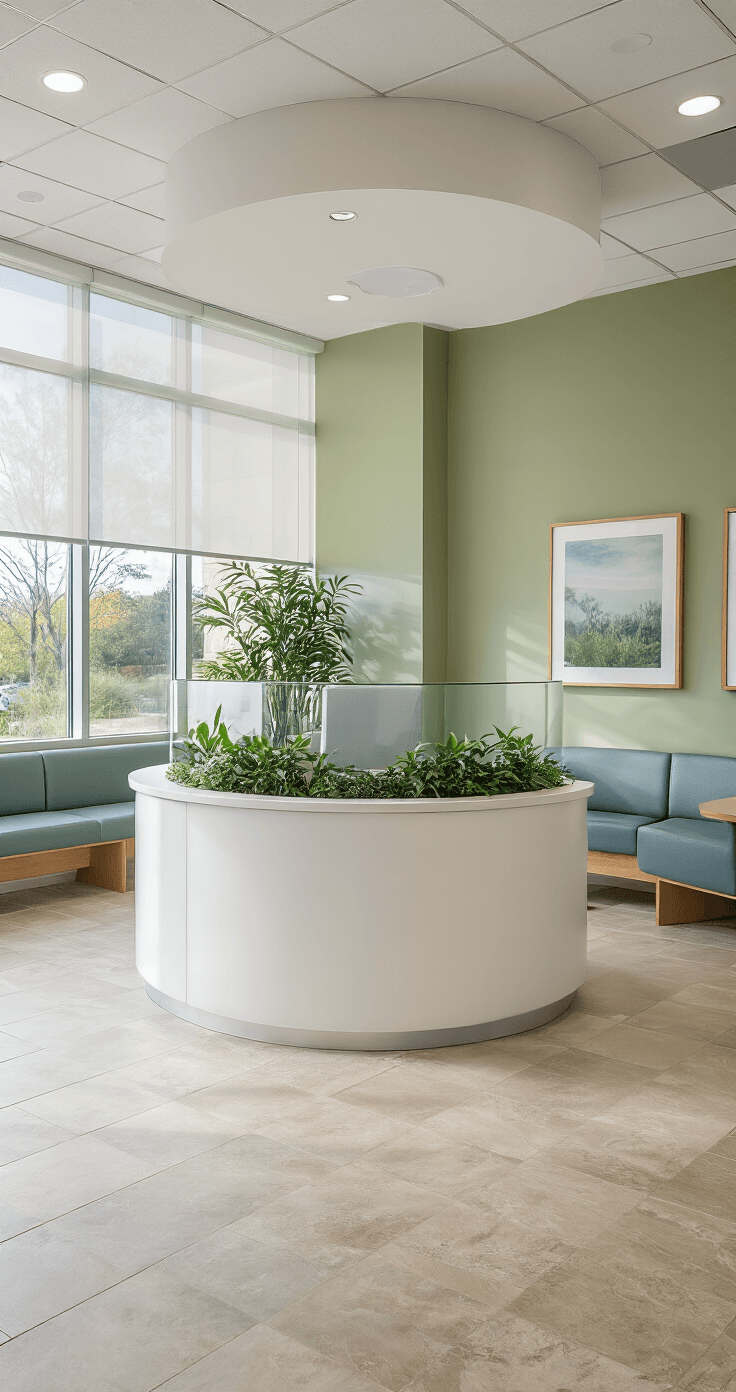
Curved or Circular: The Statement Maker
These are gorgeous. Absolutely stunning. And completely wrong for some spaces.
Perfect for:
- Open-concept offices where the desk is a focal point
- Situations where receptionists need 360-degree visibility
- Brands wanting that “we’re innovative” message
Skip them if:
- Your space is narrow or rectangular
- You need serious storage
- Your budget is tight (curves cost more)
Compact Models: Small Space Champions
Starting at 48 inches wide, these prove you don’t need a landing strip to make an impact.
I’ve seen 4-foot desks in boutique offices that looked more impressive than 10-foot monsters in corporate lobbies. Size isn’t everything.
What matters with compact desks:
- Strategic storage solutions (think vertical, not horizontal)
- Multi-functional design elements
- Quality over quantity
Materials That Actually Hold Up
Let me save you some money and headaches.
Laminate finishes:
- Affordable and durable
- Easy to clean (coffee spills happen daily)
- Available in endless colors
- Can look cheap if you go bargain-basement
I recommend mid-to-high-grade laminates. The cheap stuff chips and peels faster than you’d believe.
Wood finishes:
- Timeless and warm
- Show quality instantly
- Require more maintenance
- Cost significantly more
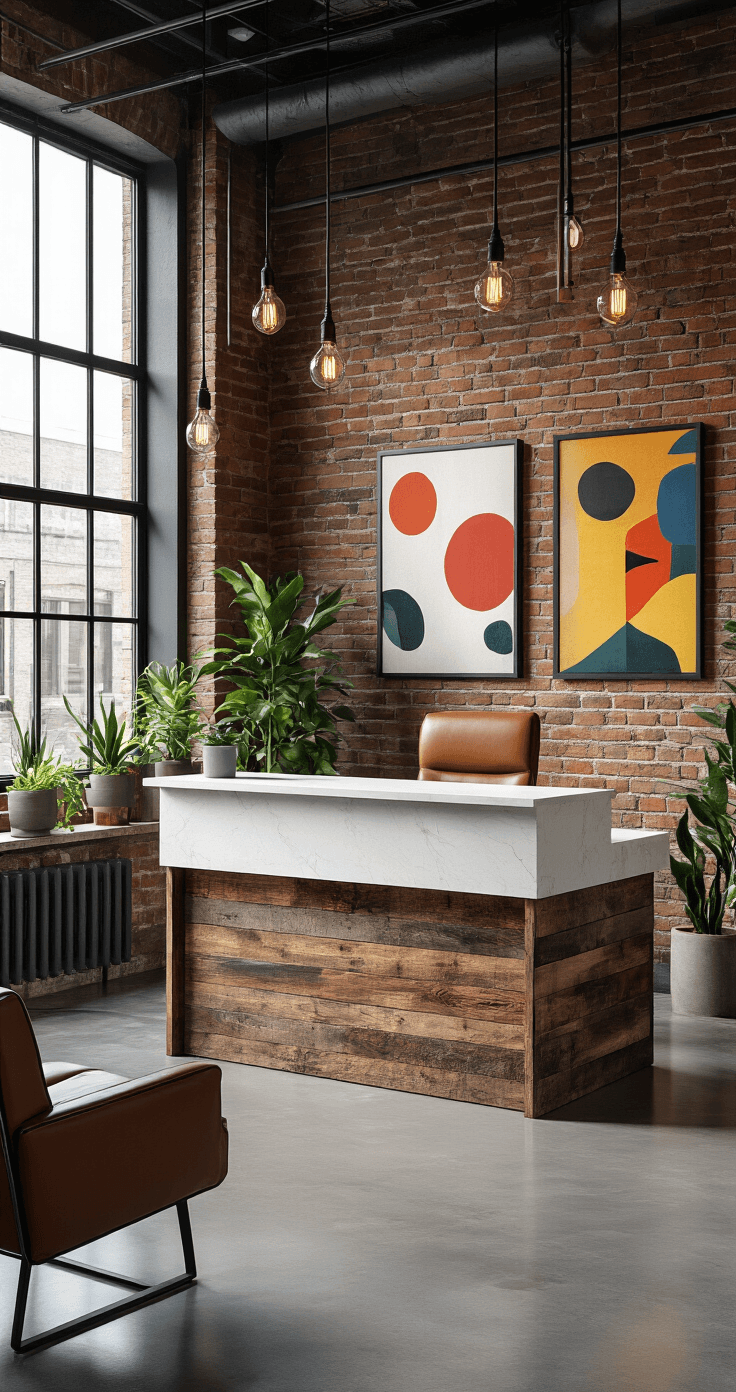
Mixed materials (urban wood, hot rolled steel, stone):
- Absolute showstoppers
- Require custom fabrication usually
- Tell clients you don’t mess around
- Come with custom-level price tags
For my own office, I went with