
This post may contain affiliate links. Please see my disclosure policy for details.
The Minimalist Desk: How I Transformed My Chaotic Workspace Into a Productivity Paradise
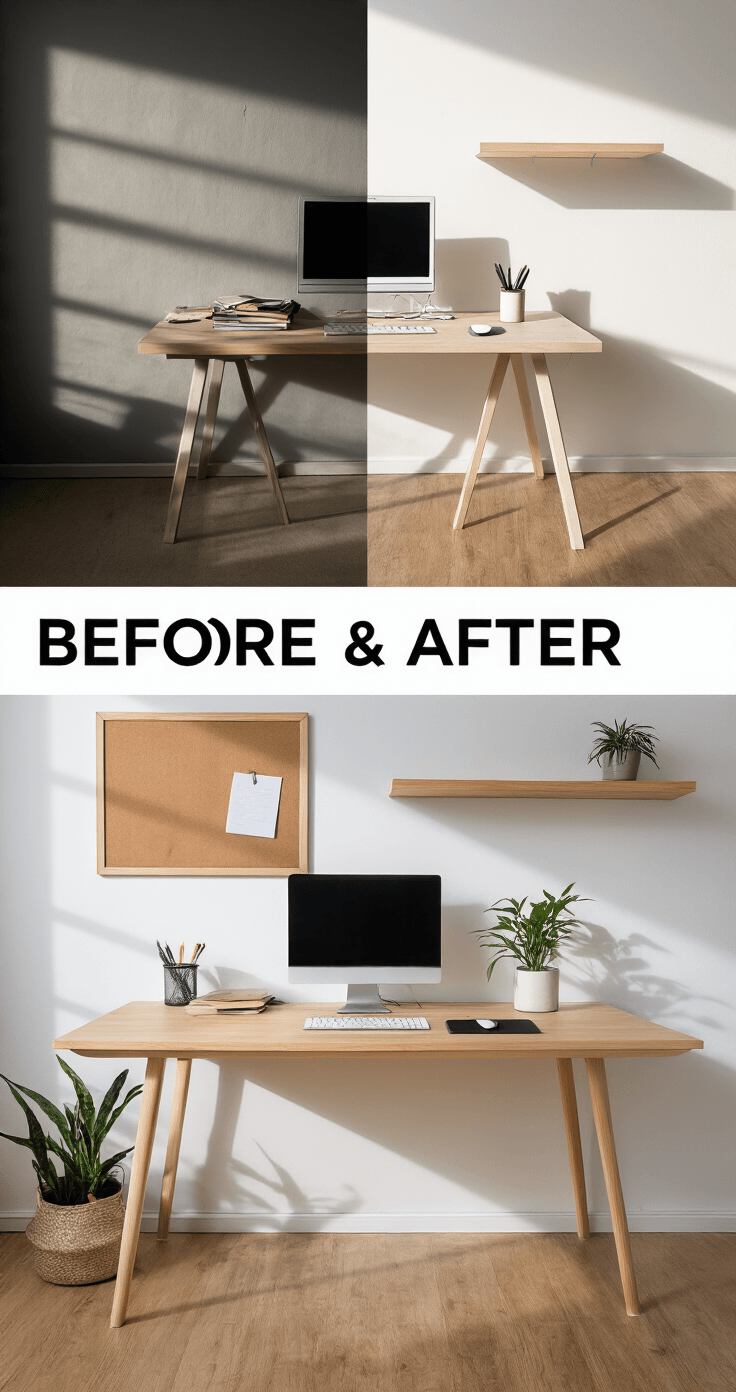
A minimalist desk cleared my mind before I even started working.
I used to think my cluttered workspace was “creative chaos.” Spoiler alert: it wasn’t creative, just chaos.
Papers everywhere, half-empty coffee mugs forming a sad collection, cables that looked like they were plotting world domination, and enough random office supplies to stock a small store.
My desk looked like a tornado had a baby with a stationary shop.
Then I discovered the minimalist desk approach, and honestly, it changed everything about how I work.
What Exactly Is a Minimalist Desk?
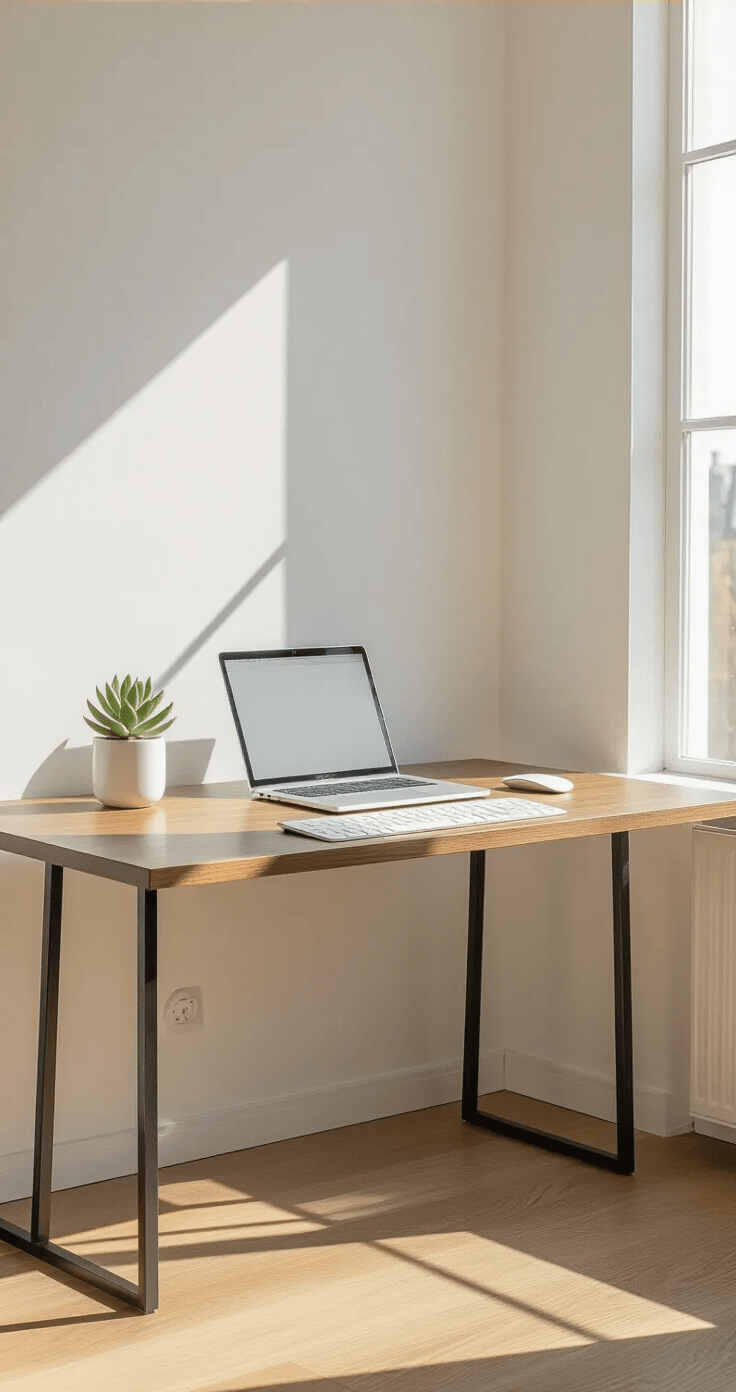
A minimalist desk is a workspace designed with clean lines, neutral colors, and uncluttered surfaces that prioritizes functionality while eliminating unnecessary items.
Think of it as Marie Kondo meeting your office setup.
You keep what sparks productivity, ditch what doesn’t.
The whole point is combining form and function to create an environment that actually helps you focus instead of sending your brain into a visual overload spiral.
No judgment here—I’ve been there.
The Stuff You Actually Need (And Nothing More)
Here’s where people get nervous.
“But what if I need that stapler from 2007?”
You don’t. Trust me.
The core items for a minimalist desk include:
- Monitor or laptop at eye level (your neck will thank you later)
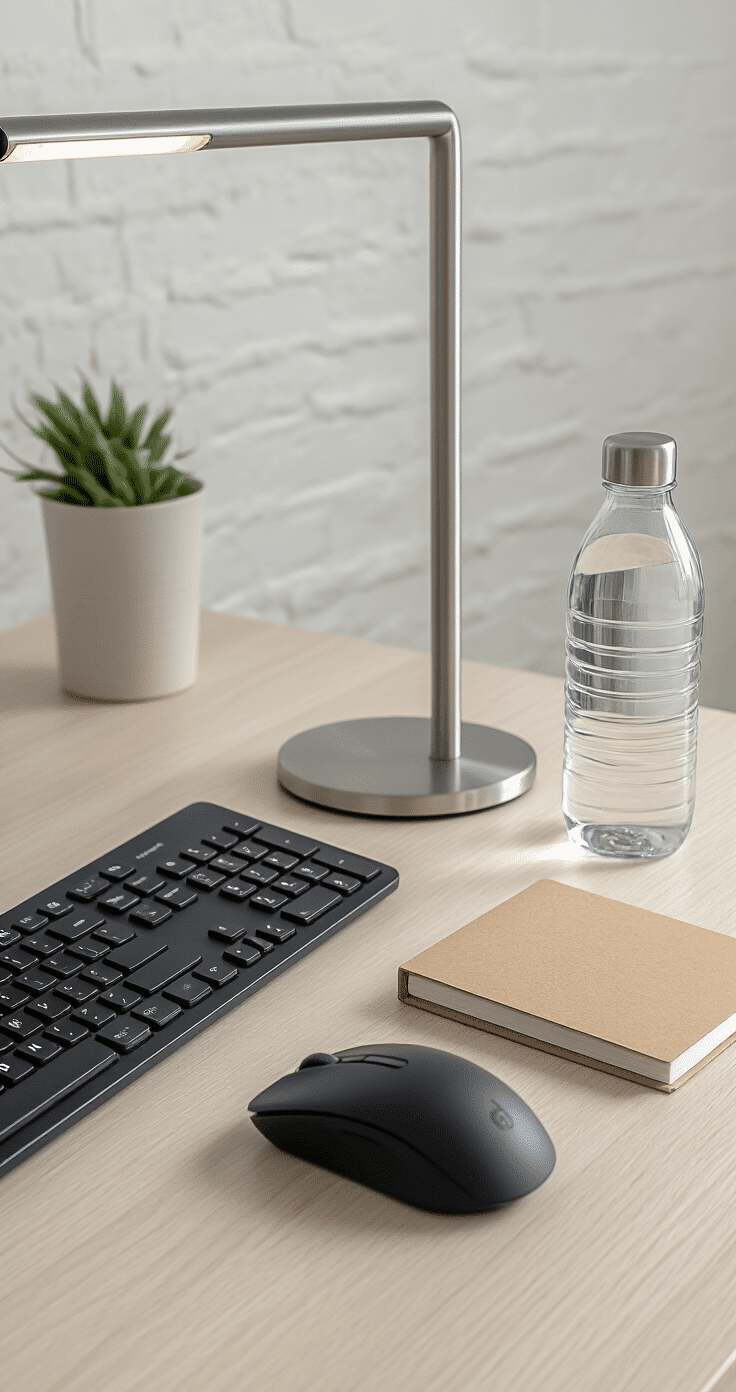
- Keyboard and mouse that actually work
- Notepad or whiteboard for brain dumps
- Personal items limited to maybe a water bottle or small plant (not seventeen framed photos and a lava lamp)
I elevated my laptop using a laptop stand and immediately felt the difference in my neck tension. Game changer.
Beyond these basics, you might want:
- A desk mat for that polished look while protecting your surface
- Cable management tools because visible cables are the enemy of calm
- A wireless keyboard and mouse to eliminate cord clutter
- A multifunctional desk lamp with adjustable brightness for different tasks
Design Principles That Actually Make Sense
Minimalist desks aren’t just about throwing everything in the trash and sitting at an empty table like some sort of monk.
There’s actual thought behind it.
Natural textures and neutral tones are your friends here.
Think wood or metal, not neon plastic screaming for attention.
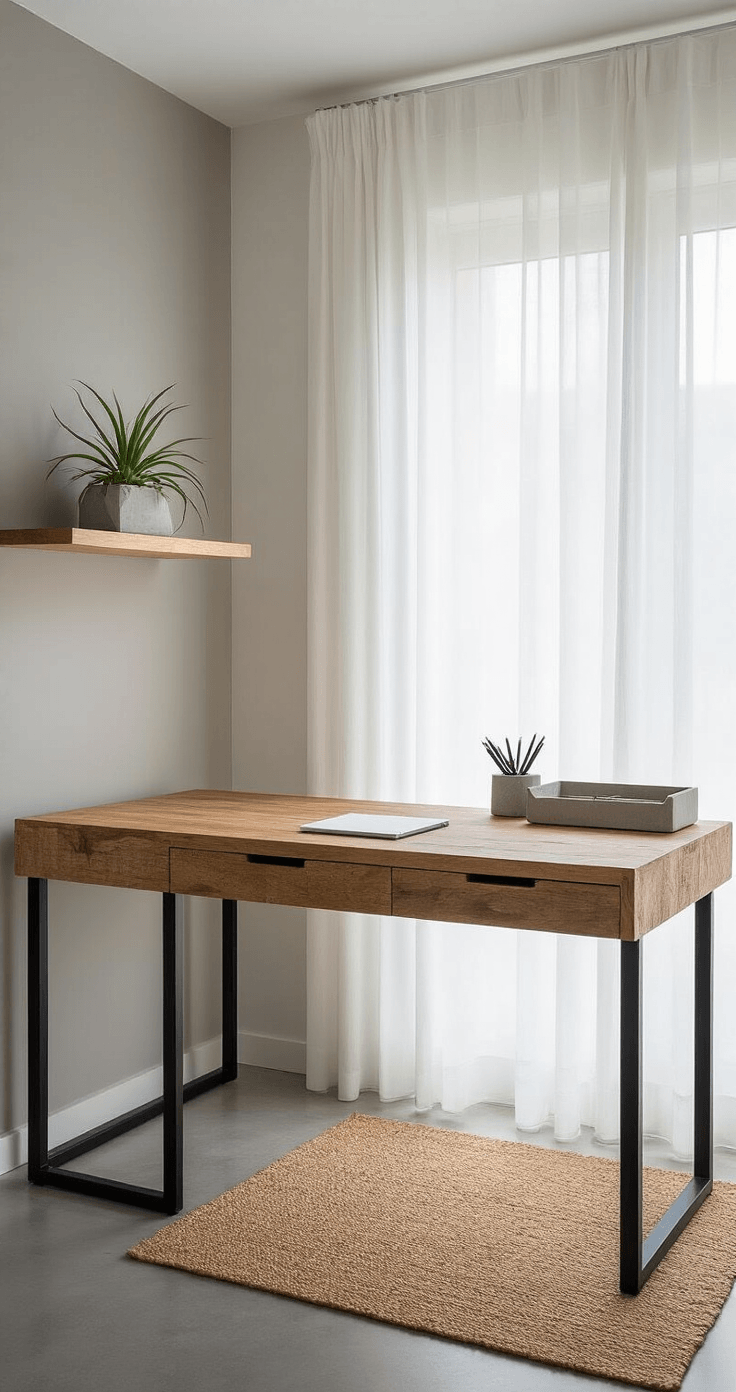
I went with a simple wooden desk that makes me feel like I have my life together even when I absolutely don’t.
The aesthetic focuses on clean lines and simple designs that create visual harmony instead of making your eyes bounce around like a pinball machine.
When I do add accessories, I choose wisely.
Eco-friendly desk organizers made from cork or bamboo fit perfectly with this approach.
They’re functional, they look good, and they don’t make your desk look like an office supply explosion.
Why This Actually Works (The Benefits Nobody Tells You)
Everyone talks about “productivity” like it’s some magical unicorn.
But here’s what really happened when I switched to a minimalist desk setup:
My brain stopped screaming at me.
Seriously.
The constant visual noise was creating this low-level anxiety I didn’t even recognize until it disappeared.
Key benefits include:
- Enhanced productivity because you’re not wasting mental energy on clutter
- Improved mental clarity since your environment isn’t constantly demanding attention
- Better ergonomic health when you set things up properly from the start
I spend zero time searching for things now.
My stapler has a home. My pens have a home. Everything has a designated spot, which sounds boring but is actually liberating.
More energy goes to actual work instead of the “where did I put that thing” dance I used to do forty times a day.
The clean environment helps me focus without feeling like I’m working in a sterile hospital room.

Storage Solutions That Don’t Ruin Everything
This is where people usually mess up.
They go minimalist on top of the desk, then shove everything into drawers that look like they’re about to burst.
That’s not minimalism—that’s just hiding the problem.
Effective minimalist storage uses compact, multi-purpose solutions that actually earn their place on your desk.
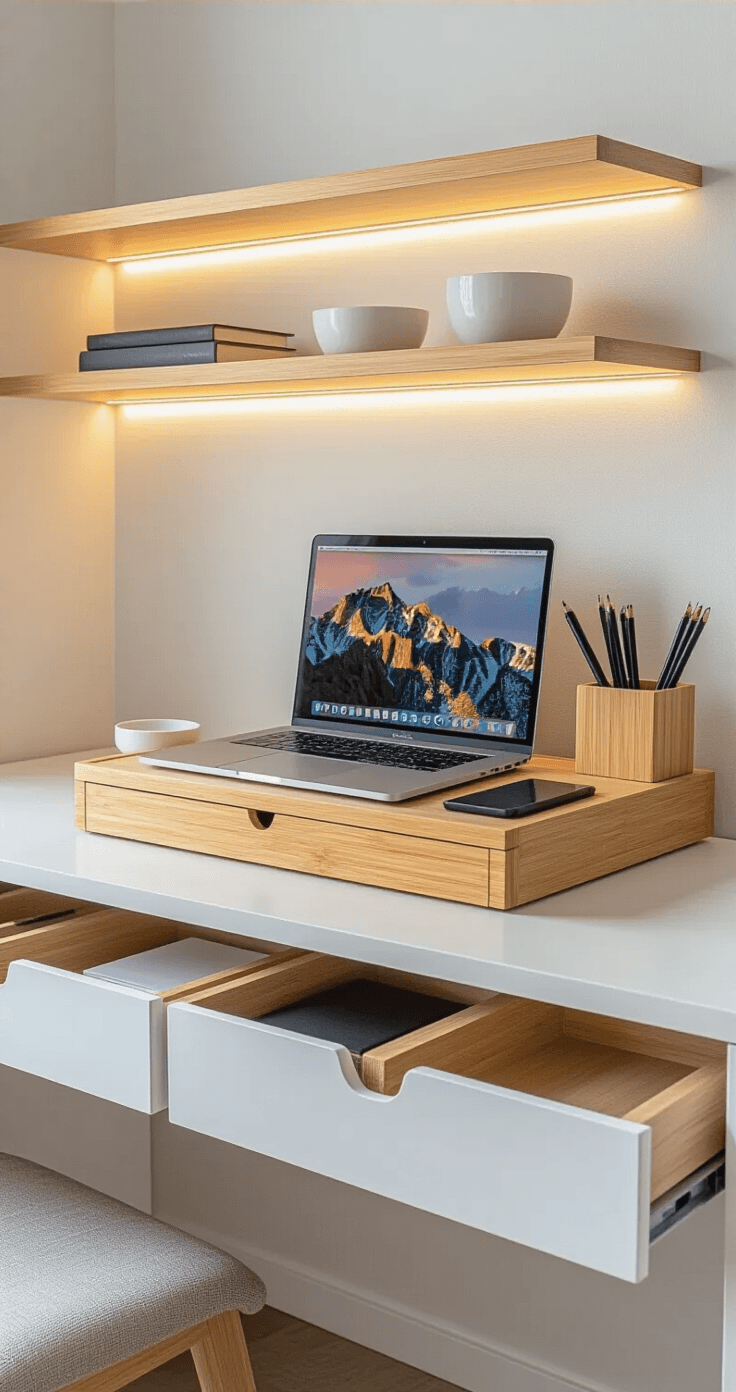
I got a monitor riser with built-in storage compartments underneath.
It elevates my screen to eye level AND gives me a spot for my notebook and a few essential supplies.
Two birds, one very attractive stone.
Other smart storage ideas:
- Integrated whiteboards that pull double duty as note-taking spaces
- Wall-mounted organizers to keep things accessible without cluttering your surface
- Drawer dividers so your drawers don’t become junk gravitational pull zones
- Cable boxes that hide the ugly power strip situation
The goal is keeping your desk organized while maintaining that clean aesthetic that makes you feel like you could be featured in an interior design magazine.
Even if you’re just answering emails in your pajamas.