
This post may contain affiliate links. Please see my disclosure policy for details.
The Foundation: Clear Your Desktop (Seriously, Just Do It)
Aesthetic desk organization is about making your workspace both beautiful and brutally efficient, and I’m here to show you exactly how to pull it off without turning your desk into a Pinterest board that’s impossible to actually work at.
Your desk probably looks like chaos had a meeting with clutter and decided to set up permanent residence. Papers everywhere, cords tangling like angry snakes, pens rolling off the edge when you need them most.
I get it—I’ve been there, staring at my workspace wondering how something meant to boost productivity became the source of my stress.
Start by removing everything from your desk. Every. Single. Thing.
Now look at what you actually use daily:
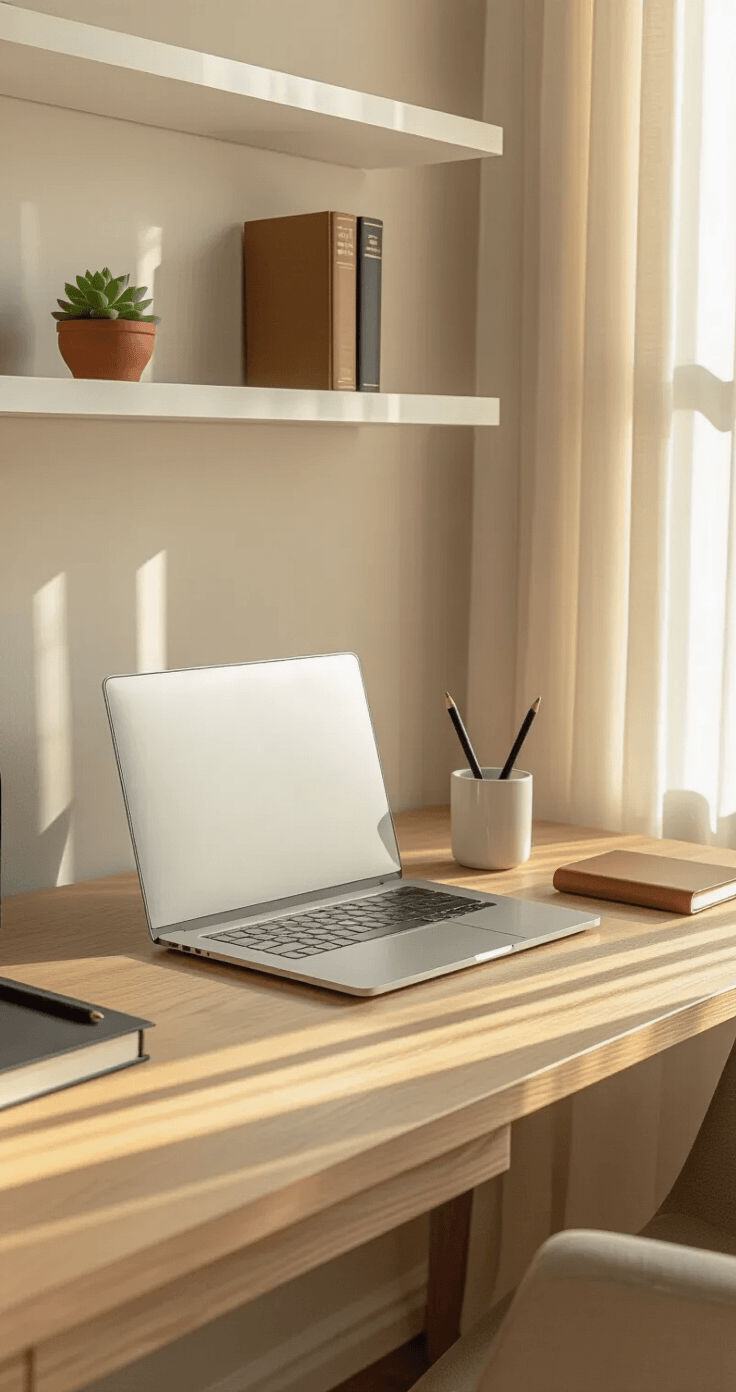
- Your laptop or computer
- One pen or pencil
- Your phone
- Maybe a notebook
Everything else? It doesn’t deserve prime real estate on your desktop.
This is where most people go wrong—they try to organize clutter instead of eliminating it first. I learned this the hard way after buying five different organizers that just made my desk look like an organized mess.
Put back only what you truly need within arm’s reach, and suddenly you’ve got breathing room.
Vertical is Your Best Friend
Walls are the most underutilized space in any home office.
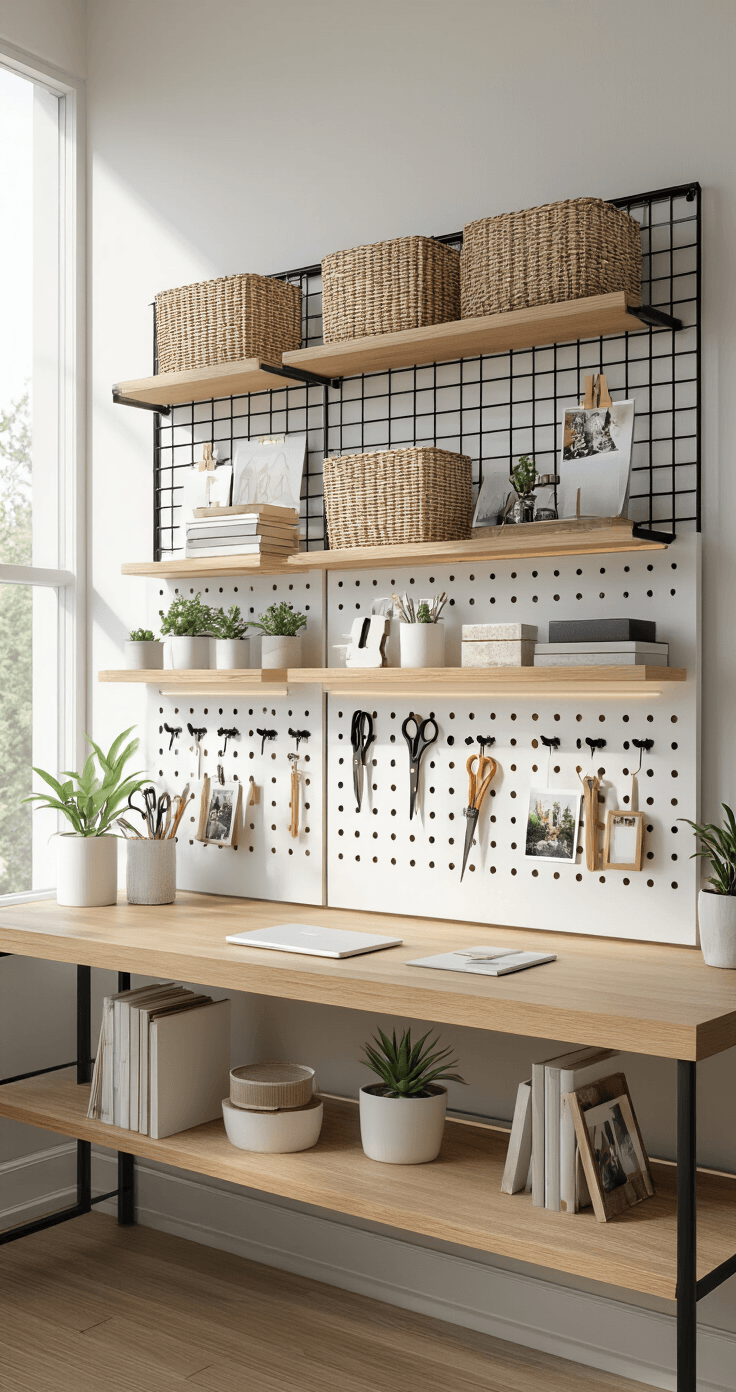
I mounted floating wall shelves above my desk last year, and it changed everything. Books that were stacked horizontally across my desk now stand vertically where they belong. Small plants add life without stealing workspace.
Here’s what works beautifully on walls:
- Pegboards with hooks and small baskets for supplies you grab frequently
- Wire grid panels that hold everything from scissors to inspiration photos
- Floating shelves in matching wood tones or clean white finishes
- Wall-mounted file organizers for papers that need to stay visible
The key is keeping wall storage at eye level or above—you want it accessible but not in your direct line of sight when you’re trying to focus.
A metal wire wall grid became my command center for current projects. Clips hold ongoing work, small baskets catch receipts and business cards, and the whole thing looks intentional instead of chaotic.
The Tray Strategy That Actually Works
Group similar items on a single tray, and watch your desk transform instantly.
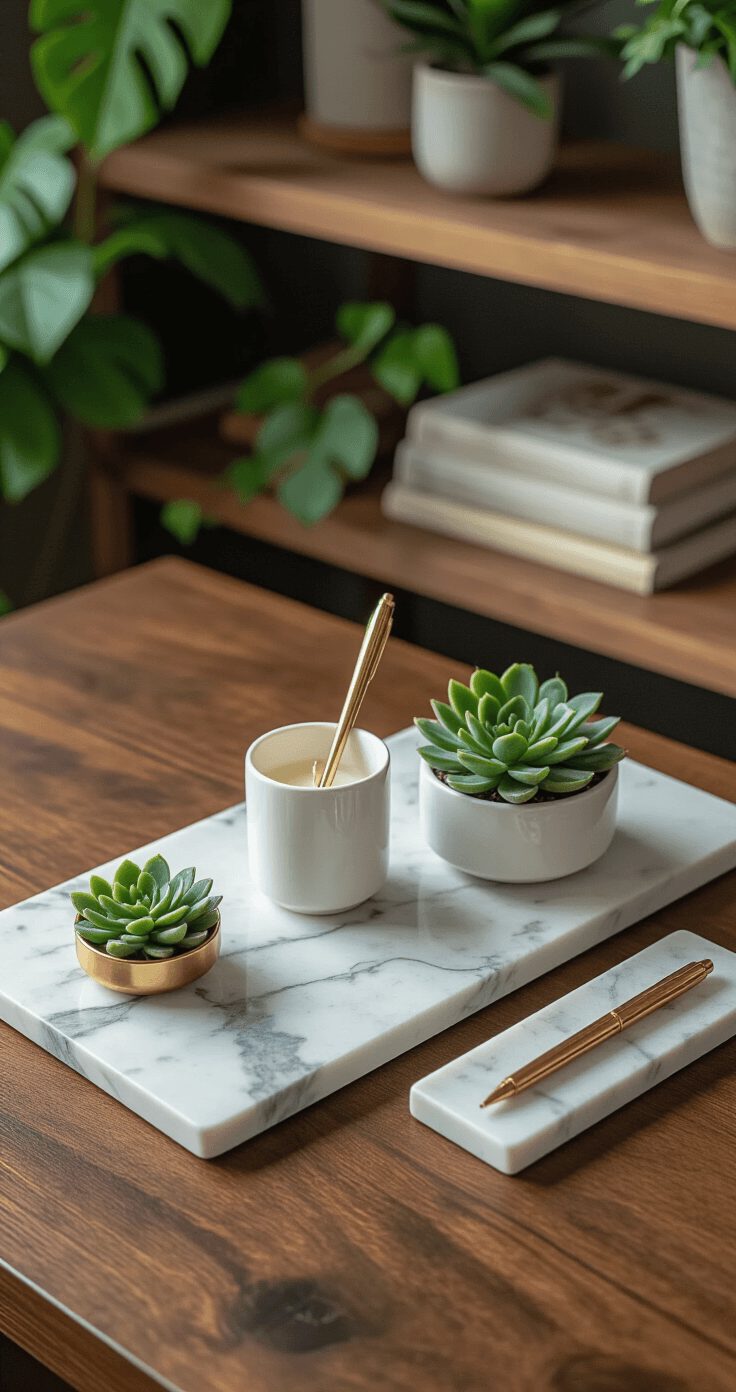
I use a simple marble tray to corral my pen holder, small succulent, and candle. Without the tray, these items felt scattered. With it, they became a curated collection.
This works because:
- Your eye reads it as one item instead of multiple sources of visual clutter
- You can move everything at once when you need a completely clear surface
- It defines boundaries so things don’t creep across your entire desk
Try acrylic desk organizer trays if you want something modern and invisible, or go with natural materials like wood or stone for warmth.
The tray should be large enough to hold your items without crowding, but not so big it dominates your desk.
Behind-the-Scenes Storage Changes Everything
The space behind and beside your desk is storage gold.
I added a narrow credenza behind my chair, and it holds everything I need weekly but not daily. Extra notebooks, my label maker, shipping supplies, backup chargers—all there, all out of sight.
Consider these setup options:
- A credenza or console table positioned behind your desk chair
- A rolling cart that tucks under or beside your desk
- A small bookshelf at a right angle to your desk creating an L-shape
- Filing cabinets that double as a side table with a cushion on top
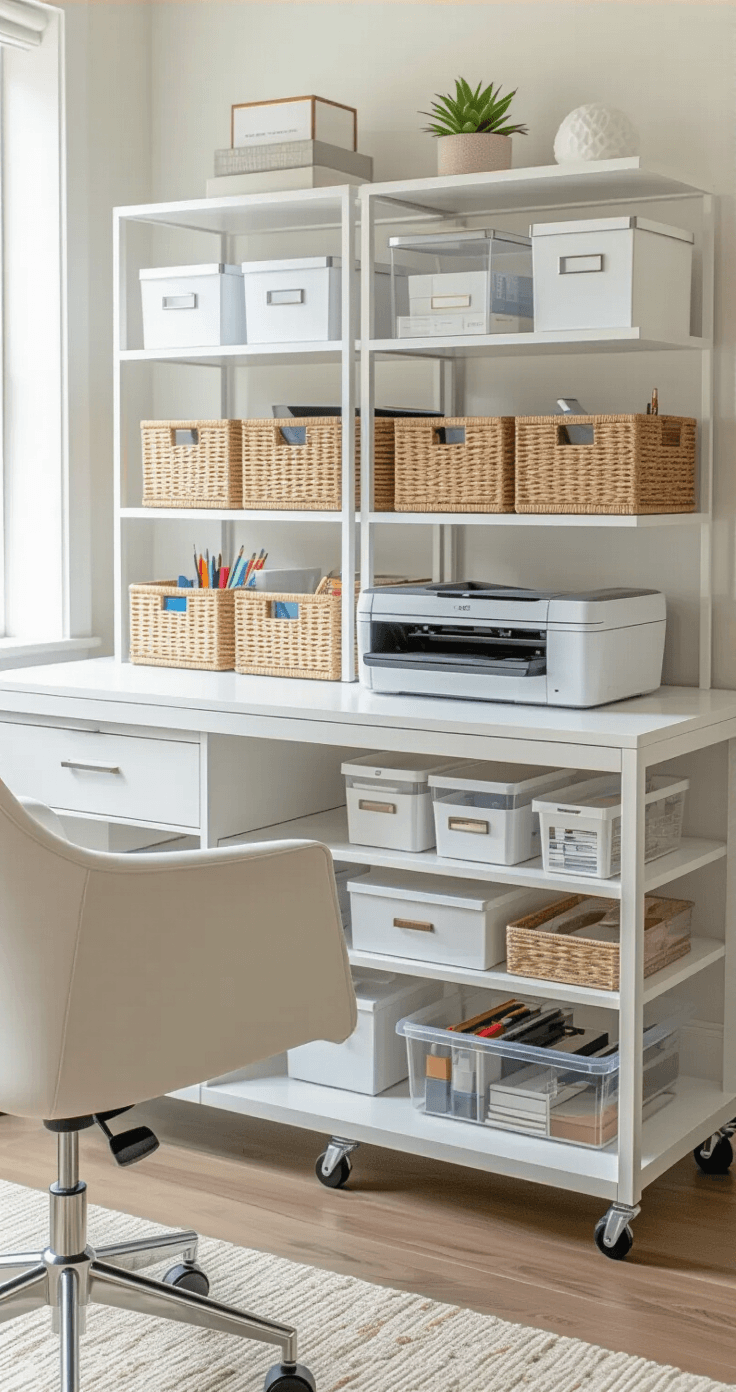
My three-tier rolling cart holds my printer on top, paper on the middle shelf, and art supplies on the bottom. When I need it, I roll it over. When I don’t, it lives in the corner looking tidy.
This approach keeps your desktop minimal while ensuring everything has a home within reach.
Drawer Dividers Are Non-Negotiable
If your desk has drawers, and you’re not using dividers, you’re basically throwing items into a dark void and hoping for the best.
I resisted drawer dividers for years because they felt fussy. Then I spent fifteen minutes digging for a specific USB cable and had an epiphany.
Good drawer organization means:
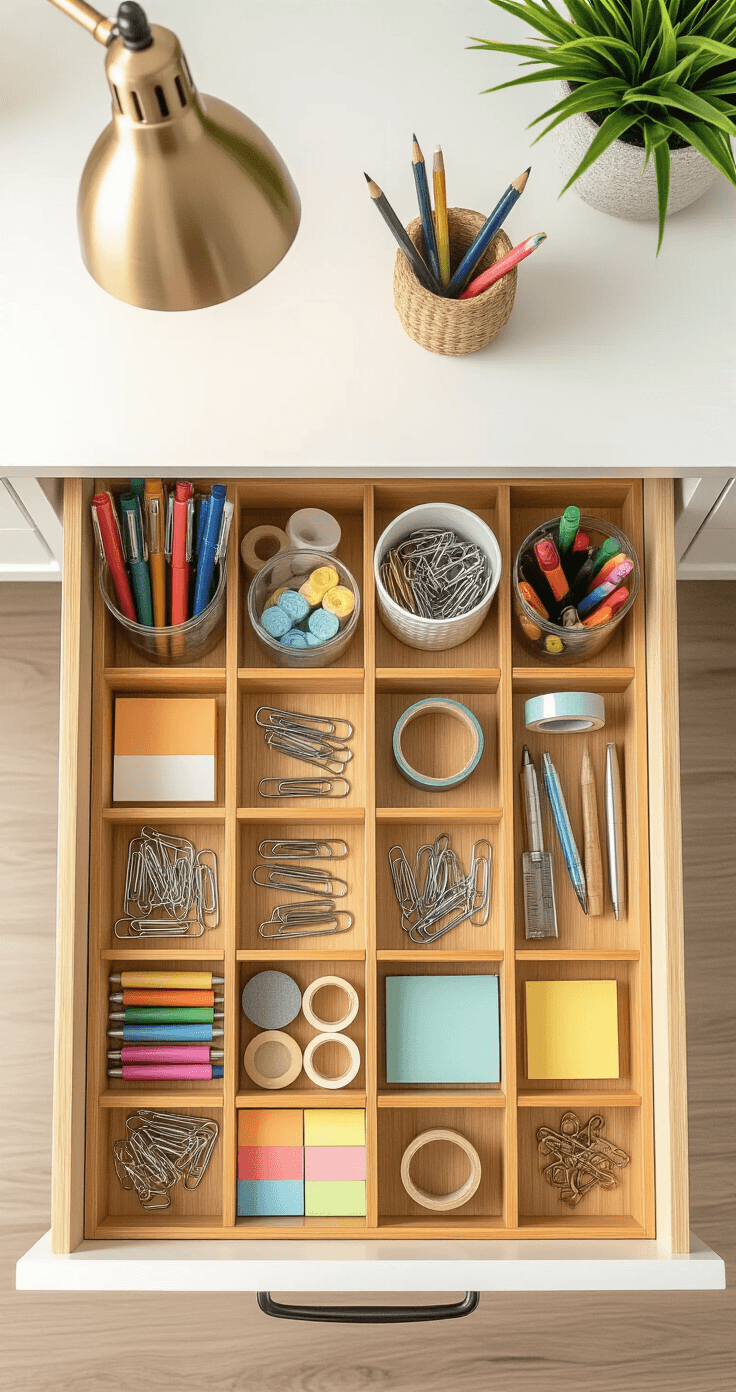
- Top drawer: Daily essentials divided into sections (pens, sticky notes, clips, tape)
- Second drawer: Weekly items (notebooks, headphones, chargers)
- Bottom drawer: Occasional needs (manuals, extra supplies, personal items)
Adjustable drawer dividers let you customize the layout as your needs change. Bamboo versions add warmth, while acrylic keeps things modern.
The difference is night and day—opening an organized drawer feels like a small gift you gave yourself.
Cable Management Isn’t Optional Anymore
Visible cords ruin even the most carefully styled desk.
I ignored this for months, thinking it didn’t matter. Then I took a photo of my desk and the tangled mess of cables made me cringe.
Here’s what finally worked: