
This post may contain affiliate links. Please see my disclosure policy for details.
Transform Your Home Into a Board Game Paradise: My Journey to Creating the Perfect Game Room
Board game rooms have become my obsession over the past five years, and I’ve learned that the difference between a cramped storage space and an inviting game haven comes down to smart planning.
You know that feeling when your game collection has overtaken every closet, bookshelf, and corner of your living room? I’ve been there. Your friends want to come over for game night, but you spend thirty minutes digging through boxes just to find Monopoly. The coffee table wobbles every time someone gets excited during Jenga. Half your games are missing pieces because they’re scattered across three different rooms.
Sound familiar?
Why Your Current Setup Isn’t Working
Most people treat board games like books—something to shove on a shelf and forget about. But games aren’t meant to collect dust. They’re meant to bring people together, create memories, and turn ordinary evenings into something special.
After hosting hundreds of game nights in my own home, I’ve cracked the code on what makes a board game room design actually work for real people with real lives.
Creating Zones That Actually Make Sense
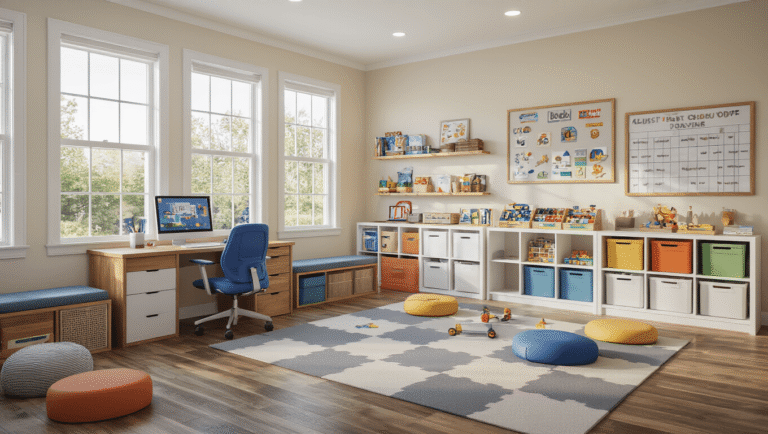
Functional zones changed everything for me. I used to think a game room meant one big table in the middle of an empty room. Wrong.
Your board game room layout should work like a well-designed restaurant kitchen—everything has its place and purpose.
Here’s what I learned works:
- The Gaming Zone: Your main table with proper lighting and comfortable seating
- The Lounge Zone: Softer seating for pre-game chatting and post-game debriefing
- The Storage Zone: Easy-access storage that doesn’t interrupt the flow
- The Refreshment Zone: A dedicated spot for snacks and drinks
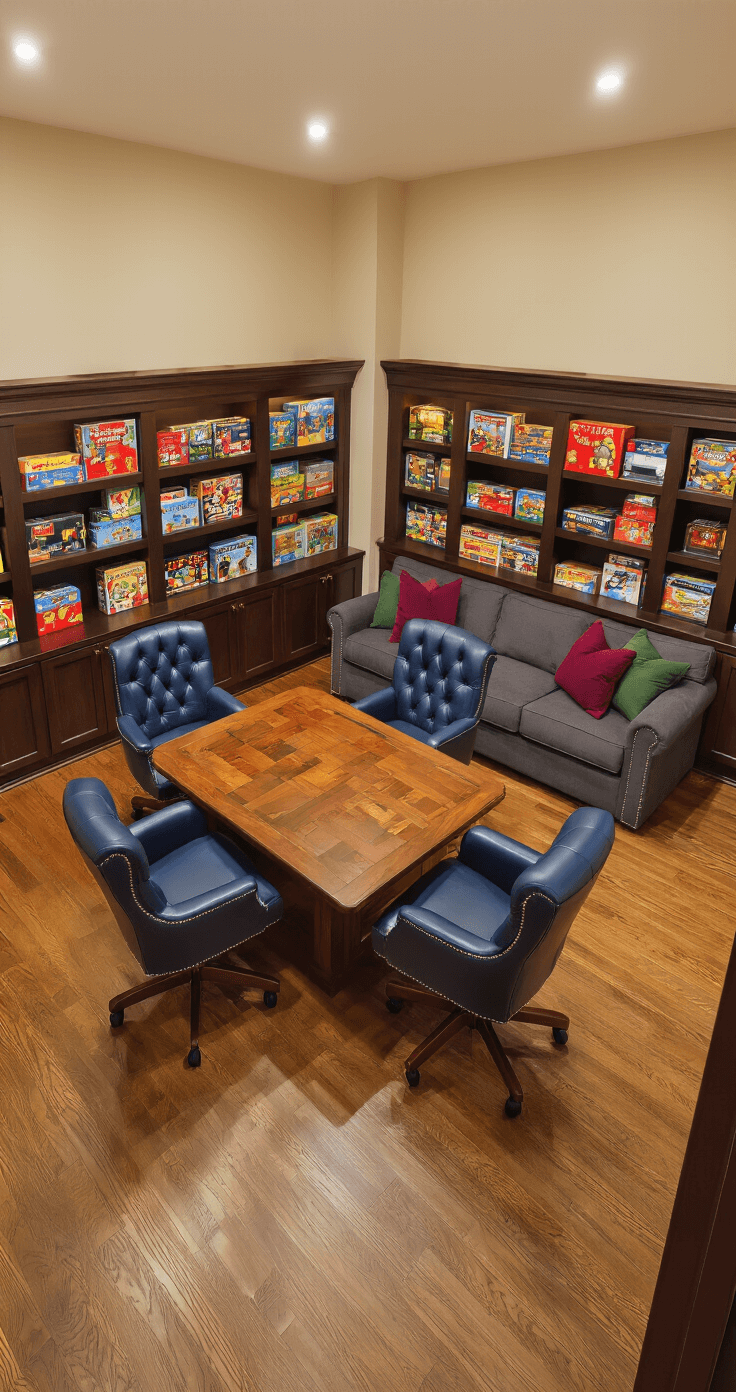
I positioned my gaming table in the center, then built everything else around it. The lounge area uses a sectional sofa facing the gaming table so people can watch ongoing games or just relax.
For smaller spaces, don’t panic. I’ve helped friends transform spare bedrooms and even basement corners into amazing game spaces. The key is making every square foot count.
Storage That Actually Works (Not Just Looks Pretty)
Let me be brutally honest about board game storage solutions. Those Pinterest-perfect rooms with games displayed like trophies? They don’t work for people who actually play their games.
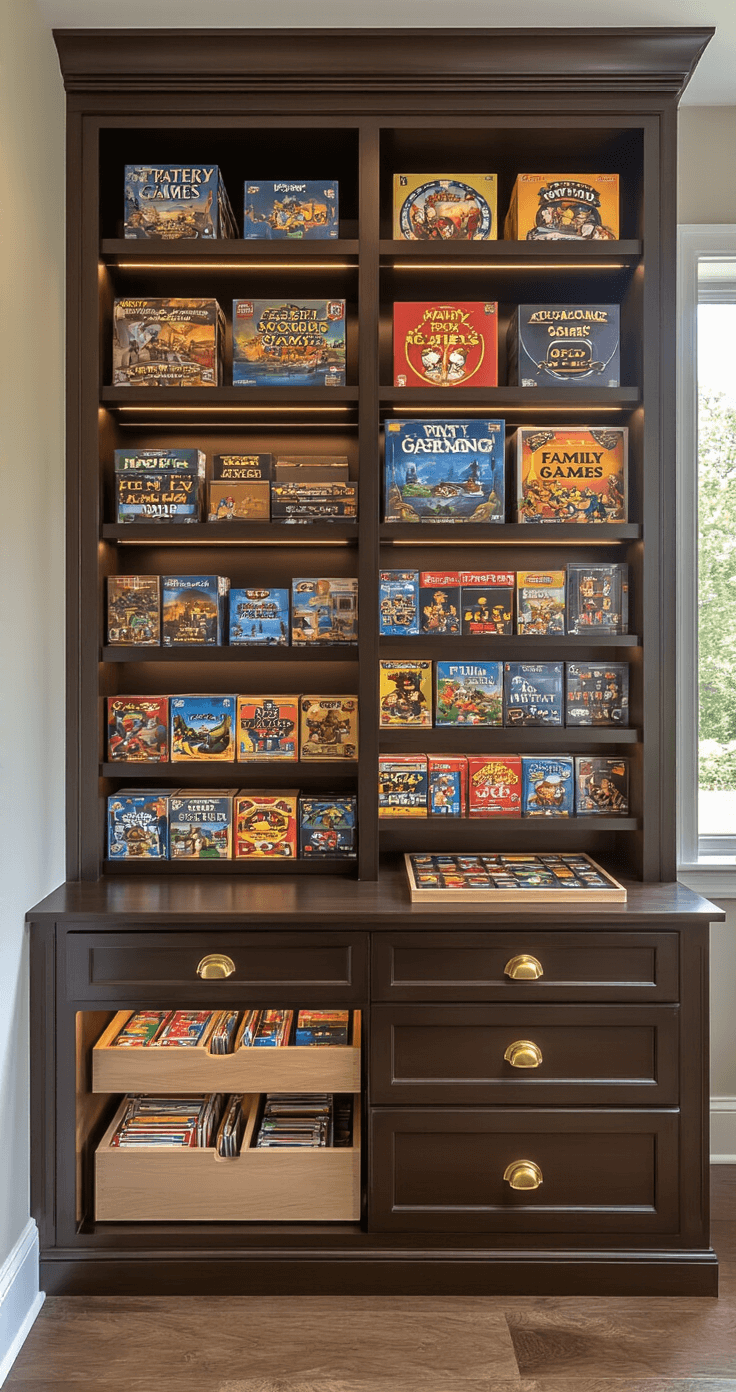
Built-in cabinets are the gold standard if you can swing them. I installed floor-to-ceiling cabinets along one wall with adjustable shelves. The middle section has drawers for card games and smaller boxes. Base cabinets provide counter space for sorting components or displaying featured games.
But not everyone can renovate. Here’s what I recommend for renters or budget-conscious gamers:
Smart Storage Alternatives
- Clear storage containers with dividers keep components organized and visible
- Drawer organizers turn any dresser into a game storage powerhouse
- Stackable storage bins that can grow with your collection
- Over-door organizers for frequently played card games
I learned this the hard way: organize by how you actually choose games, not by alphabet or size. I sort mine by:
- Quick games (under 30 minutes)
- Party games (6+ players)
- Strategy games (the heavy hitters)
- Family games (kid-friendly options)
This system means I can grab exactly what I need based on who’s playing and how much time we have.
Lighting That Won’t Give You a Headache
Good lighting makes or breaks a game room. I spent months squinting at tiny game pieces under dim overhead lighting before I got smart about this.
You need three types of lighting:
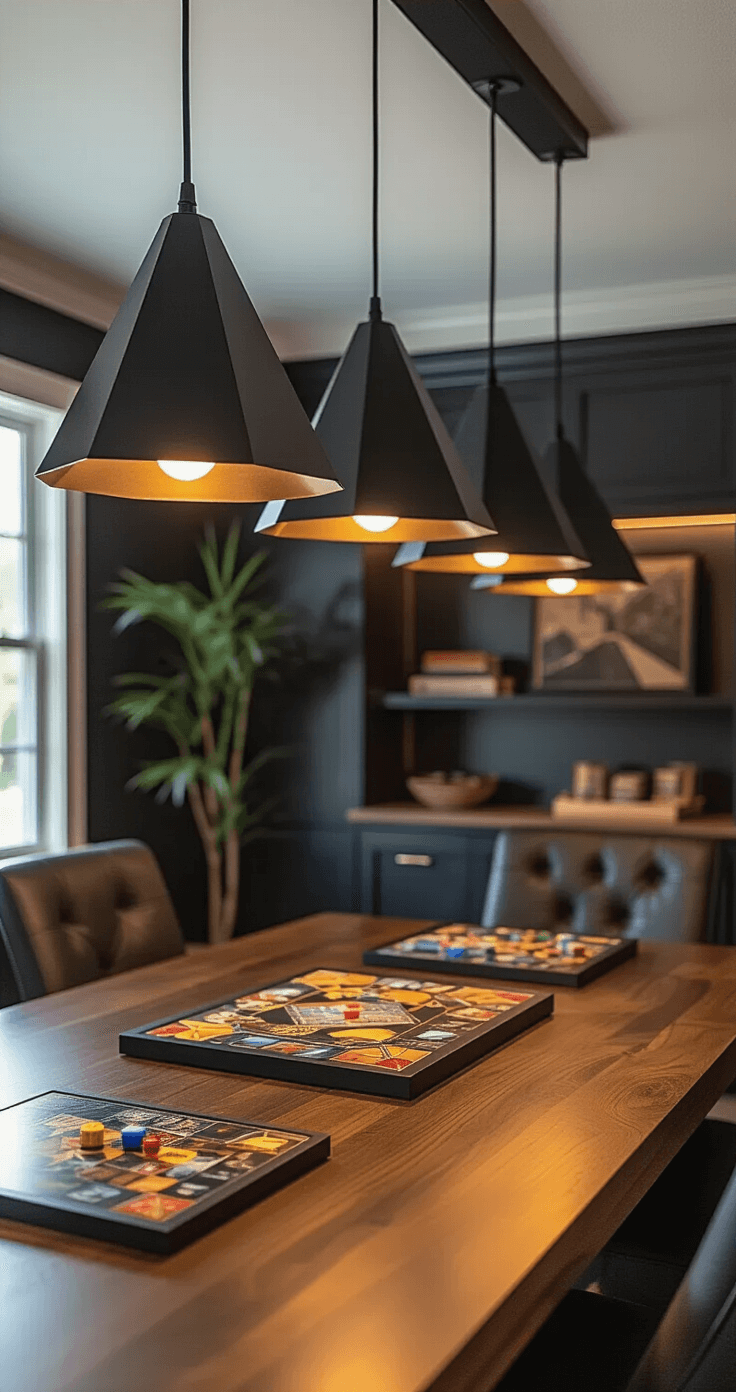
- Task lighting directly over the gaming table
- Ambient lighting for the overall room mood
- Accent lighting to highlight displays or create atmosphere
I installed pendant lights over my main gaming table. The key is positioning them high enough that they don’t block sightlines across the table but low enough to eliminate shadows.
For ambient lighting, I use floor lamps and table lamps throughout the room. Dimmer switches are essential—you want bright light for reading rulebooks but softer light for socializing.
The Snack Situation (Because Hangry Gamers Are No Fun)
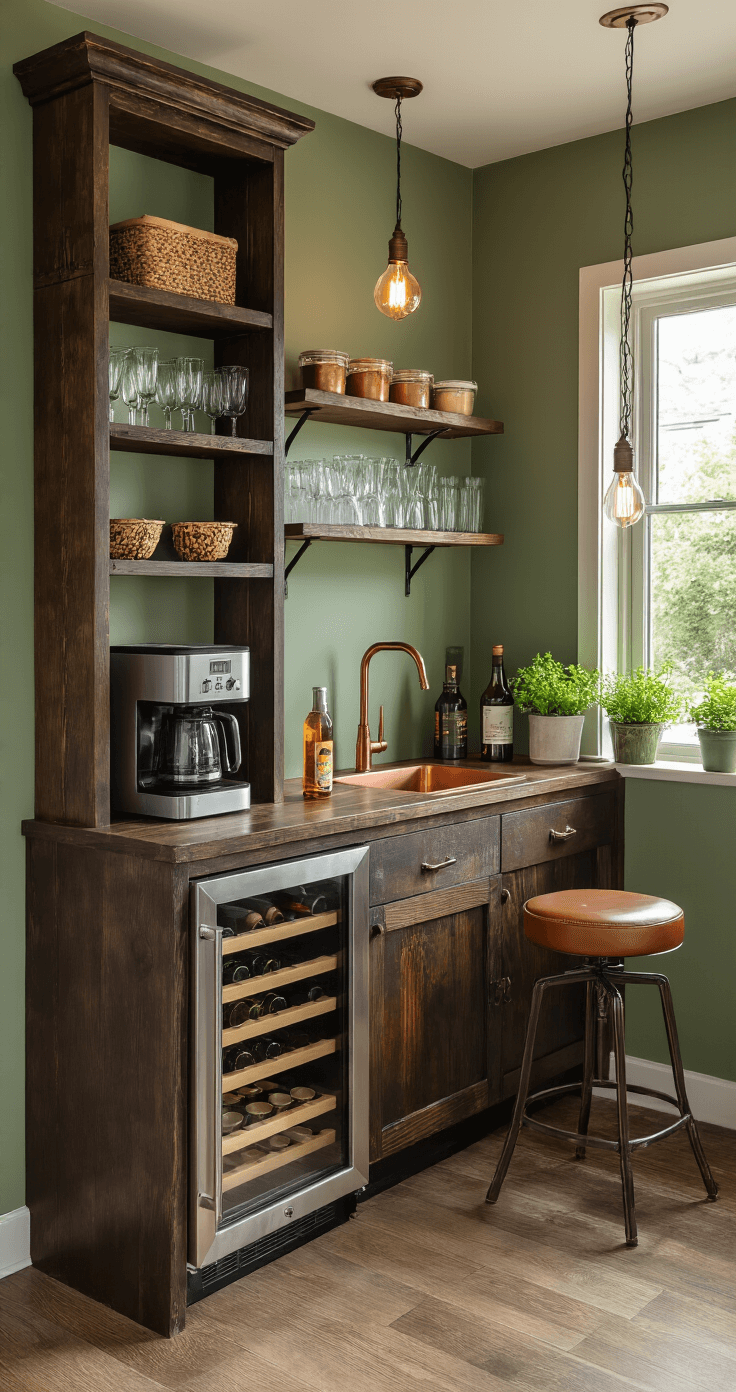
A snack bar was the upgrade I didn’t know I needed. I converted a bookshelf into a beverage station with a small wine fridge, coffee maker, and storage for glasses and napkins.
High-top stools around a bar-height counter create extra seating that doesn’t interrupt the main gaming table. Players can grab refreshments without disturbing ongoing games.
Pro tip: Keep snacks in individual bowls or containers. Nobody wants greasy fingerprints on their pristine game cards. I learned this after someone got Cheeto dust all over my copy of Wingspan.
Making Small Spaces Work
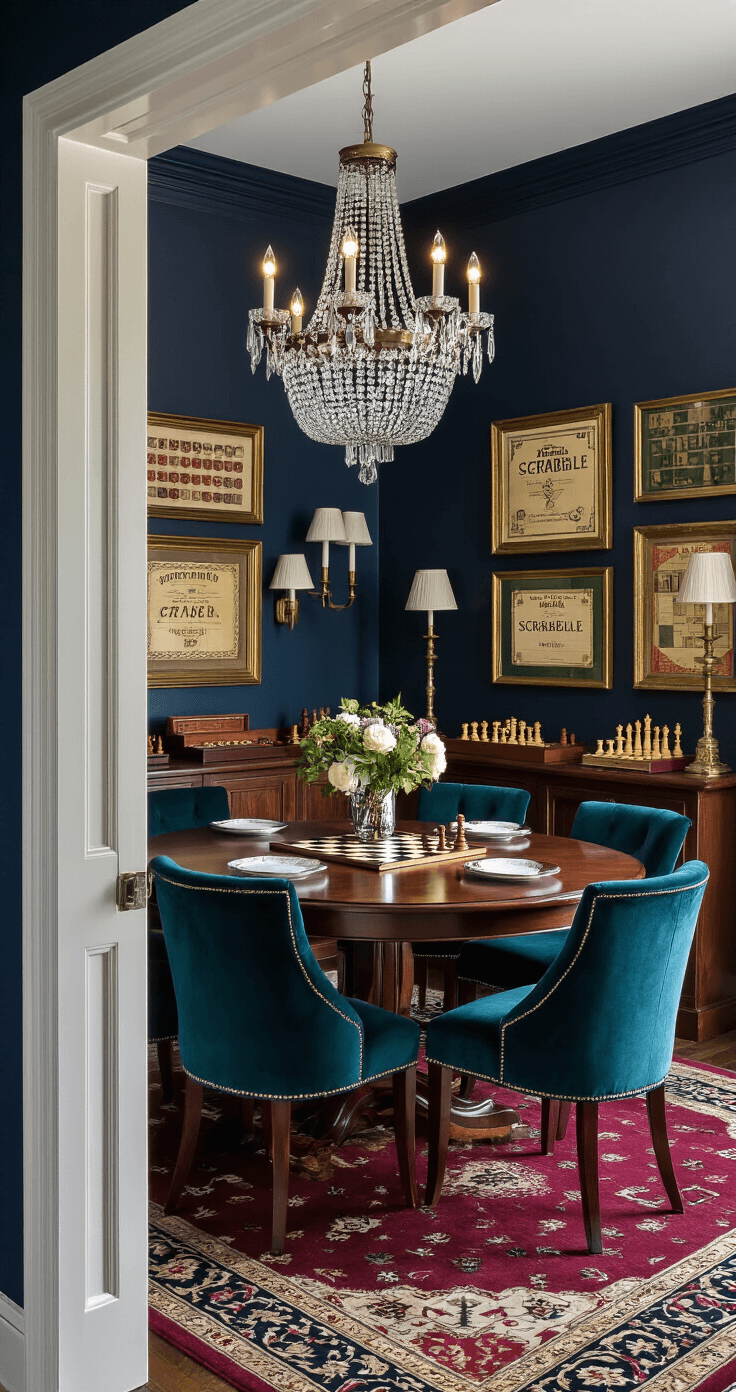
Not everyone has a whole room to dedicate to games. I helped my sister transform her dining room into a dual-purpose space that works beautifully.
Repurpose game elements as decor when you’re not playing. A beautiful chess set becomes a coffee table centerpiece. Framed vintage game boards add personality to walls. A foosball table in a hallway creates an instant entertainment zone.