
This post may contain affiliate links. Please see my disclosure policy for details.
Why Your Kid’s Desk Choice Matters More Than You Think
Your child needs a proper workspace. Not the kitchen table where you’re trying to prep dinner. Not the coffee table where they’re hunched over like tiny office workers with back problems.
I learned this the hard way when my daughter started complaining about her neck hurting after online school sessions. She’d been working at our dining table for months, and her feet dangled a good six inches off the floor.
That’s when I realized we needed to get serious about finding the right desk.

DIY Kids Desks: Building on Your Terms
Budget-Friendly Builds That Won’t Break the Bank
Listen, you don’t need to be a master carpenter to build a decent desk.
The simplest designs require minimal materials:
- Single plywood sheet option: Uses just one 1/4 sheet of 1/2″ plywood and a 2×4 board
- Basic assembly: Some designs need only a screwdriver, hairpin legs, and a wood tabletop
- Time investment: A small child-sized desk can be completed in one afternoon with off-the-shelf lumber
I built my first kids desk on a Saturday morning while drinking too much coffee. It wasn’t perfect—one leg was slightly shorter than the others—but my kid loved it because we built it together.
That’s worth more than any pristine store-bought desk.
The real costs:
- Materials typically run $30-50 for basic builds
- You’ll need basic woodworking tools (drill, saw, screwdriver)
- Time commitment: 2-4 hours for simple designs
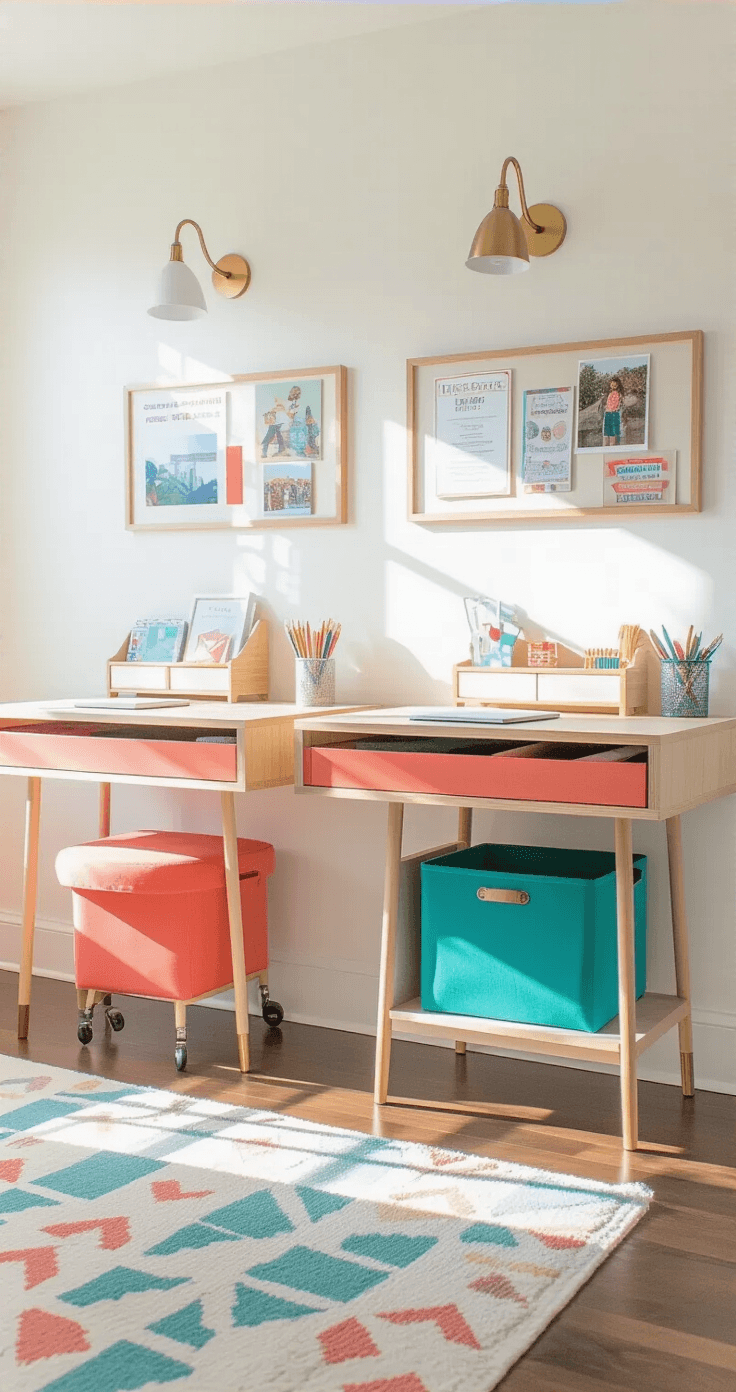
Desks with Storage: Because Kids Have Too Much Stuff
Kids accumulate things like it’s their job. Art supplies, books, random rocks they found outside—it all needs to go somewhere.
Popular storage-integrated designs:
Cubby-style desks combine plywood with wooden table legs to create compartments underneath. Add a sliding stool that tucks away, and you’ve got a compact solution that keeps clutter contained.
Lift-top designs are brilliant for hiding the chaos. Close the lid, and suddenly the room looks presentable. My neighbor uses hers as a Lego table—all those tiny plastic torture devices stay contained until playtime.
Desk with hutch takes more skill but delivers serious storage.
- Designed for intermediate builders
- Costs around $75-100 in lumber
- Takes a weekend to complete
- Provides vertical storage without eating up floor space
I watched my brother-in-law build one of these, and he swore it was easier than the IKEA instructions he’d wrestled with the week before.
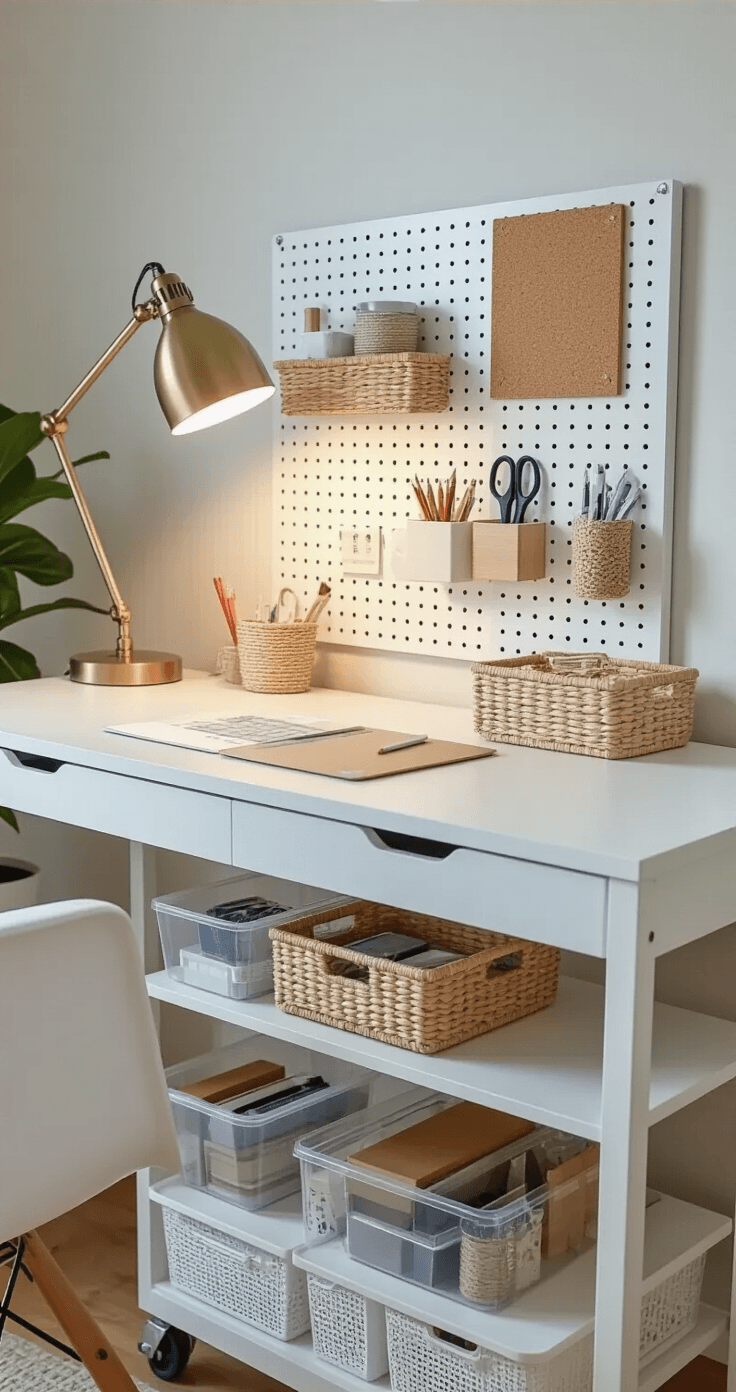
Floating Desks: Perfect for Tiny Rooms
Small bedroom? Floating desks don’t require any floor space, which is basically magic if you’re working with a shoebox-sized kids room.
What you need:
- Plywood cut to size
- Heavy-duty metal brackets
- Inexpensive stools that can slide underneath or out of the way
Multi-child floating desk setup:
- Create individual workspaces with:
- Separate cubbies for each kid
- Personal bulletin boards above each station
- Shared storage in the center
This works incredibly well for siblings who need their own space but don’t have separate rooms. No more fighting over whose desk is whose.
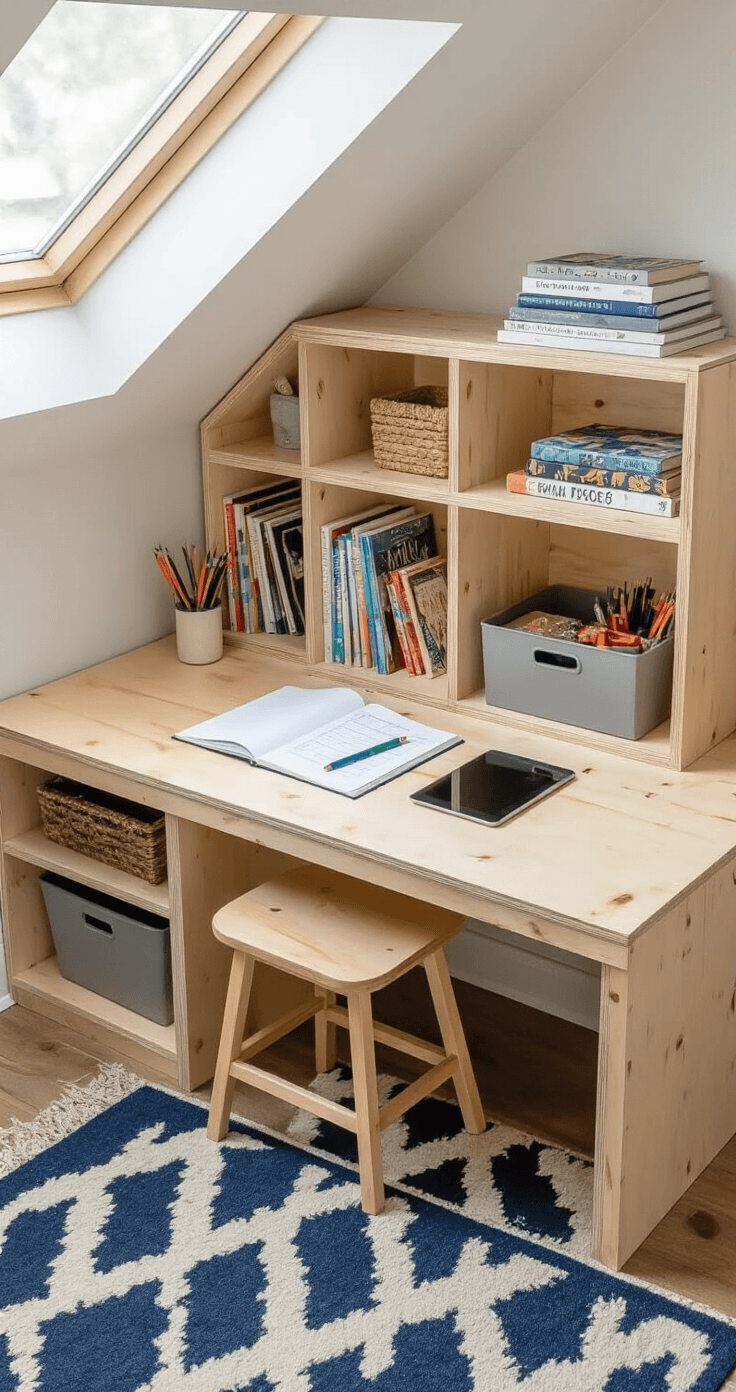
Specialized Designs for Unique Needs
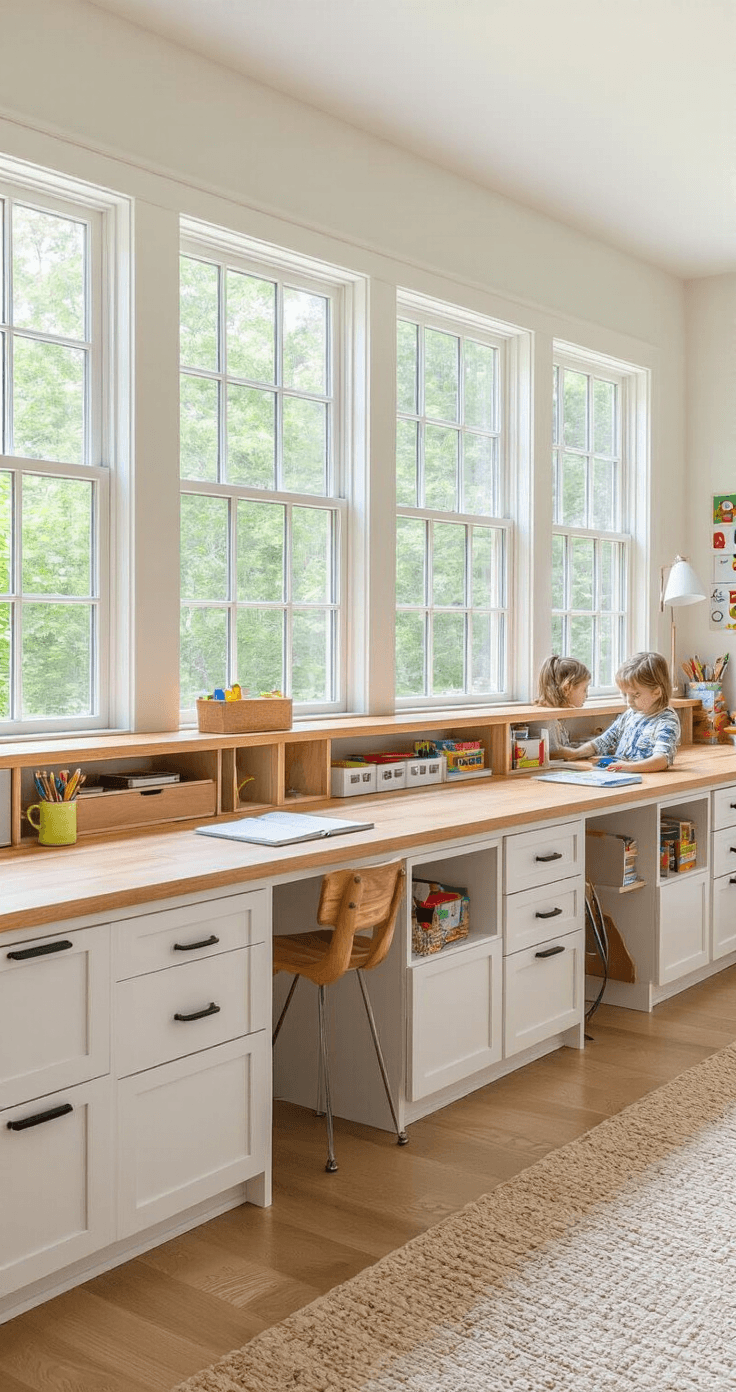
Double desks from stock cabinets work beautifully for homeschooling families.
- Use stock cabinets as the base
- Top with butcher block countertop
- Creates a long workspace for multiple kids
- Built-in storage in the cabinets below
Height-adjustable desks from fruit crates sound weird but actually work. Stack crates to adjust the height as your child grows. It’s like furniture Legos.
One mom in my neighborhood built this for her son when he was five. Seven years later, he’s still using it—just configured taller.
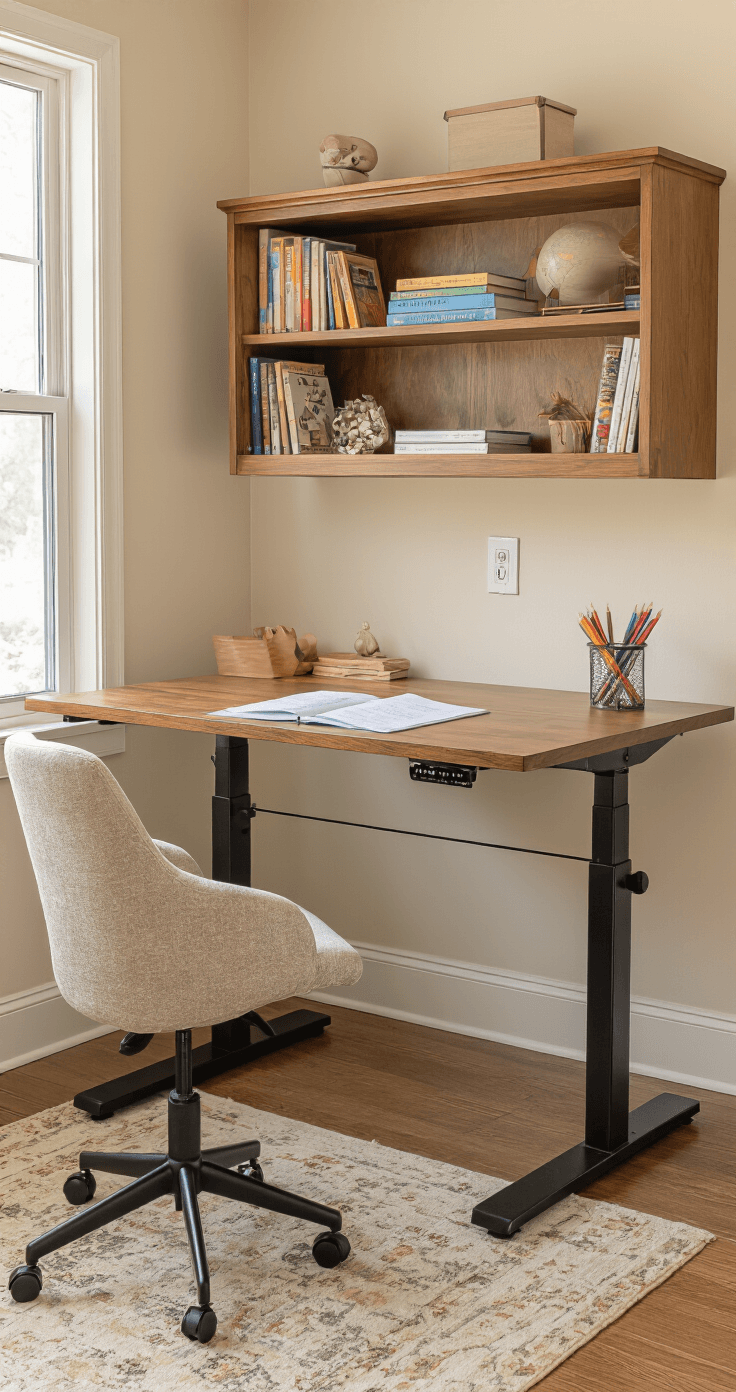
Ready-Made Options: When DIY Isn’t Your Thing
Not everyone wants to spend their weekend with sawdust in their hair. That’s completely fine.
IKEA Desks: The Reliable Middle Ground
IKEA’s kids desks come in various sizes, shapes, and colors without requiring a second mortgage.
Popular IKEA hacks that actually improve the designs:
- Mount white tabletops directly to walls with brackets
- Add rolling storage carts underneath
- Hang buckets on the side for supply organization
- Combine desk pieces with other IKEA storage systems
I’ve seen parents create stunning desk setups by mixing IKEA pieces with other elements. The modular approach means you can adapt as your kid’s needs change.